A gunman getting shots off inside a ballroom packed with America’s top officials is the kind of security failure that should never happen—yet it did at the White House Correspondents’ Dinner.
Quick Take
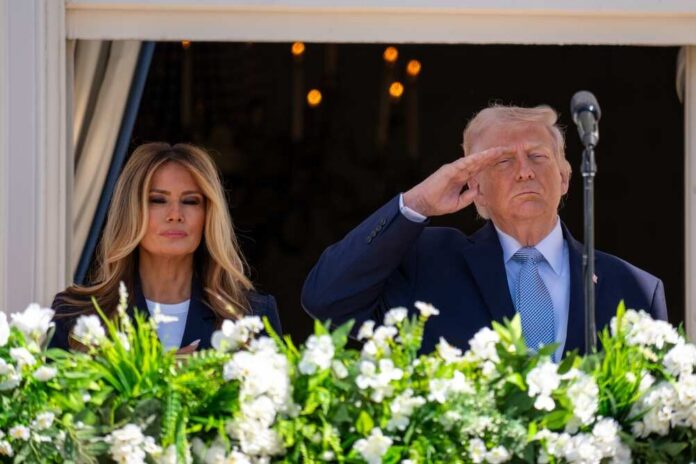
- President Trump, First Lady Melania Trump, Vice President, Cabinet members, and thousands of guests were evacuated after shots were fired at the Washington Hilton during the WHCD.
- Authorities identified the suspect as 31-year-old Cole Tomas Allen, a teacher from Torrance, California, who allegedly cased the hotel and sent a manifesto before the attack.
- No one was killed or injured, but reporting indicates conflicting accounts of how many shots were fired.
- Trump later joined a “60 Minutes” interview, describing a calm reaction and pointing to the Secret Service agent’s protective vest.
- The incident revives uncomfortable parallels to the 1981 Reagan shooting at the same venue and raises questions about how “elite” events are secured.
What happened at the Washington Hilton—and what’s confirmed so far
Investigators say shots were fired during the White House Correspondents’ Dinner at the Washington Hilton, triggering the evacuation of President Donald Trump and other high-level officials, including the First Lady and figures in the presidential line of succession. Reports indicate more than 2,500 people attended. No injuries were reported, but early accounts differed on the number of shots. That uncertainty is likely to be clarified through ballistics, surveillance review, and witness interviews.
Officials and journalists described confusion inside the room as the incident unfolded, with some initially mistaking the sound for something other than gunfire. Trump later described hearing what he thought might have been a dropped tray before realizing it was an active threat. The immediate evacuation underscores that, even when no one is harmed, a few seconds of ambiguity in a packed venue can create cascading risk—especially with senior leaders gathered in one place.
The suspect, the manifesto, and the security questions Washington can’t shrug off
Reporting identified the suspect as Cole Tomas Allen, a 31-year-old teacher from Torrance, California. Accounts say he checked into the hotel ahead of the event and appeared to case the location. Investigators are also reviewing a manifesto reportedly sent to family shortly before the incident, with rhetoric aimed at the Trump administration and criticism of Secret Service protections. Authorities said the suspect was armed, and the investigation remains focused on motive and planning.
The most politically sensitive issue is not the suspect’s notoriety, but the mechanics: how a shooter moved through an event perimeter with metal detectors and still managed to fire. When a venue holds the president, the vice president, Cabinet officials, and top lawmakers, the security standard is supposed to be closer to a summit than a gala. Any verified gap—staffing, screening, or perimeter control—will intensify public distrust in institutions tasked with protecting national leadership.
Trump’s “60 Minutes” interview and the politics of leadership under threat
Trump used his post-incident “60 Minutes” interview to emphasize calm and continuity, telling the public that nobody was killed and that the protective gear worn by a Secret Service agent performed as intended. That message fits a familiar Trump political posture: projecting steadiness and resilience while pushing agencies to show competence. For many conservative voters who already believe the federal bureaucracy is mismanaged, the story lands as another example of government failing at its most basic job.
Democrats and Trump critics are likely to focus on broader concerns—polarization, political violence, and the tone of national politics. But the core operational question is nonpartisan: if this can happen at a high-profile dinner, what does that imply for less-controlled public events? Conservatives generally argue for limited government in citizens’ lives, but they also expect government to excel at core constitutional duties like security, law enforcement, and protecting public order.
The Reagan parallel and the “elite event” problem that fuels public cynicism
The Washington Hilton is not just a random venue; it’s historically tied to the 1981 assassination attempt on President Ronald Reagan. That parallel is difficult to ignore because it highlights how institutional memory doesn’t automatically translate into institutional preparedness. Journalists and analysts also described the WHCD moment as one of the government’s most vulnerable in years because so many key officials were present at once. That concentration of leadership is a security nightmare if protocols slip.
The White House: Watch "President Trump joins 60 Minutes after the assassination attempt at the WH Correspondents' Dinner." on YouTubehttps://t.co/VfFTyrjSqe
— SG (@GREENESJ333) April 27, 2026
The broader takeaway is that Americans across the spectrum increasingly see a government that struggles to deliver competence, even when the stakes are obvious. Whether voters blame “deep state” complacency, bureaucratic churn, or leadership failures, the demand is the same: enforce clear standards, verify them, and hold decision-makers accountable. Until investigators publish a credible timeline of how the suspect reached the firing point, the public will assume insiders get pageantry while ordinary citizens get excuses.
Sources:
WHCA dinner shooting live updates: Suspect armed with multiple guns, knives