As war chokes a key Persian Gulf energy hub, Qatar is warning that the real economic shock to American families has not even started yet.
Story Snapshot
- Qatar’s finance and energy chiefs say the Iran war’s “full-fledged” economic impact is still ahead, with global shortages of fuel and fertilizer looming.
- Warnings focus on the Strait of Hormuz and Gulf export hubs, whose disruption could send oil toward $150 a barrel and squeeze liquefied natural gas supplies.
- Qatar admits it can cushion the blow at home, raising questions about how badly less-prepared Western economies could be hit.
- For American households, another externally driven energy shock would collide with years of inflation and reset debate over domestic drilling and resilience.
Gulf Officials Warn Of Imminent Energy And Food Shock
Qatar’s finance minister Ali Ahmed Al-Kuwari used a Washington forum of the International Monetary Fund to deliver a blunt warning: the world has only seen the “tip of the iceberg” from the Iran war’s economic fallout, and a “full-fledged impact is coming, and it is not far away.” He predicted that within “one month, two months’ time” the conflict could trigger a “huge economic impact globally,” moving from higher prices to outright difficulty finding energy at any price.[2][4]
Al-Kuwari stressed that the danger goes beyond household energy bills. He cautioned that prolonged disruption from the Iran war could slash production and exports of fertilizer from the region, causing farmers worldwide to miss planting seasons and potentially “triggering a food crisis.”[1][2] These are not activist slogans; they are warnings from the top financial official of one of the world’s richest gas exporters, given on record to a room full of central bankers and finance ministers.[2][4]
From “Tip Of The Iceberg” To “Bring Down The Economies Of The World”
The finance minister’s message has been reinforced by Qatar’s energy minister Saad al-Kaabi, who has warned that the Middle East war could “bring down the economies of the world” if Gulf exporters are forced to shut production.[3] In a City A.M.–distributed briefing, he sketched a scenario where oil prices lurch toward $150 per barrel, roughly double recent levels, if conflict or blockages in the Strait of Hormuz push producers to declare force majeure and halt shipments.[3]
Al-Kaabi highlighted that Qatar has already seen its largest liquefied natural gas plant shut down due to the conflict and that restarting such infrastructure can take “weeks to months.”[3] He warned that an initial spike in oil and gas prices would quickly ripple into everything moved by truck, heated by gas, or powered by the electric grid, feeding a new wave of inflation and forcing central banks to keep interest rates high even as economies slow.[3] That chain reaction, he argued, is the real systemic risk.
Qatar Says It Has Buffers – Does The West?
Even as he warned of a looming global shock, Al-Kuwari emphasized that Qatar itself has built buffers to ride out at least a year of turbulence. He pointed to a “conservative” pre-war budget, a “shock stability fund,” and the vast reserves of the Qatar Investment Authority sovereign wealth fund, saying, “Managing the fiscal situation is fine.” The country, he said, can go six months without drawing on that fund and as long as a year by tightening spending, borrowing if necessary, and delaying some projects.[1][2][4]
That combination of dire global warnings with calm domestic assurances underscores the gap between energy-rich states and heavily import-dependent economies. Economists at JPMorgan have reportedly projected that Qatar’s own economy could contract about nine percent this year after Iranian missile strikes damaged its giant Ras Laffan liquefied natural gas plant, cutting seventeen percent of its capacity.[2] Yet even that scale of hit is framed in Doha as “manageable” because of years of saving and conservative budgeting, advantages many Western governments lack after decades of debt and stimulus.[1][2]
Hormuz Chokepoint Exposes Fragile Globalization
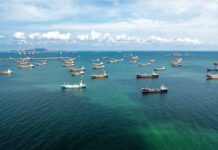
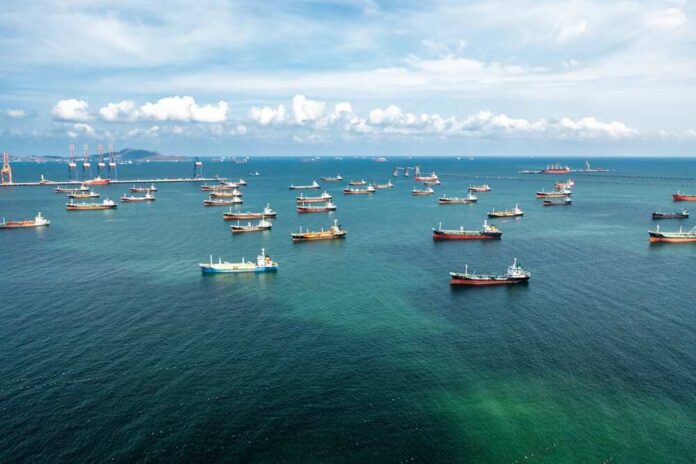
Energy-security analysts have long warned that the Strait of Hormuz, which channels a large share of global oil and gas exports, is a structural weak point in the global system.[1] The Qatar finance minister’s comment that current price moves are just the “tip of the iceberg,” coupled with his fears about gas, fertilizer, and even helium shortages if trade routes stay constrained, fits a pattern where markets initially react to headlines and only later grapple with physical supply problems.[1][2][4] If tankers face sustained risk, insurance spikes and rerouting delays can compound the shock.
For American families who remember paying more at the pump under earlier administrations and then feeling some relief as domestic production recovered, these warnings land in a different political climate. Under President Trump’s second term, Washington has pushed to rebuild energy independence and reduce exposure to foreign chokepoints. Yet a war-driven crunch in Middle Eastern exports would still push up world prices, testing how much insulation conservative policies can provide and reviving arguments for more drilling, pipelines, and refinery capacity at home.
Sources:
[1] Web – Qatar warns wider economic fallout from Iran war still ahead if …
[2] Web – Qatar warns ‘full-fledged’ Iran war impact about to hit global economy
[3] YouTube – Iran war could “bring down the economies of the world …
[4] Web – Iran war’s full economic impact nearing, Qatar finance minister says