Congressional fury over the sudden cancellation of a 4,000‑troop deployment to Poland is exposing how opaque Pentagon decision-making can rattle allies, taxpayers, and the very soldiers asked to carry the load.
Story Snapshot
- Defense Secretary Pete Hegseth ordered the Army to halt a nearly complete Poland tank brigade rotation, triggering bipartisan anger in Congress.
- Army leaders insist the move was a routine force-management decision tied to wider Europe posture changes, not a pullback from NATO.[1][2][4]
- Lawmakers say Congress and Poland were blindsided, calling the last-minute reversal “embarrassing” and a “terrible message to Russia and our allies.”[1][3]
- The episode highlights deeper problems: a multibillion-dollar Army budget hole, thin explanations from the Pentagon, and a pattern of Washington secrecy that frustrates voters.[5]
What Exactly Did The Pentagon Cancel In Poland?
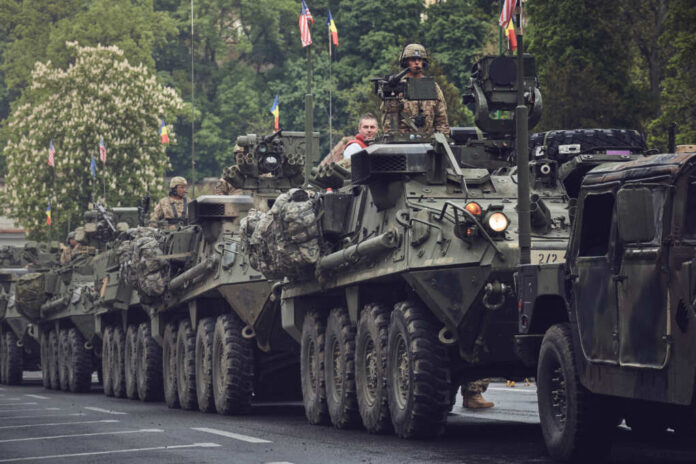
The United States Army had been preparing to send the 2nd Armored Brigade Combat Team of the 1st Cavalry Division, more than 4,000 soldiers plus heavy equipment, from Fort Hood, Texas, to Poland for a nine-month rotation.[2][4] The unit had already cased its colors May 1, a traditional signal that a deployment is underway, and an advance team with some of its gear was already moving into theater.[2][4][5] Then, with little public warning, Defense Secretary Pete Hegseth ordered the deployment stopped.
Acting Army Chief of Staff General Christopher LaNeve told lawmakers that the decision to cancel the Poland rotation was made “in the last two weeks” by the Department of Defense together with General Alexus Grynkewich, who leads United States European Command and serves as the North Atlantic Treaty Organization Supreme Allied Commander Europe.[1][2] Army Secretary Dan Driscoll stressed that he and LaNeve were consulted and framed the change as part of regular manning reviews that happen every year as the Pentagon adjusts forces globally.[1][2]
Congress Says It Was Blindsided And Allies Were Too
Members of Congress from both parties blasted Army leaders in a budget hearing, saying that whatever the internal process, the external reality looked chaotic and disrespectful to allies.[1][3] Representative Don Bacon said Polish leaders told him they were “blindsided” by the reversal and warned it sent a “terrible message to Russia and our allies.”[1][3] House Armed Services Committee Chair Mike Rogers said the panel was “not happy,” while other lawmakers called the move “reprehensible” and “an embarrassment to our country.”[1][3]
Senator Jeanne Shaheen said “it is not at all clear” why the decision was made and that she did not believe Congress had been briefed, reinforcing the sense that elected representatives were cut out of the loop.[5] Representative Austin Scott complained that such major posture changes looked “last-minute” and lacked proper statutory consultation.[2][3] That reaction matters because it puts a Republican-led Congress at odds with a Republican administration over transparency and process, even as both sides nominally agree on strengthening deterrence against Russia and supporting reliable allies like Poland.[1][3]
Routine Force Management Or Strategic Retreat From Europe?
Army leaders repeatedly pushed back on the idea that canceling the Poland deployment signaled a weakened commitment to Europe. They described it as one piece of a broader theater review that also includes withdrawing about 5,000 troops from Germany and canceling an artillery battalion deployment there, again justified as aligning forces with “theater requirements and conditions on the ground.”[1][2][4][5] Anonymous officials said Secretary Hegseth signed a memo directing that a brigade combat team come out of Europe, leaving the exact unit choice to military planners.
Critics argue that whatever the paperwork says, the optics tell a different story. The decision effectively cuts American combat power in Poland by nearly half, at a time when Russian forces are still engaged in Ukraine and Eastern European allies are watching every American move for clues about long-term resolve.[4][5] Some European commentary and partisan media tried to spin the change as “Trump snubbing NATO,” feeding the old globalist narrative that any reduction is abandonment, even though more than 10,000 United States troops remain in Poland on rotational duty and two armored brigades continue operating in Europe.[2][5]
Money Problems, Secrecy, And The Burden On Our Troops
Reports indicate the Army is facing a shortfall of four to six billion dollars, and commanders have already started cutting training to cope, a reality that may have influenced the force adjustments in Europe.[5] One analysis suggested that the cost of ongoing operations in Iran, including Operation Epic Fury, could be linked to the decision to trim rotations elsewhere, though the Pentagon has not confirmed that. What conservatives will notice is that this crunch flows from years of unfocused spending and mission creep, not from taking care of rank-and-file soldiers or securing our own border.
Army leaders in hot seat over Poland deployment cancellation – Military Times https://t.co/UoWUD5RWIE
Follow @NewsHubGlobe for 24/7 breaking news from around the world. pic.twitter.com/cMq5HgJd3q
— News Hub (@NewsHubGlobe) May 16, 2026
For the men and women of the 2nd Armored Brigade Combat Team, the cancellation was not some abstract spreadsheet entry. Families had endured months of uncertainty, ceremonies were held, and equipment had begun crossing the Atlantic when the order came down to stop and, in some cases, turn around.[2][4][5] That kind of whiplash undermines trust in leadership and fuels the broader frustration many readers feel: Washington’s bureaucracy moves billions of dollars and thousands of troops around with minimal explanation, while ordinary Americans are expected to simply salute and pay the bill.
Sources:
[1] Web – Army leaders in hot seat over Poland deployment cancellation
[2] Web – Army leaders in hot seat over Poland deployment cancellation
[3] YouTube – GOP House members grill Army leaders on Hegseth’s …
[4] Web – US Army abruptly cancels deployment of 4,000 soldiers to Poland
[5] Web – Pentagon abruptly cuts US combat forces in Poland, officials say