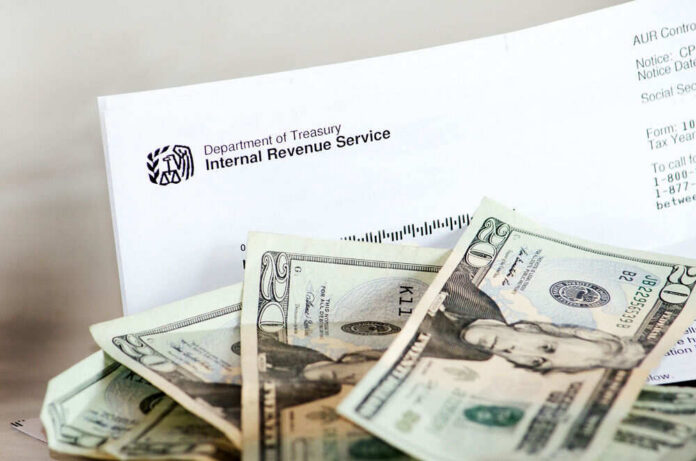
After years of weaponized leaks against conservatives, President Trump’s $10 billion tax‑privacy lawsuit against the Internal Revenue Service now has the left screaming that taxpayers are being “robbed” simply because the government might finally be held accountable.
Story Snapshot
- Trump is suing the Internal Revenue Service and Treasury Department for $10 billion over leaks of his confidential tax returns during his first term.
- A former Internal Revenue Service contractor has already been convicted and sent to prison for stealing and leaking Trump’s tax data.
- Critics on the left claim any settlement would be a taxpayer-funded “heist,” even as they ignore years of government abuse and politicized leaks.
- A federal judge is questioning whether a president can sue agencies he ultimately oversees, raising separation-of-powers concerns.
Trump Lawsuit Targets Years of Politicized Tax Leaks
President Trump, his sons Eric and Donald Jr., and a company tied to the family business empire filed suit in January against the Internal Revenue Service and the Treasury Department, seeking $10 billion in damages over the leak of their confidential tax returns during his first term. The complaint alleges that federal officials failed to maintain basic security, allowing a contractor to steal years of private financial information and hand it to hostile media outlets for political gain.[1][4]
Reports say the lawsuit relies on federal tax privacy laws that were written precisely because Americans are supposed to be able to trust that the Internal Revenue Service will not expose their personal financial lives for partisan purposes.[1][7] Conservative readers know this is not an isolated event. For years, pro-life groups, Tea Party organizations, and right-leaning nonprofits have reported harassment, extra audits, and “accidental” disclosures, while bureaucrats almost never face serious consequences when they target political enemies.
Contractor Convicted, But Bureaucracy Dodges Accountability
The leak at the center of Trump’s lawsuit is not speculation. Former Internal Revenue Service contractor Charles Littlejohn pleaded guilty and was sentenced in 2024 to five years in prison for stealing the tax data of Trump and thousands of other Americans, then funneling it to news organizations.[1][4][7] That criminal conviction confirms a massive security failure inside the tax agency. Yet the permanent bureaucracy and its defenders now insist that when the victim pushes back, he is somehow “looting” the Treasury.
According to coverage of the case, Trump’s legal team argues that the Internal Revenue Service and Treasury willfully failed to safeguard his data, violating strict confidentiality protections and allowing Littlejohn to act as a “joint employee” because he was heavily supervised by Internal Revenue Service staff.[1] If that supervision theory is correct, the federal government is responsible for the damage caused by its contractor. For ordinary citizens, this is the whole point of having laws that let you sue Washington when it tramples your privacy.
Settlement Talk, Media Spin, and Confusion Over the Numbers
Recent reporting says the Department of Justice has internally discussed settling the case, potentially with a mix of financial compensation and changes in how the Internal Revenue Service handles audits involving Trump and his family.[1][2] Separate accounts describe an idea for a $1.7 billion fund targeting Americans who say they were politically “weaponized” against under the Biden administration, which critics instantly branded a slush fund for Trump allies.[3] None of these concepts has been finalized in public documents, but that has not stopped the outrage machine.
Left-wing commentators and Democrat politicians have seized on the lawsuit’s headline figure, accusing Trump of “stealing” $10 billion from taxpayers and plotting the “largest single act of corruption” in history.[2][5] Other coverage notes that $10 billion is roughly two-thirds of the Internal Revenue Service’s annual budget, which makes for a dramatic talking point but does not change the core fact: this is a damages claim, not a signed check.[7] Any settlement would still have to be grounded in existing law, appropriations rules, and judicial oversight.
Judge Raises Constitutional Concerns About Suing One’s Own Government
The most serious legal hurdle in the case may not be whether a leak occurred, but whether a sitting president can sue agencies he ultimately controls. Federal Judge Kathleen Williams has questioned whether Trump and the government defendants are “sufficiently adverse” for the lawsuit to meet the Constitution’s requirement that federal courts handle real cases or controversies.[2][4] She has ordered both sides to explain why the case should proceed and scheduled a hearing to dig into those issues.[2][4]
$1.7 BILLION. :moneybag: President Trump is reportedly settling his IRS lawsuit with a massive payout from taxpayer funds.
Experts warn the deal creates a "slush fund" for allies with no oversight and no transparency on where the money goes.#Trump #IRS #MehdiHasan #News #Tax
— Mike Rod News (@MikeRodNews) May 15, 2026
This constitutional wrinkle is exactly what many conservatives worry about whenever Washington grows too powerful. If the head of the executive branch cannot obtain redress when his own privacy is violated, what chance does an ordinary citizen have against an unaccountable bureaucracy? At the same time, the conflict-of-interest concern is real and demands transparency. The best answer is not to shrug and walk away, but to insist on clear rules, open proceedings, and full disclosure of any proposed settlement so taxpayers can judge it for themselves.
Sources:
[1] Web – DOJ considers settling Trump’s $10B IRS lawsuit, may involve …
[2] Web – Trump’s Plot to Pocket Billions in Taxpayer Dollars Just Might Succeed
[3] Web – Trump poised to drop IRS suit, launch $1.7B ‘weaponization’ fund for …
[4] Web – Judge signals trouble for Trump’s $10B lawsuit against the IRS
[5] Web – House Democrat Warns Trump on Verge of ‘Largest Single Act of …
[7] Web – Trump is suing the IRS for $10 billion. Here’s what that actually …