
When Americans can’t even agree on whether an assassination attempt was real, the country’s deeper trust crisis stops being abstract and starts shaping politics day by day.
Story Snapshot
- Conspiracy claims that Trump’s assassination attempts were “staged” have spread across both left- and right-leaning audiences, despite physical evidence and a documented fatality.
- The July 2024 Butler, Pennsylvania shooting involved identified shooter Thomas Matthew Crooks, real gunfire, and the death of attendee Corey Comperatore.
- After a reported third attempt on April 25, 2026, misinformation accelerated again, amplified by high-profile voices and algorithm-driven platforms.
- Researchers say edited visuals, selective clips, and institutional distrust help “false flag” narratives thrive, even when investigations confirm the attacks happened.
Documented Violence Collides With a “Nothing Is Real” Information Culture
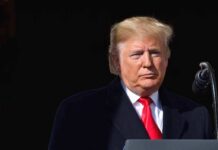
Authorities and investigators have treated the attacks on President Trump as real-world violence, not political theater. In the first attempt in July 2024 in Butler, Pennsylvania, shooter Thomas Matthew Crooks fired multiple rounds, Trump was grazed in the ear, and attendee Corey Comperatore was killed. Those basic facts—an identified shooter, ballistic evidence, injuries, and a death—directly conflict with online claims that the event was staged.
Public doubt persists anyway, and that is the heart of the story. Conspiracy narratives have circulated claiming the attempts were “false flags” or orchestrated—sometimes blaming federal agencies, sometimes blaming political opponents, and sometimes even alleging Trump’s team manufactured a crisis for political advantage. The research provided does not cite evidence supporting those accusations, while repeatedly emphasizing that official investigations confirm real gunfire and real casualties.
How the Narrative Flipped From 2024 to 2026—and Why It Matters
In 2024, skepticism about the Butler shooting initially appeared in progressive circles, often framed as suspicion about security failures or as a political “setup” to boost Trump’s campaign. By 2026, after additional attempts—including the research-noted incident dated April 25, 2026—skepticism became more visible among some conservative and MAGA-leaning commentators. The through-line is not ideology; it is a growing reflex to disbelieve institutions and assume manipulation first.
That reflex is politically consequential in a second Trump term with unified Republican control of Congress. Conservatives frustrated by “deep state” behavior see secrecy or slow-walked disclosure as proof of corruption. Liberals distrustful of Trump assume propaganda and staged optics. In both cases, the default assumption becomes bad faith, and every unanswered procedural question—about security posture, information release, or investigative steps—gets interpreted as evidence of a cover-up, even when hard proof is not presented.
The Role of High-Profile Amplifiers and Platform Dynamics
The research points to a familiar accelerant: influential personalities who signal that the “official story” cannot be trusted. It cites public questioning from figures such as Tucker Carlson, who suggested the FBI was “covering it up,” comedian/podcaster Tim Dillon, who said he thought it “may be staged,” and Rep. Marjorie Taylor Greene, who embraced theories that incidents were staged for political benefit. None of those statements, as presented, include verified supporting evidence.
Platforms then do what platforms do: they reward emotion, novelty, and certainty. Researchers highlighted confusion fueled by edited visuals and misleading posts that spread quickly after violent events. That helps explain why “staged” narratives persist even when they contain practical contradictions. The provided material notes a basic logic problem: staging would require an implausible level of control over lethal gunfire, and it cannot easily account for a documented death like Comperatore’s.
What a Conservative, Limited-Government Lens Can—and Can’t—Conclude
Two ideas can be true at once. First, citizens have a legitimate right to demand transparency, especially when federal agencies hold key facts about attempted political assassinations. Second, skepticism is not a substitute for evidence. Based on the research provided, claims that the attempts were fake, staged, or “false flags” are unverified, while the core event details—real shots, real victims, and real investigations—are repeatedly treated as confirmed. The responsible takeaway is to press for clear answers without inventing facts.
For voters across the spectrum, the bigger warning sign is the collapsing shared reality. When large numbers of Americans assume every major event is scripted by elites—whether “deep state” bureaucrats, partisan operatives, or media gatekeepers—self-government becomes harder. Security failures should be investigated and corrected, but misinformation also creates its own public-safety risk: it distracts from real threats, undermines law enforcement credibility, and turns national trauma into just another tribal argument.
Sources:
Trumps assassination attempts and related disinformation are two sides of the same coin
Why is assassination misinformation so popular?