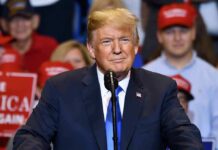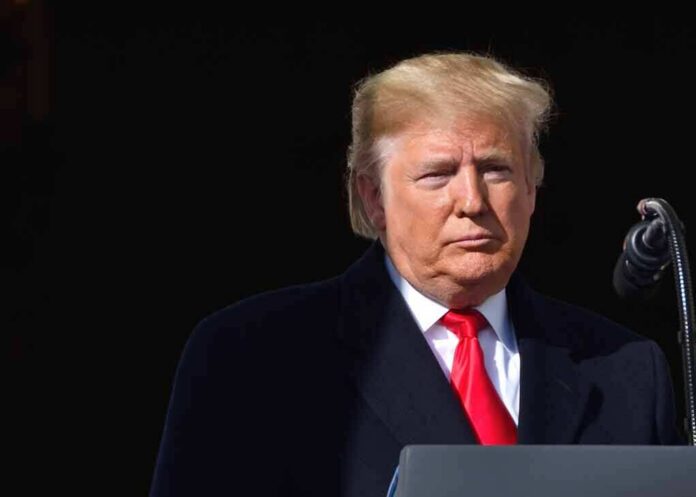
President Trump says the Iran war will end “immediately” once the midterm elections are over, but his own top advisers have privately warned him the fight could drag on for the rest of his presidency.
Story Snapshot
- Trump told reporters the war “will end immediately after our election” because Iran “can’t hold out any longer.”
- Vice President JD Vance and Secretary of State Marco Rubio reportedly warned Trump privately the conflict could stretch past January 2029.
- Trump has repeated variations of this timeline since March, from “two to three weeks” to “not too long.”
- Reuters reports some aides want the war kept “quiet” before November to avoid hurting Republican midterm chances.
- No public intelligence report has confirmed Iran is close to military or economic collapse.
Trump’s Public Timeline Points to a Quick End
President Trump has stayed consistent on one point in recent weeks: he expects the Iran war to wrap up fast. On September 9, he told reporters “this war will end immediately after our election” and said Iran “can’t hold out any longer”. It’s a bold claim from a president who has faced years of criticism over drawn-out foreign entanglements under past administrations.
Trump has framed Iran’s leadership as the side under real pressure, not the United States. Back in May, he said Iranian officials thought they could “outwait” him by dragging things out until the midterms. His response was blunt: “I don’t care about the midterms”. He repeated that message in July, telling reporters Iran’s attempts to influence the election “won’t have any impact on me”.
A Timeline That Keeps Shifting
Skeptics have a fair point worth noting. Trump’s end-date predictions have moved several times since the conflict began. In late March, he said U.S. objectives could be complete within “two to three weeks”. By April, his national address promised objectives were nearing completion “shortly, very shortly”. By September, he called the campaign one that “won’t last long”. Shifting deadlines don’t prove him wrong, but they do give doubters ammunition.
Advisers Reportedly Warn of a Longer Fight
A Wall Street Journal report, cited by Reuters, says senior White House advisers privately told Trump the war could extend through the rest of his term. Vice President Vance and Secretary Rubio reportedly warned him in the Oval Office and Situation Room that Tehran might keep resisting American pressure well past January 2029. Reuters separately reported that Vance and Rubio have pushed to keep the conflict “relatively quiet” before November, worried about the political fallout from an unresolved war heading into the midterms.
Conservative voters who backed Trump on a promise of strength abroad and no more endless wars have every right to want clarity here. If advisers believe the fight could outlast his presidency, voters deserve straight talk, not just optimistic soundbites timed to an election. Trump has publicly rejected the idea outright, telling reporters there is “not even a chance” the war drags on for years, according to social media posts capturing his remarks on the matter.
Iran’s Strategy: Wait Out Washington
Reporting shows Iran’s own calculation may be the opposite of Trump’s. An Iranian adviser told reporters that prolonging the war until a future presidential term could impose costs on the United States and discourage future strikes. Reuters has also reported Iran is betting that economic pain, not military force, will eventually force Washington to back down, turning the conflict into what analysts call “a contest of endurance”. That’s a strategy Americans have seen before with Tehran, and it rarely ends quickly.
Iran struck a US air base in Jordan overnight, tearing the wing off an A-10 and damaging eight F-15s, hours after the US sank five Iranian tankers. Iran is also tightening its Hormuz blockade. Trump says the war ends after the midterms. Nobody in Tehran has agreed to that…
— Ashwary Pratap Singghh. (@ashwarya08) September 11, 2026
Congress and the War Powers Question
Beyond the timeline debate, a bigger constitutional issue looms. The Constitution gives Congress, not the president alone, the power to declare war. Critics note Trump has not sought formal congressional authorization or laid out clear objectives to lawmakers, even as the conflict stretches toward its seventh month. That’s a legitimate concern for conservatives who believe in checks on executive power, regardless of which party holds the White House.
Voters heading into the midterms are left weighing two competing pictures: a president promising a swift end once the election passes, and advisers reportedly bracing for a fight that could last years. Only time, and the ballot box, will settle which version proves true.
Sources:
theamericanconservative.com, washingtonpost.com, reuters.com, usatoday.com, nytimes.com, youtube.com, washingtonexaminer.com, theatlantic.com, npr.org