

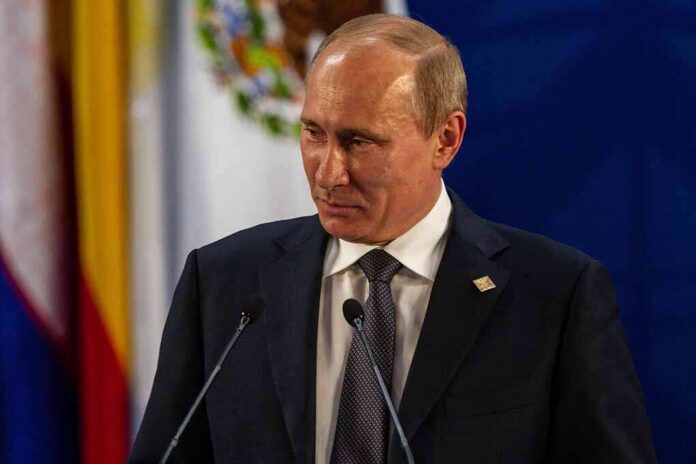
President Trump invoked a lawful waiver to pause tough new Russia penalties as the administration pursued a diesel supply deal to ease fuel costs.
Story Snapshot
- Trump used Section 115 to pause newly passed Russia sanctions and tariffs after certifying a national interest need.
- The move followed a Treasury license tied to a large Russian diesel plan aimed at boosting supply.
- Some Republicans and Ukraine’s president criticized the pause as helping Russian revenue.
- Officials say many other Russia sanctions remain in force despite this targeted waiver.
What Exactly Changed: The Section 115 Waiver
White House records show President Trump exercised Section 115 authority to waive sanctions, restrictions, and duties within the new Graham Act after sending Congress a written national interest certification and report. The action paused steep tariffs, including up to 500 percent on Russian goods and up to 100 percent on major buyers of Russian energy, before those measures took effect. The administration framed the step as a time-limited tool to manage energy supply while keeping broader Russia measures in place.
The order’s text underscores a common sanctions design: Congress sets mandatory penalties but allows a president to waive parts when national interests require it, after formal notice to lawmakers. That structure preserves flexibility during market shocks or diplomatic crunch points. Supporters say this keeps choices close to the Oval Office when rapid energy shifts risk harming families and small businesses that rely on diesel for farming, freight, and heating.
The Diesel Link: Supply Relief Versus Revenue Risk
Reporting connected the waiver to a Treasury general license and a proposed Russian diesel transaction that aimed to increase supply during a price squeeze. President Trump said the plan envisioned more than 300,000 tons of diesel immediately, 500,000 tons in November, and 1 million tons thereafter, with a larger follow-on volume also discussed. Critics worry that any such flows could add funds to Moscow’s coffers. Backers argue added barrels can cool prices that hit truckers and farmers first.
Ukraine’s President Volodymyr Zelenskyy warned that the diesel arrangement would send money back into Russia, sharpening the debate over timing and scale. Some analysts and outlets, however, note that the waiver does not erase the wide web of existing sanctions and controls, which still restrict finance, technology, and many energy dealings. The record so far does not confirm delivered cargoes, counterparties, or net proceeds, leaving open questions about actual revenue transfer to the Russian state.
Capitol Hill Blowback and Conservative Concerns
Reaction on Capitol Hill cut across party lines, with Republican Senators John Cornyn and Thom Tillis publicly opposing the pause and invoking the late Senator Lindsey Graham’s legacy on sanctions. Their pushback highlights a core conservative question: when does executive flexibility become a bridge too far over Congress’s clear intent. The law’s own waiver clause complicates that critique, since Congress wrote the safety valve that the President used.
Conservative readers face two duties at once: hold the line on hostile regimes and shield American families from punishing costs. Diesel moves our food, our goods, and our work. Sanctions aim to squeeze aggressors without crushing our own economy. The hard call is balancing both—tight enough to pressure Moscow, yet smart enough to avoid empty shelves, higher freight bills, and pain at the pump that hits working households first.
What We Know, What We Do Not, and What Comes Next
Here is what the record establishes today. First, the President lawfully used Section 115 after certifying a national interest need to Congress. Second, the pause aligned with an authorized pathway for a sizable diesel plan meant to ease supply strains. Third, Congress retains oversight tools and can seek the certification, report, and briefings to test the rationale. Fourth, many Russia sanctions remain intact, even as the Graham Act’s new penalties are on hold.
Euro gasoil crack slips towards $81/bbl support as Trump waives new Russia sanctions
🛢️Trump’s waiver of the Graham Act sanctions and tariffs removes a key upside risk for European diesel, keeping Russian and Indian supply flowing alongside the Russian diesel deal and the IEA’s… pic.twitter.com/8VD1QOnMHN
— The Officials (@FluxOfficials) October 19, 2026
Key gaps remain. Reporting has not shown completed diesel shipments, import entries, or verified payment trails tied to the proposal. Without that, claims about large revenue gains are still unproven. Lawmakers should demand the certification, the Treasury license details, and import and customs data to confirm whether flows occurred, who benefited, and how much. That transparency guards constitutional power, protects U.S. energy security, and keeps pressure on Moscow without blind spots.
Sources:
mediaite.com, whitehouse.gov, assamtribune.com