

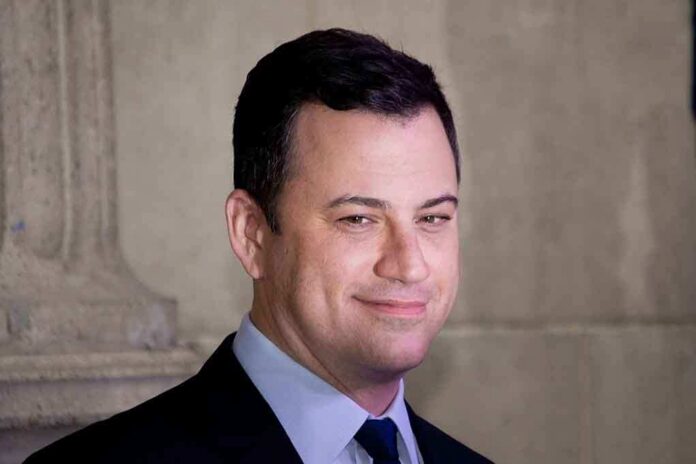
A late-night comedian used his studio to sneer at conservatives and President Trump’s 2022 record, while glossing over mixed results and real factors behind the midterms.
Story Highlights
- Jimmy Kimmel mocked President Trump over 2022 midterm outcomes, citing GOP losses.
- News reports confirm Trump endorsed hundreds of candidates and some lost key races.
- Republicans still won the U.S. House majority, making the result mixed, not a wipeout.
- Trump and allies argued money, turnout, abortion politics, and messaging shaped results.
Kimmel’s Attack Framed the 2022 Midterms as a Trump Failure
Jimmy Kimmel used his show to ridicule President Trump after the 2022 midterms, pointing to losses by several Trump-backed candidates. Major outlets reported that Trump had endorsed more than 300 candidates that cycle, and some high-profile picks lost in states like Pennsylvania and Michigan. Commentators on the left seized on those results to pin the outcome on Trump alone. That framing fits entertainment television, but it leaves out important facts and context the audience deserves.
Associated Press coverage said Trump “inserted himself” into races across the country and noted defeats among some endorsed candidates, including Mehmet Oz and Doug Mastriano in Pennsylvania and Tudor Dixon in Michigan. Politico listed other losses, like Don Bolduc in New Hampshire. Those results are real and matter. But reducing the whole election to a punchline about Trump ignores the uneven map, money gaps, abortion politics, and candidate quality debates that Republicans themselves discussed after Election Day.
What the Record Shows About Endorsements and Outcomes
News analysis after the vote highlighted that expectations of a big Republican wave did not materialize. Democrats added a Senate seat, while Republicans made smaller-than-expected gains in the House. Even so, Republicans ultimately captured the House majority. That is not a “sweep” for the left. The Los Angeles Times noted the party crossed the 218-seat line to win control, proving the final picture was mixed, not a total defeat. Any fair read must hold both truths at once.
NBC News and other outlets tied several losses to Trump-endorsed nominees, contrasting them with wins by Republicans who took a different approach, like Georgia’s Brian Kemp. That correlation is newsworthy. Still, analysts also flagged other drivers. Republican leaders argued that candidate quality, fundraising disadvantages, and turnout patterns shaped results in swing states. Those claims do not erase the losses. They remind us that elections turn on many factors, not only endorsements.
How Republicans Explained the Shortfall
Republican voices offered multiple explanations for the outcome. President Trump said the party underperformed in part because he was not on the ballot and because of outside spending choices by leaders like Mitch McConnell, reflecting real tension inside the party’s campaign world. He and others also pointed to abortion politics as a drag in key states after the Supreme Court’s ruling, which pushed suburban and younger voters left in some contests. These points match what many campaigns saw on the ground.
Senator Rick Scott said Republicans lacked a strong, positive message to inspire voters in the middle, a costly mistake in tight races. Senator J.D. Vance said the party faced a national money gap and turnout problems that hit candidates in expensive media markets and close states. These arguments may not please late-night hosts, but they reflect real strategic debates. Serious people can disagree over weight, yet they cannot pretend these factors did not matter.
Why Media Mockery Misses the Bigger Lesson for 2026
Comedy shows thrive on simple villains and quick laughs. Voters need more than that. The verified record shows Trump endorsed many candidates and some lost. It also shows Republicans won the House, while Democrats gained in the Senate. The lesson for conservatives is to fix what hurt us: raise money earlier, recruit disciplined candidates, hammer clear kitchen-table messages, and meet voters where they are on life, liberty, and economic security. That work beats studio applause every time.
Looking ahead under President Trump, conservatives should demand results that lower energy costs, secure the border, and beat inflation. That means smarter campaigns and stronger ground games. It also means resisting cultural smears that paint faith, family, and the Second Amendment as punchlines. Late-night jabs come and go. Building a durable majority takes focus, facts, and the courage to learn from both wins and losses without surrendering our values.
Sources:
mediaite.com, nbcnews.com, apnews.com, latimes.com, washingtonpost.com, redding.com, independent.co.uk