

A new federal whistleblower program promises cash for tips that lead to real fraud convictions, putting citizen watchdogs on the front line for taxpayers.
Story Highlights
- President Trump and Vice President Vance launched a $25 million program to pay fraud tipsters.
- Eligible tips submitted to fraud.gov can earn up to $30,000 after a conviction or major action.
- Trump described a 1% commission concept while the White House cited a $30,000 cap.
- The Justice Department will administer the program, widening channels to the public and journalists.
Trump Team Unveils Cash Rewards To Expose Fraud
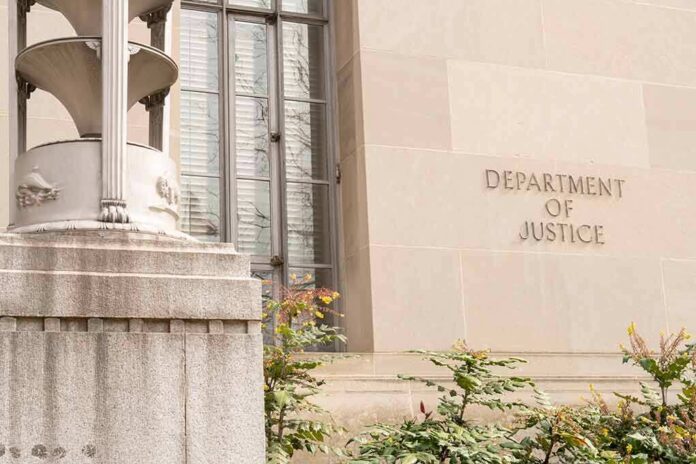
President Trump and Vice President JD Vance announced a national Fraud Whistleblower Incentive Program to reward Americans whose tips lead to proven fraud cases. The White House described a $25 million initiative run by the Department of Justice, with tips submitted through fraud.gov and rewards available when cases end in convictions or significant enforcement actions. Trump framed the effort as paying citizens who help stop waste and abuse, turning insider knowledge into real savings for taxpayers.
The program’s hook is simple: provide actionable information that helps law enforcement secure a conviction or major recovery, and the government pays a reward. Reports describe eligibility “up to $30,000” tied to results, not rumors. Officials said the aim is to surface fraud that normal audits miss, including tips from members of the public and even journalists who uncover documented schemes. That structure targets fraud where oversight is hard and encourages people with proof to come forward.
How The Incentive Works And What It Could Catch
The Justice Department will administer the program and handle incoming tips through fraud.gov, giving the effort a single door and clear agency steward. That channel should speed sorting real leads from noise and route them to investigators. The reward is linked to outcomes, which pressures tipsters to bring documents, data, contracts, or billing records rather than speculation. That design reflects a basic principle: pay for results, not for accusations that never hold up in court.
This new incentive sits beside the long-running False Claims Act, which pays private whistleblowers a share of government recoveries, often between 15% and 30% in successful cases. Vice President Vance described the new program as targeting fraud outside those lawsuits’ scope, which can be slow and complex. Together, these channels expand the pipeline of leads, from health care billing grifts to procurement padding, where everyday citizens may spot patterns first.
Pay Formula Tension: 1% Talk Versus A Posted Cap
Public descriptions of the payout have used two frames. Trump spoke of a 1% commission concept tied to exposed fraud, citing large-dollar examples to show potential reach. The White House description, carried in multiple reports, says qualifying tipsters can receive up to $30,000 when a submission leads to a conviction or comparable action. The available reporting does not identify the controlling rule that reconciles those two figures, which will matter for planning and expectations.
The most important point for readers is the trigger, not the headline number: money flows only after the government acts and wins. That aligns incentives. People who can supply emails, invoices, routing numbers, or contract bid documents have the best shot at a reward. People who only have rumors likely will not. For a nation tired of waste and special deals, paying for solid proof that sticks in court is a common-sense way to defend every tax dollar.
First Public Payout And Why Scope Matters
Media reports say Vice President Vance presented a $10,000 check to YouTube commentator Nick Shirley as the program’s first payment after a widely viewed fraud video focused on Minnesota. That moment showcased the administration’s goal of activating nontraditional tipsters, including online investigators. The report did not provide the full case file, but it illustrated how a public submission can move through the new channel and lead to a tangible award when it drives enforcement steps.
**Trump just put a 1% bounty on proven fraud recoveries, turning citizens and reporters into paid auditors of taxpayer theft.**
**1. The Frame**
What people think this is about: A straightforward new tool to crowdsource fraud detection and recover stolen public money through…— GrumpyNews, emotionally clean news. (@GrumpyNews_) October 21, 2026
For conservatives who want smaller, cleaner government, this is a tactical win. It invites honest Americans to help stop fraud that raises prices, drains benefits, and undercuts trust. It also signals that this White House is backing citizens over bureaucrats when fighting waste. To reach full power, the Justice Department should publish the detailed award rules, so every patriot knows the standard, the cap, and how journalists are treated. Clear rules plus strong tips can deliver real taxpayer savings.
Sources:
thegatewaypundit.com, wbaltv.com, ms.now, upi.com, mprnews.org, nbcdfw.com, mynews13.com, wctv.tv