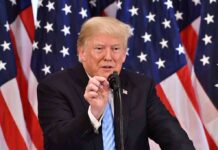

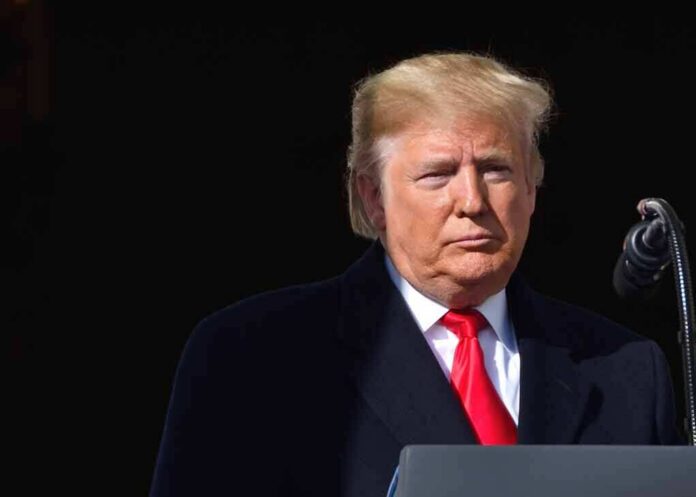
At an Arizona rally, President Trump said leakers of U.S. battle plans “should be shot,” tying the warning to a claimed leak that delayed a strike by two days.
Story Snapshot
- Trump called for the harshest penalties for leaking sensitive military plans.
- He linked a reported leak to a two-day delay of planned Iran-related strikes.
- Reports noted cheers from the crowd, showing support for tougher deterrence.
- Critics warned the stance could chill whistleblowing and press freedom.
What Trump Said And Why It Matters
President Trump told supporters in Bullhead City on October 14 that people who leak U.S. attack timing “should be shot,” calling leakers “the scum of the earth”. He argued that revealing movements and schedules puts troops and missions at risk. He said a source leaked when forces would depart Missouri, which he claimed forced a two-day delay of planned action tied to strikes on Iranian nuclear sites. Reporters captured the remarks on record, and outlets published the quotes in full.
Trump framed the issue as self-defense, saying the target nation sought weapons that could kill millions in one blast. He said operational security is nonnegotiable when lives are on the line. He also suggested reporters who publish leaks are “almost as bad,” further broadening his warning. News coverage stressed the “should be shot” line and his harsh labels. That focus risks crowding out the operational-security claim that leaks can derail missions and endanger Americans.
What We Know And What We Do Not
Coverage confirms Trump made the statement and described the alleged leak and delay tied to an Iran-related operation. Reports noted strong cheers from parts of the Arizona crowd after the comments, signaling base support for stiffer deterrence against leakers. The record so far does not name a leaker, show a charging document, or provide a declassified after-action report that proves the two-day delay was caused by a leak. Those details remain unverified in public sources.
Trump’s phrasing shifted between jailing and shooting leakers, and he did not lay out a legal path for any capital penalty. No public statement from the Department of Defense or the Department of Justice has endorsed execution for leakers as policy, according to the reporting cited here. That gap leaves open whether this was rally rhetoric or a signal of a policy push. Until agencies issue guidance or Congress acts, the legal framework appears unchanged in public view.
Security Stakes And Constitutional Lines
U.S. forces rely on secrecy to protect troops and win missions. Disclosing exact timing or routes can cost lives, waste taxpayer money, and tip off hostile states. That is why many conservatives back stronger penalties for leaks of active operations. At the same time, critics warn that sweeping threats against “leakers” could blur lines between spies, careless officials, and lawful reporters. They say such talk could chill whistleblowers who expose real wrongdoing.
Archbishop Timothy Broglio, who oversees Catholic pastoral care for the US armed forces, has urged Catholic service members assigned to a planned firing squad execution to request exemption, declaring that participation would violate Church teachings. In a statement issued on… pic.twitter.com/yYXFUu7Qfp
— TMJ News Network (@tmjnewsnetwork) October 15, 2026
Common sense says two principles can both hold: stop releases that put troops at risk, and guard First Amendment protections for a free press. Clear rules help. The government must prove any leak case in court, show the information was properly classified and harmful, and avoid punishing lawful reporting. Trump’s core gripe centers on real operational risk. The unresolved questions are who leaked, what law was broken, and how to punish proven offenders without trampling constitutional rights.
Sources:
nypost.com, azcentral.com, thehill.com, washingtonexaminer.com, yahoo.com, irishstar.com, galvnews.com