

Prosecutors say Caleb Flynn staged a fake home invasion after texting his mistress he was “finally free of Ashley.”
Story Highlights
- State argues garage damage shows staging, not a break-in.
- Mistress testified Flynn wanted his wife “dead and gone” and felt “free of Ashley” days before.
- Neighbor reported no noises, no alerts, and no suspicious footage that night.
- Defense says there is no murder weapon and the case is circumstantial; Flynn pleads not guilty.
Alleged Staging Versus Burglary Claim
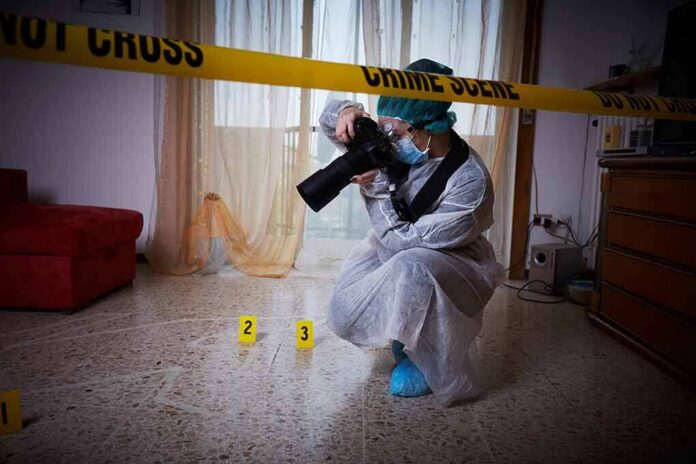
Trial coverage reports that on February 16, 2026, Caleb Flynn called 911 and said intruders shot his wife, Ashley. Investigators testified the garage door looked damaged from the inside, not forced from outside. They described debris and broken wood inside the garage and no matching pry marks outside, which they said was inconsistent with a real break-in. That detail sits at the core of the state’s theory that the scene was staged to cover a domestic killing.
Ohio investigators also documented and preserved the damaged door as exhibits and removed an iPad from the garage, according to trial testimony. That chain-of-custody step backs up the claim that physical evidence was handled and logged, a standard that helps jurors weigh what the photos and tools marks mean in context. Prosecutors later added tampering and intimidation counts to their case, signaling they believe concealment followed the shooting.
Texts, Motive, and the Mistress’s Account
Reporters in court say the mistress, Alleigha Botner, read messages where Flynn complained about his marriage, said he wanted Ashley “dead and gone,” and said, “If I could kill her and not go to jail, I would.” She also testified Flynn messaged that he was “finally free of Ashley” two days before the killing, which prosecutors cast as a motive link. The full message archive was not published in full, which narrows outside review of context.
The defense pushed back hard, telling jurors that ugly, hurtful language does not equal murder. They argued Flynn lied to appease the mistress and that the state has no direct proof, like a firearm, tying him to the shooting. They reminded jurors Flynn is “not on trial for being a bad husband.” Flynn has pleaded not guilty to all charges, including aggravated murder and tampering with evidence.
What Neighbors and Cameras Did—and Did Not—Show
A next-door neighbor testified she heard nothing unusual, her dogs did not bark, and her cameras captured no suspicious activity before police arrived. Investigators said other nearby cameras showed only the arrival of law enforcement. That negative evidence does not identify a shooter, but it undercuts the claim that prowlers moved in and out unnoticed that night. The state says that quiet night lines up with a staged scene rather than real intruders.
AI LOVE SONG PLAYED FOR JURY: Jurors in Caleb Flynn’s murder trial heard an AI-generated song investigators say was recovered from his device – with lyrics tied to his relationship with mistress Alleigha Botner.
The song describes a relationship that began as friendship before… pic.twitter.com/ecxUxJu1Iw
— Fox True Crime (@FoxTrueCrime) September 25, 2026
Cross-examination raised gaps. An officer acknowledged the door opens inward, which can complicate damage readings. He also said the night was dark and foggy, and no sensitivity test was done on the neighbor’s camera. Officers did not deploy a wall X-ray machine in the home to look for a gun, according to testimony. Those concessions help the defense argue reasonable doubt about both the scene and the missing weapon.
How Juries Weigh Circumstantial Evidence
Courts across the country let juries consider signs of staging as one piece of the puzzle. Appellate opinions have affirmed that “staged burglary” evidence can support guilt when the record backs it up. At the same time, legal commentary warns about “trial by motive” when prosecutors lean too much on affairs and angry words rather than physical proof. Juries must decide whether motive plus scene clues add up to proof beyond a reasonable doubt.
This case lands in that common pattern. The state leans on interior door damage, quiet cameras, and texts that sound like planning. The defense counters that there is no gun, no eyewitness, and no direct forensic tie to Flynn. For readers who value due process, the standard stays the same: the state must clear the high bar of proof beyond a reasonable doubt. If they meet it, justice speaks. If they do not, the Constitution holds the line.
Sources:
facebook.com, cnn.com, foxsanantonio.com, youtube.com, usmagazine.com, whio.com, courttv.com, courts.state.co.us