
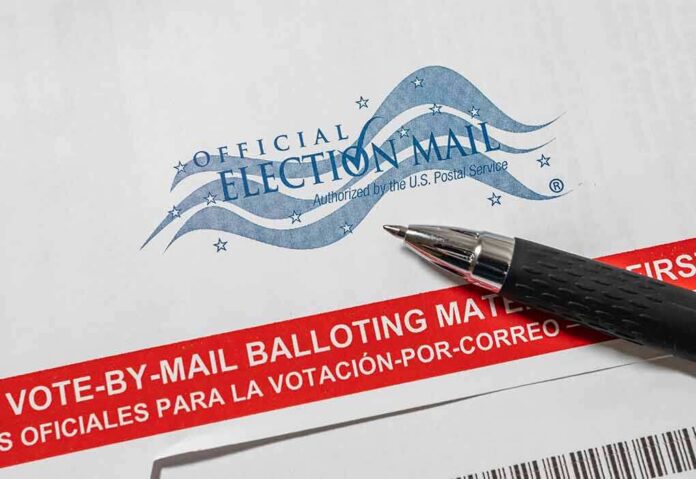
A sharp, documented 30 percent drop in Wisconsin absentee ballot requests is reshaping how votes will be cast and counted this November.
Story Highlights
- Wisconsin absentee ballot requests are about 30 percent lower than 2022, based on reported totals.
- State election officials say many voters now prefer early, in-person absentee voting over mail.
- Clerks report fewer mailed ballots received three weeks out than at the same point in 2022.
- Officials still expect more than 2.6 million total voters statewide despite the mail decline.
Documented Decline in Absentee Requests
Wisconsin is seeing far fewer absentee ballot requests compared to the last midterm. A report citing state figures compares 493,039 absentee ballots requested and sent in 2022 with 347,984 requests through October 12, 2026. That gap is 145,055, about a 30 percent decline, and it reflects a real shift in how people plan to vote this fall. The number is not final for 2026, but the size of the change is large enough to affect planning for both parties and for local election clerks.
Three weeks before Election Day, clerks also reported receiving fewer mailed absentee ballots than at the same time in 2022. Wisconsin Public Radio tallied around 128,000 ballots received by clerks, compared to nearly 184,000 at that point in 2022, tracking with the request decline. Fewer mailed ballots can change workloads for municipalities and can shift when votes get counted, especially in cities that process large stacks at central count locations.
Why Voters Are Moving Away from Mail
Wisconsin Elections Commission Administrator Meagan Wolfe said voters are choosing early, in-person absentee voting because it feels more secure and more certain than putting a ballot in the mail. She pointed to concerns about mail timing, rule changes, and greater awareness of other voting options as reasons for the shift. Local officials echoed that explanation. Dane County’s clerk cited weaker confidence in mail delivery and more interest in in-person absentee voting as the practical drivers of the change.
Officials stressed that a drop in mailed ballots does not automatically mean lower turnout. CBS 58 reported the Wisconsin Elections Commission still expected more than 2.6 million voters for the general election while acknowledging fewer people were requesting ballots by mail. That outlook lines up with what many of us saw after the pandemic spike: mail use cooled while early voting stayed popular. National research also shows mail and absentee voting have retreated from the 2020 peak, though they remain a major share.
What This Means for Election Day and Election Integrity
Lower mail use can speed up results if more voters cast ballots early in person or at polling places, where ballots are scanned on site. But Wisconsin has also faced reporting hiccups when many mailed ballots get processed at once. A recent primary saw a download error delay Milwaukee results, which fueled online rumors until officials explained the technical issue. Fewer mailed ballots could reduce those late-night spikes, but central count sites still need tight controls and clear communication.
Wisconsin Democratic gubernatorial primary: Polls (including Marquette Law School) showed Francesca Hong with large double-digit leads (polling averages around 20 points ahead); she narrowly lost to David Crowley.
— TheProf (@SocraticBloke) October 15, 2026
For voters who still prefer mail, Wisconsin’s own best-practices guide urges early action and close tracking. The state tells voters to request and return ballots early and to use the MyVote website to confirm that a clerk received the ballot. That advice matters because one late or mishandled batch can erode trust overnight. A recent Dane County court ruling also addressed late-arriving ballots tied to official errors, underscoring how process mistakes can have legal and political fallout.
Bottom Line for Conservative Voters
The numbers show a real, sizable move away from mailed absentee ballots this year in Wisconsin. State officials say voters want certainty and are turning to early, in-person voting instead. That shift can help reduce last-minute counting drama, but only if clerks keep tight chain-of-custody, clean reporting, and fast public updates. Voters who value secure, transparent elections should plan early, vote in person if able, verify their ballot status, and watch local officials closely on procedures and reporting.
Sources:
thegatewaypundit.com, cnn.com, factcheck.afp.com, wpr.org, elections.wi.gov