

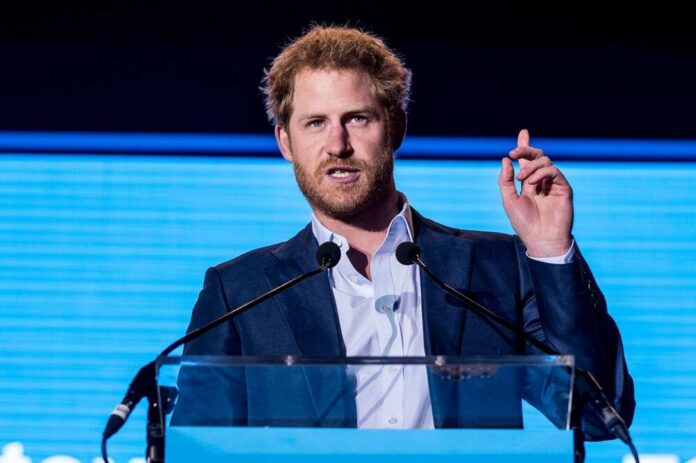
Prince Harry’s warning about a “deeply troubling” rise in antisemitism in Britain lands at a time when public officials and commentators keep failing to draw a clean line between lawful protest and hatred.
Quick Take
- Harry said antisemitism in the United Kingdom is rising in a way that demands urgency and clarity.
- He argued that silence and muddled public debate allow hate and extremism to spread unchecked [1].
- He separated protest from prejudice, saying hatred aimed at people for who they are is not protest [1].
- He also called for opposition to anti-Muslim hatred, saying both forms of hate must be rejected [2].
Harry Targets the Climate Around the Hate
Prince Harry addressed the issue in an opinion piece for The New Statesman, where he said antisemitism across Britain has become deeply troubling [1]. He pointed to deadly attacks on Jewish communities in Manchester and London as signs that the threat is not abstract. His central message was blunt: when people stay quiet, hate and extremism are free to grow. That is the kind of moral confusion many readers have watched poison public life for years.
Harry also drew a sharp distinction between protest and prejudice, arguing that hatred directed at people for who they are or what they believe is not legitimate dissent [1]. That matters because public debate over Gaza and Lebanon has often become a mess of rage, slogans, and reckless rhetoric. Harry acknowledged the “deep and justified alarm” many people feel over destruction in the region, but said anger must be directed with more precision.
Why the Message Resonates Beyond Royal Gossip
The broader point reaches beyond one royal opinion piece. Britain, like much of the West, has seen too many institutions lose the ability to name antisemitism without immediately turning the subject into a political food fight. Harry’s warning fits a common-sense position that conservatives will recognize: protect free speech, but do not excuse mob hatred, intimidation, or attacks on Jews under the banner of activism. That standard should not be controversial, yet too often it is treated as one.
Harry also criticized the tone of media coverage after the recent wave of antisemitic incidents, saying public discourse has become increasingly polarised [1]. He argued that this kind of division deepens confusion and fuels more division. That observation is hard to dismiss. When institutions treat every crisis as a partisan battle, the truth gets buried, victims get lost, and bad actors gain cover. Families trying to live peacefully should not have to pay for elite dysfunction.
The Call for Unity and a Clear Standard
Harry ended by urging readers to stand against both antisemitism and anti-Muslim hate wherever they appear [2]. The principle is straightforward enough: a civilized country cannot tolerate hatred toward any faith community. For readers frustrated by years of moral relativism, the useful part of the statement is not celebrity theater but the reminder that communities under threat need direct defense, not performative ambiguity. On this issue, clarity is not optional; it is the point.
Prince Harry warns of ‘deeply troubling’ rise in antisemitism in UK https://t.co/8sceezHOuQ pic.twitter.com/oe6wCxwwi0
— bulletinindy (@bulletinindy) May 14, 2026
The research package does not provide a quantified national trend line or government data attached to Harry’s remarks, so the safest reading is limited to what he actually said and the incidents he cited [1]. Even so, the warning tracks with a larger concern many Britons share: if public leaders cannot defend Jews plainly, they will not defend anyone else when pressure rises. That is why the message matters well beyond palace chatter.
Sources:
[1] Web – Prince Harry warns of ‘deeply troubling’ rise in antisemitism in UK
[2] Web – Prince Harry: Rising antisemitism in UK is deeply troubling