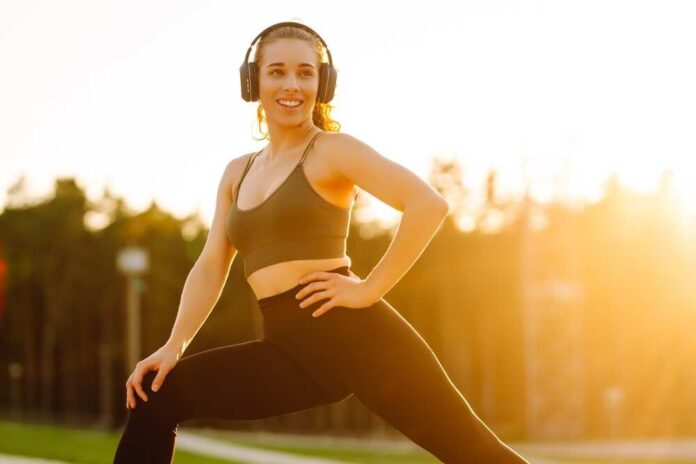
Choosing your own workout music boosts endurance by nearly 20%—a zero-cost trick empowering Americans to take control of their fitness without relying on big government or elite-driven solutions.
Story Highlights
- University of Jyväskylä study shows self-selected music extends high-intensity cycling endurance from 29.8 to 35.6 minutes, a 20% gain.
- Participants pedaled at 80% peak power; music did not change heart rates or perceived effort levels.
- Lead researcher Andrew Danso calls it a simple tool to tolerate sustained effort longer, enhancing training quality.
- Songs typically ranged 120-140 BPM, prioritizing personal preference over prescribed tempos.
Study Details Reveal Psychological Edge
Researchers at Finland’s University of Jyväskylä tested 29 recreationally active adults in two identical high-intensity cycling sessions. Participants rode stationary bikes at 80% of peak power until exhaustion. Silence marked one session, while self-selected music defined the other. With music, average duration reached 35.6 minutes versus 29.8 minutes without. Heart rates and physical workloads stayed consistent across conditions.
Music Alters Effort Perception, Not Physiology
Andrew Danso, from JYU’s Centre of Excellence in Music, Mind, Body and Brain, explains self-selected music helps individuals tolerate sustained effort without altering fitness levels or heart demands. Familiar songs distract from discomfort, regulate pace, and foster momentum. This perceptual shift occurred despite unchanged physical markers. The findings appeared in Psychology of Sport and Exercise.
Practical Benefits for Everyday Americans
In an era of government overspending and elite distractions, this zero-cost hack empowers personal initiative. Recreational athletes gained nearly six extra minutes per session, potentially accumulating more quality training time. Experts like psychiatrist Carole Lieberman note music changes mindset, making workouts feel less taxing. Gyms and apps could see higher retention as users adopt motivating playlists.
Conservatives value self-reliance; this aligns by rejecting expensive supplements or programs pushed by wellness industries tied to globalist agendas. Liberals frustrated with inequality find an accessible tool narrowing fitness gaps without taxpayer-funded interventions. Both sides recognize individual choice trumps bureaucratic fixes.
Scientists say this simple music trick can boost workout endurance by 20% https://t.co/KqEgcWL1dE
— Un1v3rs0 Z3r0 (@Un1v3rs0Z3r0) May 9, 2026
Historical Context and Limitations
Prior research, including Costas Karageorghis’s work, showed 15% endurance gains with 120-140 BPM music via fatigue dissociation. Meta-analyses confirm 10-12% reductions in perceived exertion. JYU’s study uniquely emphasizes self-selection in high-intensity settings. Limitations include focus on recreational cyclists; professional athletes may experience smaller effects. No long-term adherence data exists yet.
This research underscores timeless American principles: hard work plus simple, personal tools yields results. As federal failures mount—from inflation to ignored health crises—citizens reclaim control through proven, no-nonsense strategies like curating your own playlist.
Sources:
This Simple Trick Can Boost Your Workout Endurance by 20%
Study finds self-selected music boosts workout endurance by nearly 20%
Study: Listening To Your Favorite Music Can Boost Workout Endurance by 20%
Research reveals how music can transform exercise from a chore to a joyful habit
Beat It! Listening to music leads to longer workouts
New research reveals how music can transform exercise from a chore to a joyful habit