Kamala Harris just admitted out loud what millions of Americans have felt for years: the American Dream is slipping away—and Washington keeps acting like it’s someone else’s problem.
Story Snapshot
- Kamala Harris told a Democratic National Committee event in Las Vegas that the “American dream… has become an American myth” for many families.
- Harris framed the breakdown as bipartisan, saying both parties failed to meet everyday needs and warning against “nostalgia for a flawed status quo.”
- The speech leaned heavily into economic anxiety: high living costs, middle-class fragility, and job disruption linked to fast-moving AI.
- Polling cited in coverage shows deep public skepticism, with a large share of Americans saying the American Dream no longer exists.
Harris’s “American myth” line lands in a moment of deep distrust
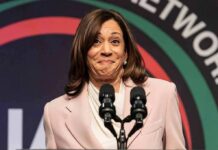
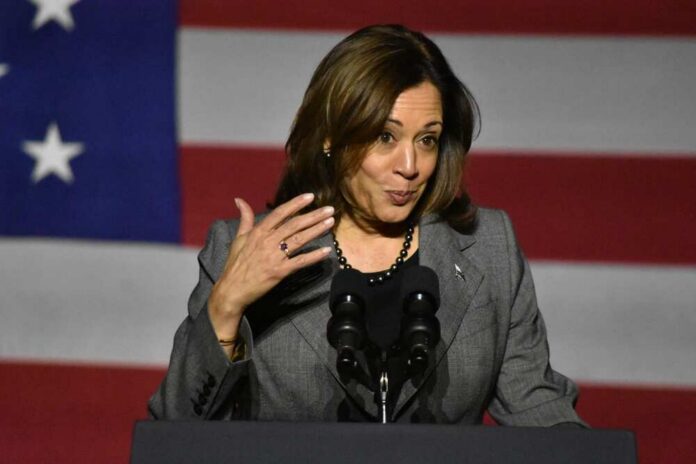
Kamala Harris delivered her keynote at a DNC event in Las Vegas on Dec. 12, 2025, saying “the American dream for so many people has become an American myth.” The line spread quickly online and became a shorthand for a broader reality: Americans across the political spectrum increasingly doubt that hard work reliably leads to stability. Harris also argued government is failing to meet real-world needs, a claim that resonates even with many voters who strongly disagree with her policy instincts.
Harris’s remarks stood out because they aimed criticism inward as well as outward. Coverage described her acknowledging that Democrats share responsibility for outcomes that feel stagnant or unfair to many families. That bipartisan framing matters in 2026 because it intersects with the public’s “rigged system” suspicion—often described as elite capture or a “deep state” culture—where institutions protect themselves first. The available reporting does not document a specific policy package, but it does portray a deliberate attempt to speak to disillusionment.
Economic pressures behind the rhetoric: housing, inequality, and AI disruption
Harris tied the Dream’s decline to structural economic stress, including concentrated power and worker insecurity. Research around the speech cited long-running inequality trends and argued that middle- and lower-income families have been left behind by market outcomes and political complacency. The broader context includes rising housing costs since 2020 and continued frustration about affordability. Harris also highlighted AI-driven job displacement as a looming threat, reflecting a growing debate over whether technology gains are being broadly shared.
For conservatives, the key takeaway is not whether Harris has discovered a new truth, but whether Washington will stop treating working Americans as an afterthought. The research notes that Republicans counter Democratic narratives with macro indicators such as GDP growth and low unemployment figures cited in coverage. Those topline numbers can be real while families still feel squeezed by rent, groceries, insurance, and energy costs. The tension between “good charts” and “bad lives” is where public anger tends to harden into lasting distrust.
Nevada focus and immigrant-centered messaging signal a coalition play
The Las Vegas setting matters. Nevada remains politically competitive and has sizable immigrant communities, and Harris’s speech highlighted immigrant and working-family struggles as emblematic of a broader opportunity crisis. That framing is consistent with Democrats’ long-running coalition strategy, though it also risks alienating voters who want stricter immigration enforcement and believe illegal immigration lowers wages or strains public services. The research provided does not include new statistics from Harris on immigration, but it emphasizes her intention to connect economic mobility to dignity and inclusion.
What the polling suggests—and what it doesn’t
Polling referenced in coverage reported that 46% of Americans agreed the American Dream “no longer exists,” with higher agreement among Democrats and younger voters. That kind of number signals a country primed for populist messages, whether from the left or the right. At the same time, the research notes an important limitation: surveys often leave “American Dream” undefined, which can inflate agreement because respondents interpret it differently—homeownership, stable work, family security, or simply hope.
The political meaning in 2026: a Democrat rebrands while GOP governs
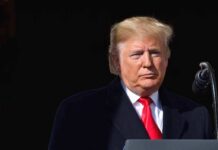
Harris’s speech also functions as positioning after her 2024 loss, with coverage hinting at future ambitions and an effort to reclaim economic-populist language inside the Democratic Party. With President Trump in a second term and Republicans controlling Congress, Democrats have incentives to obstruct and narrate “system failure” even when they lack governing power. Still, Harris’s admission that both parties failed should challenge voters to demand specifics: which regulations, spending decisions, and enforcement priorities actually restore opportunity without expanding bureaucracy or rewarding political insiders.
The unresolved question is whether either party will confront the most practical barriers to upward mobility—housing supply constraints, credential inflation, broken workforce pipelines, and the government’s habit of subsidizing powerful interests while preaching sacrifice to everyone else. Harris used a dramatic phrase—“American myth”—but Americans will judge leaders by measurable improvement: safer neighborhoods, affordable energy, rising real wages, and a system that rewards work more than connections. The research available captures the rhetoric and reaction; it provides limited detail on concrete next steps.
Sources:
Kamala Harris claims American dream has become a ‘myth’ for families under Trump economy
In First Keynote Since ’24 Loss, Kamala Harris Calls For ‘Revival Of American Dream’
Kamala Harris DNC American Dream