

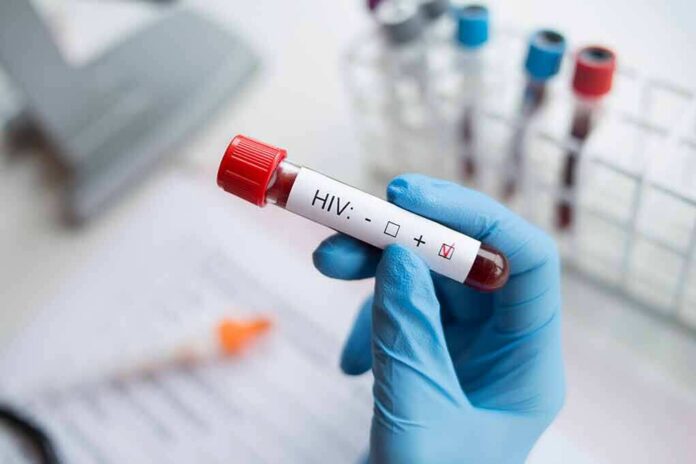
Americans were funding jobs for transgender workers in Nepal because U.S. foreign aid there was not just shipping commodities; it was paying for a local service system built around HIV prevention, counseling, outreach, and community support, and transgender Nepali workers were part of that workforce.
Intro Header
- The funding supported clinics and support centers, not a standalone “jobs program.”
- Many of the affected workers were LGBTQ+ people, including openly transgender workers.
- The jobs existed inside broader public-health and inclusion work in Nepal.
- The record supports the existence of these positions, but not the claim that they were transgender-only patronage posts.
What the U.S. Money Was Actually Paying For
The strongest reporting on this story points to a basic but easily misunderstood fact: USAID money in Nepal helped finance local organizations that delivered HIV prevention and community-health services to LGBTQ+ people, and those organizations employed Nepalese staff to do the work. AP reported that Friends Hetauda, one of the groups in the network, provided HIV testing, counseling, and prevention services, while the Blue Diamond Society ran clinics, distributed antiretroviral medication, and employed counselors, health assistants, data collectors, and outreach workers. In other words, the money did not arrive as a blunt salary subsidy for identity alone; it paid for labor that was operationally tied to a health program.
That distinction matters. Foreign aid often looks abstract from a distance, but on the ground it is usually labor-intensive: someone has to greet clients, keep records, conduct outreach, distribute condoms, explain treatment adherence, and maintain trust with populations that governments and private employers often marginalize. AP reported that the Blue Diamond Society was staffed largely by people who were themselves gender and sexual minorities, which helps explain why transgender workers were present in the system. Their presence was not an anomaly; it was part of how the program reached the community it was designed to serve.
Why Transgender Workers Were Part of the Workforce
The answer is less ideological than practical. In Nepal, openly transgender people face severe labor-market exclusion, and AP reported that legal work for them outside NGOs is “virtually nonexistent.” When the only stable work channels available are community organizations, public-health projects, or donor-funded nonprofits, aid programs become one of the few formal employment ladders available at all. That is not unique to Nepal. Across global health and development work, donor money often functions simultaneously as service funding, local capacity-building, and a source of protected employment for people shut out of mainstream labor markets.
The jobs also fit the logic of “peer outreach,” a long-standing method in HIV prevention. Programs that serve stigmatized or hard-to-reach groups often hire workers from the same communities because trust is the intervention. A transgender outreach worker is not being hired merely because of identity, but because identity can be operationally relevant to access, communication, and credibility. The reporting here supports that pattern: AP described staffers serving as counselors and outreach workers in clinics and community centers that existed to reach LGBTQ+ clients.
What the Job Listings Show About USAID’s Staffing Model
The documentary evidence in the research package also shows that this was a broader USAID staffing ecosystem, not a one-off anomaly. A USAID solicitation for Kathmandu includes an FSN-08 Project Management Assistant position with a multiyear performance period, demonstrating that U.S. aid operations in Nepal directly employed local staff in administrative and management roles. That is important because it undercuts the simplistic notion that foreign aid only buys goods or contracts foreign consultants. USAID’s model has long depended on national staff, local implementers, and project-specific roles embedded in-country.
The same structure appears in the recruitment materials for development support projects. A Nepal posting for a GESI/DEIA Advisor sought a specialist for a USAID localization support project in Kathmandu, and another posting sought a GESI Officer with donor-program experience and responsibilities linked to social norms and exclusion in the WASH sector. A trainee posting even advertised a monthly stipend and benefits for a gender-equality and social-inclusion role. These listings do not prove transgender-only hiring, but they do show that donor-funded work in Nepal included explicit inclusion positions, with compensation attached, as part of ordinary project staffing.
The AP’s Kristen Gelineau, who has been covering the impact of US foreign aid cuts, is reporting on how the cuts have prompted scores of unemployed aid workers in Nepal to turn to sex work to survive. https://t.co/wK5fqbppwO
https://t.co/zPzScqb4Bj— Steve Herman (@newsguyusa) July 23, 2026
What the Controversy Gets Right and What It Leaves Out
The provocative phrasing—“Americans funding jobs for transgender workers”—captures a real fact, but it compresses several different things into one political slogan. It is true that U.S. money supported jobs held by transgender Nepalis and other LGBTQ+ workers. It is also true that the work was connected to HIV services, clinics, and community outreach, not to some detached identity bureaucracy. What the available record does not show is a special program created to employ transgender people for its own sake, a partisan domestic payoff, or a clear case of waste. The evidence supports funded positions; it does not support a stronger allegation of impropriety.
That is the central interpretive error in much of the surrounding debate. Aid critics hear “transgender workers” and assume ideological vanity. Aid defenders hear “sex work after cuts” and assume pure humanitarian virtue. The actual record is more prosaic and more revealing: USAID paid for a local delivery system in which LGBTQ+ people were both beneficiaries and employees, because public-health outreach in a stigmatized environment often requires workers drawn from the affected community itself. If that arrangement looks unusual from Washington, it is because the United States is seeing the workforce from above rather than from inside the service network.
Why the Jobs Vanished So Fast
AP reported that when U.S. funding ended, support centers and clinics shuttered, clients lost access to services such as PrEP, testing, condoms, and follow-up care, and hundreds of staffers lost their jobs. The same reporting said around 100 LGBTQ+ aid workers turned to sex work to survive, while the Blue Diamond Society said 262 of its 350 staffers were out of work. That is a reminder that in a donor-dependent system, payroll can be inseparable from service continuity: when the grant ends, the clinic closes, the outreach stops, and the local employment disappears with it.
None of this means the spending was perfect, fully transparent, or immune from criticism. The record here does not include the underlying grant files, line-item budgets, or subaward agreements, so it cannot tell us exactly how much money went to salaries versus clinic operations, training, administration, or patient services. But it does support a clear, defensible account: Americans were funding jobs for transgender workers in Nepal because U.S. aid there was underwriting a local HIV-and-inclusion infrastructure, and transgender Nepalis were part of the workforce that made that infrastructure function.
Sources:
pjmedia.com, jobsnepal.com, usaid.gov