When a state is willing to take a $95,000 airplane over a six-pack of beer, you are no longer just looking at an odd Alaska story—you are looking at the outer limits of government power to punish and the meaning of the Constitution’s ban on excessive fines.
Key Points
- Alaska law mandates forfeiture of any aircraft used to import alcohol into a “dry” village, regardless of quantity.
- Bush pilot Kenneth Jouppi was convicted after flying with a visible six-pack of beer bound for Beaver, a dry community, and the state moved to confiscate his Cessna.
- The Alaska Supreme Court unanimously upheld the forfeiture as not “grossly disproportionate” under the Eighth Amendment’s Excessive Fines Clause.
- The U.S. Supreme Court has now agreed to hear Jouppi’s challenge, which could reshape how courts judge when a property forfeiture becomes unconstitutionally excessive.
From six beers to a $95,000 airplane: the facts of the Jouppi case
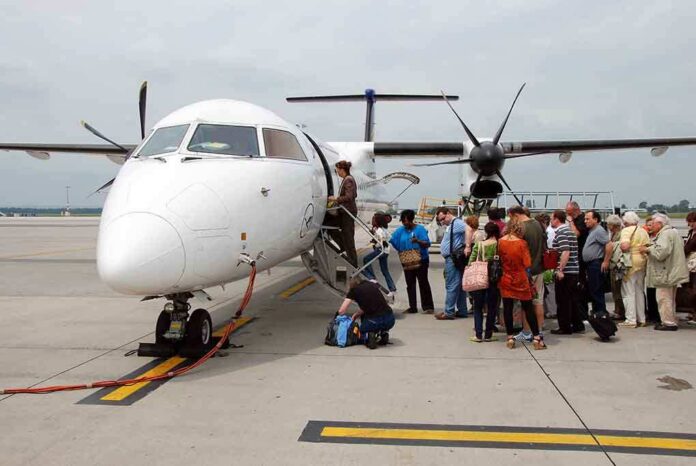
The starting point is simple and undisputed. Kenneth Jouppi is a longtime Alaska bush pilot whose small 1969 Cessna was seized after he was caught attempting to fly beer into Beaver, a remote interior village that has elected to be “dry”—no legal sale, possession, or importation of alcohol within its borders. On the day in question, troopers observed a six-pack of beer in plain view in a passenger’s luggage as the aircraft was being loaded for a flight to Beaver. Jouppi was prosecuted for unlawful importation of alcohol into a local‑option community and ultimately convicted.
Under Alaska Statute § 04.16.220, when a person is convicted of unlawful importation into a local‑option community, “any aircraft used to facilitate the transportation of the alcoholic beverages” must be forfeited to the state. The statute does not scale the penalty to the quantity of alcohol, the profit involved, or whether the alcohol actually arrives; use of an airplane for the offense is enough. After trial, the state invoked that statute and sought forfeiture of Jouppi’s airplane, estimated to be worth about $95,000. That penalty—six beers on one side of the ledger, a pilot’s livelihood on the other—is what has driven more than a decade of litigation and now a pending Supreme Court review.
Alaska’s dry villages and why aircraft are treated differently
To understand why Alaska law is this harsh toward aircraft, you have to understand the geography and politics of alcohol in rural Alaska. State law gives communities the power to choose their alcohol status under a “local option” scheme: they can remain wet, go “damp” (limited possession, no sales), or go fully “dry,” forbidding sale, importation, and possession of alcohol within the community. More than one hundred communities have exercised that option, many of them small, majority Alaska Native villages accessible only by air or river.
For those villages, an aircraft is not a luxury; it is the primary conduit for people, groceries, medicine—and, if someone is determined, contraband. Alaska’s legislature has long treated airplanes as a special enforcement target in the fight against bootlegging because there is often no road check, no patrol car, no easy way to interdict alcohol once it is airborne. In 2004, the legislature amended the forfeiture statute to make aircraft always subject to mandatory forfeiture when used in unlawful importation, regardless of whether the offense is a misdemeanor or felony. Lawmakers explicitly embraced forfeiture as a deterrent strategy: if pilots risk their aircraft, not merely a fine, they may be less willing to facilitate bootlegging into fragile communities where alcohol abuse and associated violence are serious and persistent concerns.
How Alaska’s courts analyzed the Excessive Fines question
The Constitution’s Eighth Amendment bars “excessive fines,” but it does not define what “excessive” means. Modern doctrine traces to the U.S. Supreme Court’s 1998 decision in United States v. Bajakajian, which held that a forfeiture is unconstitutional if it is “grossly disproportionate” to the gravity of the offense. In Jouppi’s case, the Alaska Supreme Court accepted that framework and agreed that the forfeiture of an airplane is a punitive “fine” subject to the Excessive Fines Clause.
Applying the Bajakajian factors—seriousness of the offense, relationship of the property to the offense, harm caused, and other penalties authorized—the court concluded unanimously that the forfeiture was not grossly disproportionate. Justice Jude Pate, writing for the court, emphasized that Jouppi “knowingly transported” alcohol in plain sight into a dry village while acting in a professional capacity as a bush pilot. The airplane was not incidental property; it was the essential instrumentality of the crime. The court gave substantial weight to legislative findings about the serious harms associated with alcohol in rural Alaska, including crime, domestic violence, and accidental deaths, and treated those harms as justifying a severe sanction even for a single instance of importation.
On the proportionality side of the ledger, the court declined to focus narrowly on the six‑pack itself or the statutory maximum fine for Jouppi’s misdemeanor—about one‑ninth the value of the plane, according to a prior Court of Appeals ruling that had found the forfeiture excessive. Instead, the supreme court looked to broader deterrence goals and to the legislature’s considered judgment that forfeiting aircraft is appropriate whenever a pilot uses one to violate a dry community’s alcohol ban. On that basis, it reversed the Court of Appeals and held “as a matter of law” that Jouppi had failed to show the forfeiture was unconstitutionally excessive.
Why the U.S. Supreme Court took the case
The U.S. Supreme Court’s decision to grant review in Jouppi’s case signals concern not about the oddity of a six‑pack costing a man his plane—that headline practically writes itself—but about the methodology courts use to decide when a fine or forfeiture crosses the constitutional line. In its petition, Jouppi’s legal team argues that Alaska’s approach effectively immunizes mandatory forfeitures from meaningful proportionality review; by focusing on abstract social harms and the instrumentality of the property, the state court discounted the minor nature of Jouppi’s offense and the crushing impact of the penalty on an individual.
Advocates for stronger protection against excessive fines point to a broader national pattern in civil and criminal forfeiture. When the property at stake is a valuable, mobile asset—a car, a boat, a house, or here an airplane—and the statute makes forfeiture turn on use of that asset rather than on profit or quantity, it becomes easy for penalties to dwarf the underlying conduct. Jouppi’s airplane forfeiture is a textbook example: a misdemeanor involving a handful of beers triggering loss of property worth nearly ten times the maximum authorized fine. By taking the case, the Supreme Court has an opportunity to clarify whether courts must engage in a more concrete, defendant‑specific proportionality analysis instead of resting on legislative generalities about social harm.
Instrumentality, deterrence, and the risk of disproportion
Alaska’s defense of its statute—and of the forfeiture in Jouppi’s case—rests heavily on the concept of “instrumentality.” The idea is that certain kinds of property are so closely tied to the commission of specific offenses that the state is justified in treating the property itself as culpable and removing it from circulation. That logic has long underpinned forfeitures of drug money, smuggling vessels, and vehicles used in drunk driving or poaching. In the rural Alaska context, the state argues, aircraft sit at the center of bootlegging: without planes, most dry villages would be shielded from commercial quantities of alcohol.
Critics do not deny the centrality of aircraft; they question whether instrumentality alone should override proportionality. If every use of an airplane in unlawful importation, no matter how trivial, automatically justifies total forfeiture, then the value of the property and the scale of the offense become irrelevant. Jouppi’s supporters—from policy advocates to legal scholars—warn that such a regime erodes the Excessive Fines Clause into a formality: as long as the legislature declares a category of property forfeitable and invokes serious social harms at a high level of generality, courts may rubber‑stamp extreme penalties for minor, sometimes technical offenses.
In response, Alaska’s lawyers emphasize both the unique circumstances of dry villages and the pilot’s professional status. Jouppi was not an unwitting tourist; he was a licensed bush pilot operating a commercial flight into a community where alcohol is banned, with beer visible and readily accessible onboard. In their view, a professional who knowingly facilitates importation into such a community occupies a different moral and legal position than a casual traveler or a passenger hiding contraband in a bag. The forfeiture, they argue, sends a clear signal to the aviation community that the state will not tolerate cooperation with bootlegging—an especially important deterrent when law enforcement resources are thin and aircraft are the choke point.
Beyond Alaska: what this case could mean for forfeiture law
However the Supreme Court rules, Jouppi’s case will reverberate far beyond the Arctic Circle. The Court has already held that the Excessive Fines Clause applies to the states and to in‑personam criminal fines; it has also indicated that property forfeitures can be punitive and therefore covered. What is missing is a clear, workable standard for proportionality that lower courts can use across the wide variety of forfeiture schemes.
If the Court endorses Alaska’s reasoning, legislatures may feel emboldened to tie mandatory forfeiture to the use of high‑value property in relatively low‑level offenses, confident that courts will defer to their general assessments of social harm and deterrent need. If, instead, the Court insists on a more fact‑specific inquiry—looking closely at the defendant’s culpability, the statutory maximum penalties, and the relationship between the property’s value and the offense’s gravity—it could force states to recalibrate forfeiture laws that now operate with little regard for proportionality.
For individuals, especially in rural or economically precarious settings, the stakes are concrete. A car, a boat, or a small plane is not simply a possession; it is often the means of earning a living. In Jouppi’s case, the forfeiture would strip an 82‑year‑old pilot of the aircraft that anchors his livelihood and identity. The Court’s decision will help determine how much weight constitutional law gives to that reality when stacked against a state’s legitimate interest in protecting vulnerable communities from the real harms of alcohol abuse.
The Supreme Court agreed Monday to hear the case of an Alaska bush pilot claiming authorities violated his Eighth Amendment rights after they tried to seize his airplane over beer. In 2012, pilot Kenneth Jouppi was attempting to take a passenger to a remote village called Beaver,…
— Common Sense with Chad Law (@chadparkerlaw) July 21, 2026
Why this odd Alaska story is worth paying attention to
It is easy to dismiss a case like this as another entry in the catalog of “weird Alaska laws”—alongside anecdotes about dry villages and colorful enforcement stories. That would be a mistake. The legal question at the heart of Jouppi’s fight is not parochial; it goes to the balance of power between citizen and state, and to whether constitutional protections against excessive punishment have real teeth when property, rather than prison time, is on the line.
Alaska’s dry‑village regime reflects genuine and painful experience with alcohol’s damage in remote communities, and its legislature has chosen aggressive tools to address that damage. The question now before the Supreme Court is not whether those concerns are valid; it is whether the Constitution allows a state to pursue them by turning a six‑pack into the legal lever for taking a man’s airplane. The answer will shape forfeiture law, deterrence policy, and the outer boundary of “proportional” punishment for years to come.
Sources:
nypost.com, theepochtimes.com, caselaw.findlaw.com, alr.law.duke.edu, usasymbol.com, alaskapublic.org, verdice.news, newsweek.com, law.justia.com, finesandfeesjusticecenter.org, cnn.com, supremecourt.gov, alaskabeacon.com, washingtonexaminer.com, washingtontimes.com, cato.org, news.bloomberglaw.com, thealaskastory.com, findlaw.com, fm.kuac.org, seattletimes.com, kcgilbert.substack.com