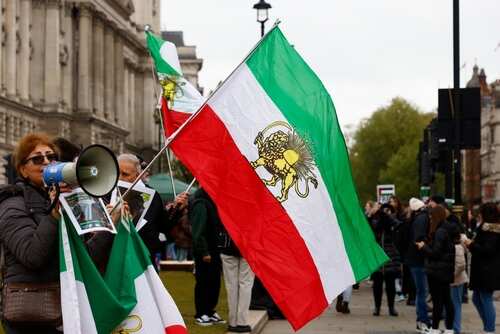
A US-led call for action against Iran’s brutal crackdown on protesters is gaining momentum at the United Nations, sparking both hope and tension.
Story Overview
- The US accuses Iran of slaughtering protesters and threatens potential military intervention.
- Dissidents testify to the UN, demanding action beyond diplomacy.
- Iran claims the protests are a US-Israel plot and rejects military threats.
- Tensions rise as President Trump supports protesters, canceling diplomatic talks with Iran.
US Stands Firm Against Iran’s Repression
President Donald J. Trump and the US have taken a strong stance at the United Nations against Iran’s violent suppression of protests that began in late December 2025. The economic struggles sparked these protests, and reports indicate that thousands have been killed. Trump has warned that “all options are on the table,” including military intervention, to protect peaceful demonstrators. This marks a significant shift from previous US responses, emphasizing a more proactive approach to defending human rights abroad.
The UN Security Council, at the behest of the US, convened to address these issues, featuring testimonies from Iranian dissidents. These dissidents, including prominent figures like Masih Alinejad, have detailed the tortures, blackouts, and killings, urging the international community to take decisive action. The Iranian government’s response has been to blame the unrest on foreign interference, specifically accusing the US and Israel of orchestrating the protests. The situation remains tense, with both sides firmly entrenched in their positions.
Iran’s Response and International Reactions
The Iranian regime has labeled the protests as a foreign-led plot and has rejected US accusations as violations of sovereignty. Iran’s UN representative has dismissed military threats and highlighted the millions of pro-regime marchers who have taken to the streets. Meanwhile, China, Russia, and Pakistan have opposed US “aggression,” defending Iran’s right to maintain order. This division at the UN underscores the geopolitical complexities surrounding the situation and the challenges of reaching a unified response.
Watch:
Within Iran, the government’s severe repression has included a communications blackout and the use of force to quell protests. The reports of thousands dead have varied, with estimates ranging from 2,400 to over 12,000, reflecting the chaotic and dangerous environment for those demanding change. Despite the crackdown, President Trump continues to encourage the Iranian people to “take over institutions” and promises that “help is on the way,” signaling ongoing US support for the protestors.
Implications for Global Stability
The current situation in Iran has significant implications for global stability. Short-term consequences include heightened volatility and potential military escalation if tensions continue to rise. Long-term, the protests’ success or failure could either destabilize the Iranian regime or entrench its repressive measures further. The potential for US-Iran negotiations remains uncertain, contingent on developments within Iran and the broader international community’s response.
The economic impact is also profound, with inflation and currency depreciation fueling unrest. Socially, the blackout has destroyed evidence of the government’s actions, while politically, it raises questions about the regime’s stability and the efficacy of US support. The international community, particularly the UN, faces a challenging task in balancing support for human rights with the risk of exacerbating tensions in an already volatile region.
Sources:
US Congressional Research Service Report on Iran
Iran International Live Blog on Protests
Institute for the Study of War’s Iran Update