
A North Carolina couple and their two dogs walked away after a night engine failure ended in a tree-top landing that stopped the plane inches from the ground.
Story Highlights
- A Piper PA-32 lost engine power at night; the pilot aimed for trees to slow the crash.
- Dustin and Autumn Davis, plus two dogs, exited with minor injuries, according to local reports.
- The Federal Aviation Administration confirmed mechanical trouble before the aircraft struck trees.
- Investigators are reviewing the cause; no component failure has been publicly identified yet.
Engine Power Lost Over Rural North Carolina
Reporters in North Carolina say Dustin and Autumn Davis were flying a single-engine Piper PA-32 on October 7 when the engine stopped producing power at night. Dustin Davis told a station that the engine “wasn’t producing power” while they worked checklists and contacted air traffic control. The couple had two dogs aboard. They searched for a place to land in the dark as the aircraft descended. The flight ended near trees outside Whiteville in Columbus County.
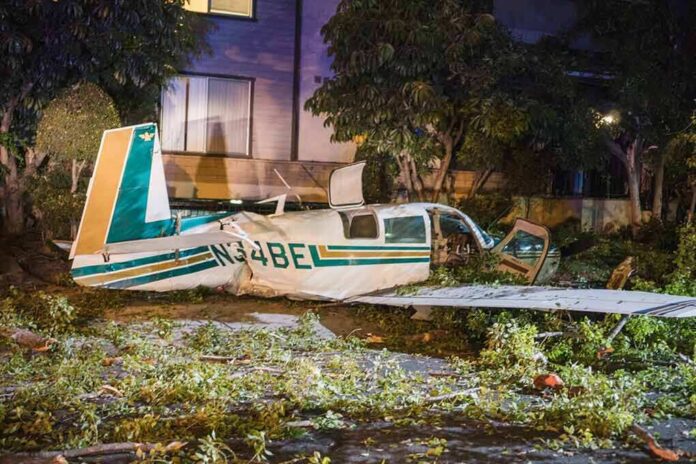
The Federal Aviation Administration confirmed the aircraft had mechanical trouble before it struck trees. Local outlets describe the airplane coming to rest about six feet above the ground after contacting a smaller, flexible tree that absorbed energy. Photos cited by outlets show the nose near the ground, which supports a controlled, low-speed impact rather than a nose-first crash. The accounts match a treetop or tree-supported landing instead of a direct ground impact in open terrain.
Pilot’s Last-Second Pull-Up Helped Control Impact
Davis said he pulled up when he saw the trees, using the airplane’s belly to take the hit. That move can spread force over the airframe and cut the vertical drop. Coverage adds that this decision likely kept the cabin space more intact. In emergencies like this, pilots are taught to keep control and fly the plane all the way to touchdown, even if the “runway” is a field, a road, or trees. The key is lowering speed and keeping the impact level.
After the airplane stopped, both adults and both dogs were able to get out. Follow-up reports say the couple had minor injuries, such as a black eye and soreness. No deaths were reported. The outcome fits a known pattern in general aviation: when power is lost, survival improves when pilots maintain control, pick the best reachable spot, and use structure and terrain to manage the energy of the landing. That is what appears to have happened here, at night, under real pressure.
Why This Matters For Safety-Minded Flyers And Families
This story is a reminder that skill, training, and calm choices protect lives. The airplane lost power at night, which is among the hardest times to force-land. Yet the crew worked procedures, called for help, and kept control. The Federal Aviation Administration’s own safety material stresses that many fatal small-plane crashes begin as power problems but end in loss of control. Keeping wings level and speed under control makes the difference in survival.
Officials have not yet released a mechanical cause. Investigators typically examine the fuel system, ignition, engine internals, and maintenance logs. Until that work is done, the focus stays on what is known: a reported power loss, a deliberate choice to use trees to slow the landing, and four lives spared. For families who fly or drive under dark skies and tight timelines, this is a lesson in preparation, checklists, and faith under fire—and a credit to responders and neighbors who helped afterward.
Sources:
nypost.com, wsoctv.com, wwaytv3.com, aopa.org