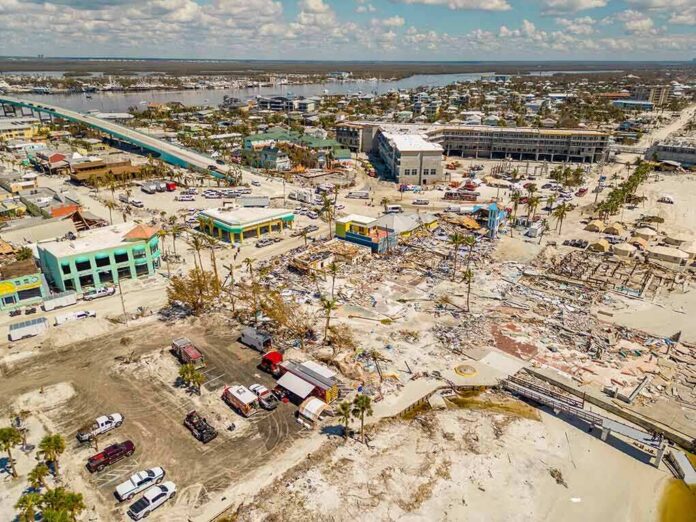
A massive offshore quake in the southern Philippines just sent tsunami waves across Mindanao and beyond, posing hard questions about disaster readiness, media alarmism, and what it really takes to protect families when seconds count.
Story Snapshot
- A powerful magnitude 7.8 earthquake off Sarangani, Mindanao, triggered tsunami waves and coastal evacuations across the southern Philippines.
- At least 19 people are dead, over 130 injured, and buildings have collapsed as tsunami waves near five feet hit parts of Mindanao’s coast.
- Conflicting early magnitude reports and sensational foreign coverage highlight how quickly media panic can outrun verified science.
- Philippine and international agencies issued rapid tsunami warnings, but the scale of damage shows chronic infrastructure and preparedness gaps.
Powerful Offshore Quake Slams Mindanao Coast
The Philippine Institute of Volcanology and Seismology recorded a powerful magnitude 7.8 earthquake off the coast of Sarangani province in southern Mindanao at about 7:37 a.m. local time on June 8, 2026.[2] The epicenter was offshore, roughly west-southwest of the town of Kablalan, along the southern Mindanao coastline.[2] United States Geological Survey readings and other international networks also placed the event at magnitude 7.8, with a depth in the tens of kilometers beneath the seafloor.[2] Shaking lasted around thirty seconds, long enough to bring down vulnerable buildings.[2]
The offshore quake immediately triggered tsunami warnings across the southern Philippines and throughout the western Pacific.[2] Philippine authorities, echoing guidance summarized by the United States Embassy, warned that the first tsunami waves could arrive within about two hours of the quake and continue for several hours afterward.[2] Residents in coastal warning zones were strongly urged to evacuate immediately to higher ground or move farther inland, as officials treated the threat as real and imminent rather than hypothetical.[2][3]
Tsunami Waves, Collapsed Buildings, And Rising Toll
Field measurements later confirmed that tsunami waves did hit sections of Mindanao’s southern coast, with water heights reaching roughly 1.5 meters—nearly five feet—in Kiamba, Sarangani.[2] Other monitoring points in Kalamansig, Maasim, Zamboanga City, Mati, and Tandag recorded smaller but still dangerous waves.[2] Additional gauges as far away as Indonesia and Palau detected measurable tsunami activity, underscoring how one offshore rupture can disturb the entire region’s coastal communities in minutes.[1][2]
Philippine disaster officials now report at least 19 deaths, more than 134 injuries, and at least seven missing persons tied to the quake and its aftermath.[2][3] Many of the fatalities occurred in General Santos City and nearby provinces such as South Cotabato and Davao Occidental, where buildings partially collapsed and debris rained down on residents.[2][3] Some victims died from falling rubble, while others reportedly suffered cardiac arrest during the chaos, a sobering reminder that panic can be as deadly as physical impact.[2]
Emergency Response, Early Warnings, And Media Confusion
The Philippine Office of Civil Defense and regional disaster agencies moved quickly to deploy first responders, conduct search-and-rescue operations, and assess damage to infrastructure, including bridges and airports.[2] Authorities ordered or strongly urged evacuations from low-lying coastal communities once tsunami warnings were issued, steering people toward higher ground while aftershocks continued to rattle nerves.[2][3] Power disruptions hit more than two dozen areas across affected regions, complicating communication just when families desperately needed reliable information.[2]
Early coverage revealed how confusing major disasters can be in the first hours. Some outlets and foreign seismic agencies initially reported a higher magnitude, around 8.2, before later aligning with the magnitude 7.8 figure now used by Philippine and United States experts.[1][2] This kind of preliminary discrepancy is common in large quakes because different systems process early seismic data differently.[1][2] However, it can leave the public unsure which number to trust, especially when social media amplifies the most dramatic claims first, regardless of later corrections.[3]
Hard Lessons On Preparedness And Infrastructure Weakness
The Mindanao quake is already being described as the strongest to hit the Philippines in decades, rivaling past disasters like the 1976 Moro Gulf earthquake and tsunami that killed thousands.[2] Today’s casualty numbers are far lower than that historic catastrophe, but they still expose serious vulnerabilities: older buildings that cannot withstand severe shaking, critical infrastructure with preexisting weaknesses, and coastal communities that must rely on rapid, organized evacuation to survive.[2][3] Each aftershock underscores how thin the margin is between a close call and a mass-casualty event.[2]
🚨 7.8 Magnitude Earthquake Hits Sarangani, Mindanao
A powerful M7.8 quake struck offshore Sarangani at 7:37 AM today (June 8, 2026). Epicenter ~26 km west of Maasim. Strong shaking felt in General Santos City and across SOCCSKSARGEN.
Reports: Multiple building collapses…
— Nic Gabunada (@nicgabunada) June 8, 2026
For American readers, especially those in earthquake-prone states and coastal regions, this event is a reminder that real resilience depends less on bureaucratic promises and more on hardened infrastructure, clear communication, and empowered local communities. The science behind tsunami alerts worked: networks detected the quake, warnings went out, and at least some residents had time to reach higher ground.[1][2] The human cost came where buildings crumbled, information lagged, or people were left relying on underfunded systems in the path of a predictable threat.[2][3]
Sources:
[1] YouTube – Earthquake of magnitude 7.8 strikes off southern Philippines
[2] Web – Earthquake of magnitude 7.8 strikes off southern Philippines … – CNA
[3] Web – Magnitude 7.8 Earthquake, Tsunami Warning affecting Mindanao