

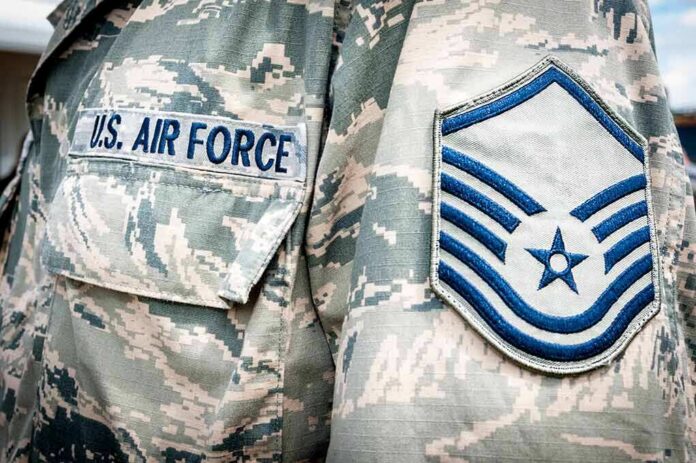
A new court order has put President Trump’s transgender military ban on hold for one key Air Force master sergeant, raising sharp questions about how far judges can go in rewriting Pentagon policy from the bench.
Story Snapshot
- A New Jersey judge blocked the Air Force from starting discharge proceedings against Master Sergeant Logan Ireland for 14 days.
- A Washington, D.C. judge has already said the broader transgender military ban likely violates equal protection and issued a nationwide injunction.
- The Supreme Court later allowed the ban to be enforced while lawsuits move forward, creating a tug‑of‑war between courts over control of military policy.
- Transgender Air Force members are also suing over lost retirement benefits and say the government broke its promises to them.
Judge Stops Air Force Discharge Case, Citing “Immediate Harm”
U.S. District Judge Christine O’Hearn in New Jersey granted a 14‑day temporary restraining order that stops the Air Force from beginning involuntary separation against Master Sergeant Logan Ireland and Staff Sergeant Nicholas Bear Bade. Her order blocks commanders from enforcing parts of President Trump’s January 27, 2025 executive order on “Prioritizing Military Excellence and Readiness” against these two plaintiffs. The judge said the transgender airmen faced “immediate, ongoing, and significant” harm from being pushed out under the new rules.
According to court records, the executive order and follow‑up guidance require transgender personnel to serve only in their birth sex, including in housing, facilities, pronouns, and official records. Ireland and Bade, who are biologically female but live and serve as men after transition, argue this policy is unequal and demeaning and has nothing to do with their fitness to serve. Their lawsuit asks the court to bar the government from separating them, denying reenlistment, or blocking promotion based only on transgender status.
Nationwide Injunction Says Ban Likely Unconstitutional
Judge O’Hearn’s short‑term order leans heavily on a wider case in Washington, D.C., where U.S. District Judge Ana Reyes granted a nationwide preliminary injunction against the same transgender military ban on March 18. Judge Reyes found the ban likely discriminates based on sex and transgender status and described the policy record as “soaked in animus,” citing a lack of evidence that transgender troops harm readiness. Her ruling temporarily stopped enforcement across the armed forces while the case continues.
In her written decision, Judge O’Hearn said she was “inclined to agree” that excluding service members because of gender identity violates equal protection under the Fifth Amendment. She also stressed that her order was needed even though Judge Reyes had already acted, because the broader injunction “could be stayed or reversed at any time.” This shows how lower courts are using emergency orders to shield individual plaintiffs from being discharged before the higher courts settle the policy fight.
Supreme Court Allows Enforcement While Battles Continue
Despite these victories for transgender service members, the U.S. Supreme Court later allowed Trump’s ban to be enforced while legal challenges move through the lower courts. Reporting on Logan Ireland’s situation says the Supreme Court’s decision left him facing a hard choice: leave voluntarily and get higher separation pay or be involuntarily separated and lose half that amount. The high court’s move shows it is willing, at least for now, to let elected leaders and Pentagon officials set standards for medical fitness and unit cohesion.
For many conservative readers, this back‑and‑forth is a clear example of courts stepping into military decisions that should rest with the commander‑in‑chief, Congress, and defense leaders. Supporters of the ban argue that clear sex‑based rules protect privacy in barracks and showers, reduce disruption, and keep the focus on combat readiness, not identity politics. Judges like Reyes and O’Hearn take the opposite view, saying equal protection rules apply fully inside the military and limit how far sex‑based standards can go.
Retirement Pay Fight Raises Cost and Fairness Questions
The lawsuit over service rules is only one front. Another group of 17 transgender Air Force members is suing after the military revoked early retirement pensions and benefits that had already been approved. The Air Force confirmed it would deny all transgender members with 15 to 18 years of service the option to retire early and would instead separate them without retirement benefits, based on a finding that transgender individuals are medically unfit to serve. Plaintiffs say this reversal is unlawful and breaks promises made by the government.
Advocacy group GLAD Law estimates that each affected service member could lose up to $2 million in lifetime retirement pay, plus the loss of health coverage. This raises a hard policy question for taxpayers and for conservatives: if the government finds certain medical conditions incompatible with service, can it still be forced by courts to pay long‑term benefits that were granted under earlier, more permissive rules? Judge Elaine Kaplan in Washington has already refused to dismiss most of these retirement claims, allowing the challenge to move forward.
What Logan Ireland Calls “Meaningful” – And Why It Matters
Master Sergeant Ireland has spoken publicly about feeling betrayed by the shift from earlier policies that allowed transgender service to the current ban, but he has also described the New Jersey order and the D.C. injunction as “meaningful” because they stop his discharge and keep his case alive. For him and other plaintiffs, these rulings signal that at least some judges see constitutional limits on how far the federal government can go in enforcing sex‑based rules in uniform.
For conservatives who back President Trump’s focus on readiness and discipline, the same rulings highlight a bigger trend: federal courts are increasingly willing to second‑guess elected leaders on military, social, and cultural issues. Whether one agrees with Ireland or with Trump’s Pentagon, the outcome of these cases will shape who sets the standards in our armed forces—judges applying equal protection tests, or civilian leaders chosen by voters to defend the country.
Sources:
military.com, gladlaw.org, inquirer.com, usatoday.com, civilbeat.org, abcnews.com, npr.org, news.bloomberglaw.com, advocate.com, whyy.org