

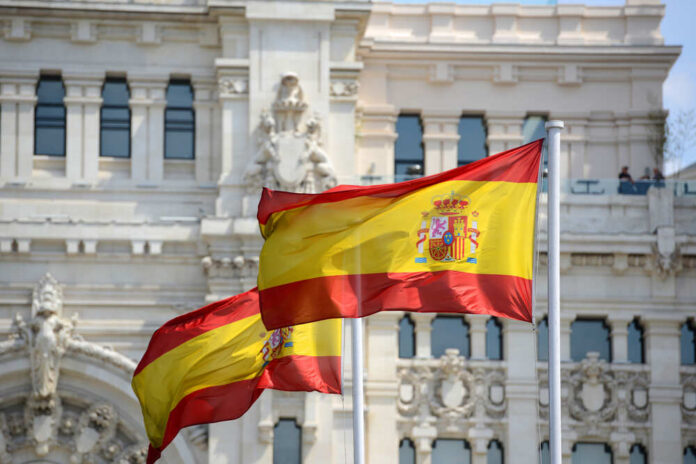
Madrid’s parks are reportedly emptying of illegal migrants—not because the problem vanished, but because enforcement finally made hiding the safer option.
Quick Take
- Reports from April 2026 say illegal Moroccan migrants have largely disappeared from parks and plazas in Madrid and other Spanish cities as deportation pressure increases.
- Spain’s Interior Ministry issued 41,315 expulsion orders in 2025 and carried out 3,398 deportations, the highest total in five years.
- Moroccan media describe the shift as “police repression,” while Spanish accounts tie the crackdown to insecurity and crime concerns in affected neighborhoods.
- The episode highlights a broader European tension: humanitarian strain at the border versus public-order demands inside major cities.
Visible Street Encampments Give Way to Quiet Evasion
April 2026 reporting describes a sudden change across Madrid and other major Spanish cities: parks, squares, and public gathering spots that had been associated with illegal Moroccan migrants are now noticeably quieter. The reporting attributes the shift to stepped-up policing and the fear of extradition or deportation, pushing migrants to avoid public visibility. At least 120 Moroccan nationals were reportedly identified as being in the country illegally and facing removal actions.
Spain’s Interior Ministry statistics cited in the reporting put a hard number behind the message migrants appear to be hearing. In 2025, authorities issued 41,315 expulsion orders and executed 3,398 deportations, a 12% increase over 2024 and the highest in five years. Even with a large gap between orders and removals, the increase signals more consistent follow-through—exactly the kind of “consequences” model voters often demand when public spaces feel unsafe.
Two Competing Narratives: “Repression” vs. Public Safety
Morocco’s newspaper Assabah frames the disappearance from parks and plazas as a response to Spanish “police repression,” a choice of words that casts migrants as victims of heavy-handed tactics. Spanish accounts cited in the same reporting emphasize rising crime statistics and neighborhood insecurity as the rationale for stronger action. The underlying facts in the public record do not resolve every claim about day-to-day policing, but they do show Spain escalating enforcement capacity and removals.
The limited sourcing also matters for readers trying to separate measurable policy from viral narrative. The reported emptying of specific parks and plazas is not presented alongside independent, on-the-ground verification from multiple mainstream Spanish outlets in the provided research. What is verifiable is the broader enforcement trajectory—expulsion orders, deportations, and the identification of individuals for removal—suggesting the visible change in public spaces is plausibly connected to perceived enforcement risk.
Border Pressure Hasn’t Disappeared—It Has Shifted Locations
Spain’s interior enforcement story sits downstream from a long-running pressure point at the Morocco-Spain frontier, especially around Ceuta and Melilla. Past surges, including a 2021 event where more than 8,000 migrants entered Ceuta amid diplomatic tensions, show how fast flows can spike when politics and border controls change. Migrants have repeatedly attempted crossings by swimming, climbing fences, or hiding in rugged terrain, taking extreme risks despite well-known dangers.
Reporting from the region also describes Morocco intercepting large numbers of attempted crossings in 2024—nearly 80,000 at Ceuta—illustrating how a clampdown can produce displacement effects rather than permanent resolution. When border entry becomes harder, pressure can build in staging areas, including Moroccan border towns where migrants sleep outdoors and rely on aid. When interior policing intensifies, the pattern can repeat again, pushing people out of visible spaces and into hidden networks that are harder to monitor.
What This Signals for Europe—and Why Americans Should Pay Attention
Spain’s experience echoes a basic principle familiar to U.S. voters: enforcement that is predictable changes behavior faster than enforcement that is sporadic. Conservatives tend to see this as a public-order win—restoring parks and plazas to ordinary families and reducing the “pull effect” created by perceived non-enforcement. Liberals often focus on the humanitarian downstream costs, including homelessness, exploitation, and dangerous smuggling routes. Both concerns can be true at once, which is why outcomes depend on whether enforcement is paired with workable legal pathways and cooperation with origin countries.
📌Moroccan illegal immigrants are hiding and leaving parks and squares in Madrid and other major Spanish cities amid increased controls. The situation reopens the debate on security, immigration, and public space management.
🖊By @MariaHerreraMe https://t.co/zyQLz0UjUe
— Gateway Hispanic (@GatewayHispanic) April 18, 2026
The bigger takeaway is institutional credibility. When governments promise border control but fail to execute, citizens conclude the system protects everyone except the taxpayer and the law-abiding resident. When governments respond with blunt, late-stage crackdowns, critics argue leaders are chasing optics rather than building durable policy. The Spanish figures show more activity, but the gap between expulsion orders and actual deportations underscores how difficult enforcement remains—even when politics shift toward tougher action.
Sources:
https://gatewayhispanic.com/2026/04/illegal-moroccan-migrants-are-hiding-abandoning-parks-plazas/