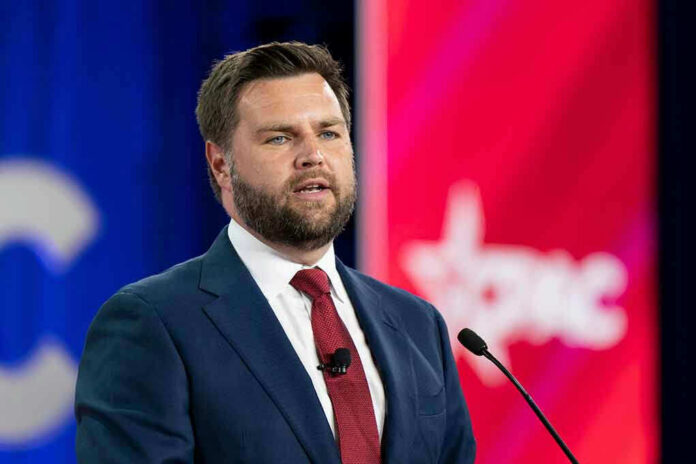
Vice President JD Vance backed tougher H-1B visa crackdowns and pressed agencies to block companies that lay off Americans while importing cheaper foreign labor.
Story Highlights
- Vance says H-1B should never replace Americans with lower-wage foreign workers
- White House order adds layoff screening to protect U.S. workers
- Administration cites sharp decline from major staffing firms after reforms
- Vance argues Congress lacks the will, so agencies must act
Vance’s Core Message: Stop Replacing U.S. Workers
Vice President JD Vance said the H-1B visa program should not exist to replace American workers with lower-paid foreign labor. He pushed a simple test: if a company fires an American accountant making $60,000, it should not hire a $45,000 foreign worker as a substitute. He argued the program should bring in rare, high-value talent, not serve as a cost-cutting pipeline. Reports from his podcast appearance captured his theme of ending wage-driven displacement of U.S. workers.
Vance tied the argument to abuse and fraud concerns that undercut faith in the system. He said some firms pursue visa hires to save on wages rather than to fill true skill gaps. He described enforcement as the path that works when Congress stalls. He added that screening should target firms that lay off Americans and then file visa petitions anyway. Coverage across multiple outlets reflected the same thrust from his remarks about shutting the door on displacement strategies.
What The Administration Just Did: Layoff Screening And Integrity Rules
The White House issued a fact sheet detailing steps to tighten the H-1B program after layoffs. The order directs agencies to weigh “recent or planned layoffs of similarly situated U.S. workers” when judging petitions. It frames the actions as enhancing program integrity and improving agency coordination. The message is clear: petitions face higher scrutiny when there is a risk that American workers are being pushed out and replaced by lower-wage visa hires.
The administration paired scrutiny with tools aimed at curbing gaming of the system. Reports highlighted a wage-first selection approach and a $100,000 payment requirement for certain new petitions to steer use toward top-tier roles. Officials pointed to a striking drop in registrations from large information technology staffing and outsourcing firms after earlier steps. That decline signals pressure on the business models that most often draw abuse claims from workers and watchdogs.
Why It Matters To American Families And Wages
American families feel real pain when stable, mid-wage jobs are cut and replaced. Vance’s example of a $60,000 job swapped for a $45,000 hire shows how wage pressure spreads. When companies make that trade, communities lose buying power, savings fall, and local shops suffer. Targeted enforcement aims to keep companies from using visas to undercut pay scales. The policy push says talent visas must lift our economy, not hollow out the middle class through backdoor wage cuts.
Supporters of reform say the goal is not to shut out genuine experts. They say the program should focus on rare skills that truly do not exist in the current labor pool. The White House guidance tries to draw that line: screen out petitions that follow layoffs of similar workers. That way, visa use supports growth without inviting a race to the bottom on wages. Agencies now have marching orders to test employer claims against recent headcount moves and pay realities.
Congress Stuck, Agencies Move: The Path Forward
Vance said Congress will not pass major changes, so the administration is acting through enforcement and rulemaking. That means the near-term fight is inside agencies and at the review desk. Employers that depend on body shops or wage arbitrage will face tougher questions and more denials. Companies that truly need scarce skills can still apply, but they must show they are not laying off Americans in the same roles. That is the standard taxpayers expect.
JD Vance is challenging the way H-1B visas are being used, arguing that the program should fill genuine specialized talent gaps—not allow companies to replace American workers with cheaper labor.
His question is straightforward: Should H-1B visas protect American jobs while…
— Eyeworldnewsdigital (@eyeworldnews444) October 1, 2026
Critics claim the visa program helps overall growth, but the administration is focused on specific harm when layoffs and cheap replacements line up. The new guardrails do not ban high-skill immigration; they put Americans first when firms cut staff and then seek visa hires. That is a fair ask in a time of tight family budgets and high costs. If agencies enforce these rules with teeth, it will reward employers that invest in American workers and pay market wages.
Sources:
foxnews.com, ndtvprofit.com, newsweek.com, financialexpress.com