

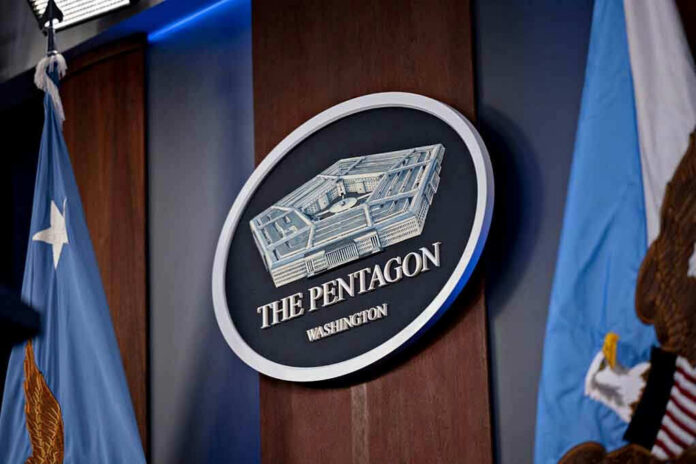
Defense Secretary Pete Hegseth is set to slash 20% of the Pentagon’s general and admiral positions, doubling down on a promise to strip out bloated brass and hand power back to the troops on the ground.
Quick Take
- Hegseth will announce a 20% cut to general and flag officer billets, doubling last year’s 10% target.
- The cut applies to positions, not an automatic firing of one-fifth of current officers.
- Military services were told to finish the reductions by the end of the year.
- Roughly 170 top command roles will disappear, leaving about 680 in place.
- The move builds on a May 2025 order that already trimmed four-star and National Guard general slots.
Pentagon Chief Doubles Down On Trimming Top Brass
Hegseth plans to announce the new reduction in general and admiral billets, according to multiple reports citing Pentagon officials. The target doubles the 10% cut in general and flag officer positions Hegseth ordered last year as part of his push to streamline the military’s senior ranks. Reuters, CBS News, ABC News, The Hill, and The Washington Post all confirmed the plan on September 29.
Fox News reported the cuts target billets — the actual jobs set aside for generals and admirals — rather than automatically pulling one-fifth of serving officers from their posts. Some positions will be eliminated outright. Others will simply get downgraded to a lower rank. That distinction matters, since it means fewer officers lose their jobs overnight than the raw percentage suggests.
Timeline And Scale Of The Reductions
A Pentagon official told The Washington Times the military branches must finish the reductions by the end of the year. Federal News Network reported the cut would eliminate about 170 active-duty generals and admirals, leaving roughly 680 still serving in command roles. Other outlets pointed to a January 1 deadline, showing the exact rollout schedule was still being finalized publicly.
This is not Hegseth’s first swing at the top brass. In May 2025, he ordered a 20% cut to four-star officer positions and a matching 20% reduction among National Guard generals, plus an added 10% cut spread across all general and flag officers. A memo he signed that month called the move a “critical step” toward “removing redundant force structure to optimize and streamline leadership”.
Why Hegseth Says The Military Is Top-Heavy
Hegseth has pointed to World War II as his benchmark. Back then, 17 four- and five-star generals commanded 12 million troops. Today, 44 four-star generals and admirals oversee a force of just 2.1 million. That comparison drives his argument that the Pentagon has piled up senior leadership far faster than it has grown the actual fighting force, a point that resonates with conservatives tired of government agencies bloating their own management layers while frontline resources shrink.
Research on military staffing backs up part of that concern. A report from the nonpartisan think tank Third Way found the Pentagon eliminated more than 100 general and flag officer positions during a prior round of “efficiency initiatives,” yet senior ranks still outpaced overall force reductions since the Cold War ended. Congress itself directed a reduction of general and flag officer billets in the 2024 defense policy law, showing bipartisan appetite for trimming the brass even before Hegseth took over.
What The Cuts Mean Going Forward
Critics inside the defense commentary world have questioned whether trimming senior officers could strip out experience the military needs for cyber, space, and multinational coordination missions that didn’t exist in the World War II era. That’s a fair debate to have. But for conservatives who’ve watched federal agencies balloon their executive ranks for decades while ordinary workers get squeezed, Hegseth’s move looks like overdue accountability — a leader actually following through on his word instead of just talking about shrinking government.
PETE HEGSETH IS ABOUT TO CUT EVEN MORE BLOAT OUT OF THE PENTAGON'S TOP BRASS, AND I LOVE IT.
Tomorrow at Quantico, he's standing in front of enlisted troops and NCOs to announce he's doubling the cuts to general and admiral positions.
The goal is to slash active duty four-star… pic.twitter.com/ey6oy8RZws
— Gunther Eagleman™ (@GuntherEagleman) September 29, 2026
Hegseth has now ordered senior-rank reductions twice in less than two years, a pace unmatched by recent defense secretaries. Whether the Pentagon hits its year-end deadline for these cuts will be the next marker to watch, along with whether Congress presses for a full public accounting of which billets disappeared and which simply got downgraded.
Sources:
cbsnews.com, thehill.com, ntd.com, yahoo.com, federalnewsnetwork.com, cnn.com, dw.com