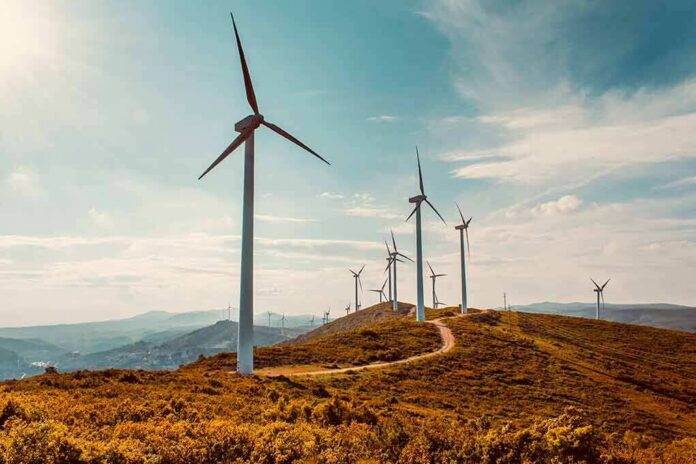
President Trump slammed wind projects as ugly, costly, and harmful—but said their one virtue is they can be taken down when they fail communities.
Story Highlights
- Trump reaffirmed his stance that wind harms landscapes, wildlife, and pocketbooks.
- The administration paused federal wind leasing and new permits while reviewing policies.
- A federal court later struck down parts of the blanket freeze as unlawful under the Administrative Procedure Act.
- Supporters tout wind’s jobs and local revenue, but costs, subsidies, and siting remain flashpoints.
Trump’s Case Against Wind: Beauty, Cost, And Community Impacts
President Trump has long argued that wind projects scar views, drain value, and kill birds. During a National Prayer Breakfast address, he said wind is “a quick way of losing money, losing beauty, losing your fields, killing your birds,” and warned Europe is “destroying their country with wind”. Earlier, he said homes near turbines can lose half their value and called turbines noisy and dangerous to wildlife. His message lands with residents who live near massive towers and see little local gain.
Trump also ties wind growth to higher power costs and foreign-controlled supply chains. He has criticized subsidies and mandates that hide the true price of intermittent power and shift grid costs to families. The White House detailed a push to end what it called market-distorting subsidies for wind and solar, arguing taxpayers should not bankroll unreliable energy while American families face high bills from past policies. This aligns with conservative calls for energy that is affordable, domestic, and dependable.
Federal Actions: Lease Pause, Policy Review, And A Court Rebuff
On day one of his second term, Trump ordered a temporary halt on new wind leases and permits on federal lands and waters, pending a full review of leasing and permitting practices. Major outlets and policy trackers reported that approvals for new projects on federal territory were paused while agencies conducted that review. The move aimed to check legal, environmental, and economic impacts before allowing more large projects to advance.
Courts later weighed the scope of those pauses. In December 2025, a federal judge invalidated a sweeping freeze that blocked nearly all leasing and authorizations, calling it “arbitrary and capricious” under the Administrative Procedure Act. The ruling vacated the order nationally and forced agencies to restart lawful processes while their policy review continued. The decision shows how process discipline matters, even when voters back tougher scrutiny of industrial wind.
Supporters’ Claims Versus Real-World Tradeoffs
Wind boosters cite government fact sheets that say wind can provide low-cost power, create good jobs, and bring tax revenue to towns. They also point to emissions benefits and fuel-free operations that lower some costs over time. Those claims deserve a fair read. But they do not erase the local tradeoffs that neighbors feel—tower siting, transmission lines, and wildlife concerns—and they depend on subsidies and grid rules that shift hidden costs onto ratepayers.
The policy fight is not about whether a turbine can spin; it is about who pays and who lives with the impacts. The Department of Energy materials highlight broad benefits, yet they do not resolve siting conflicts, intermittency costs, or the burden on rural landscapes. That is why Trump’s point about one “redeeming” feature resonates: unlike permanent scars from some boondoggles, wind towers can be removed if they fail tests of cost, reliability, and community consent. Limited government means saying no to projects that need endless favors to survive.
What Comes Next For Energy Policy And Consumers
Agencies must now pair strong environmental reviews with clear cost accounting and community input. Lawful process and transparent numbers can prevent courtroom losses while protecting Americans from forced, top-down experiments. Congress and states should stop writing blank checks to intermittent power and focus on reliable baseload, modernized grids, and American-made energy that lowers bills without blighting towns. Energy policy must put families, not favored industries, first.
For now, Trump’s message is simple and firm: protect landscapes, protect wallets, and end subsidies that mask real costs. If a wind project can win on its own merits—with honest pricing, sound siting, and community buy-in—fine. If not, take it down and move on. That approach respects taxpayers, defends local voices, and keeps America focused on energy that actually works for the people who pay the bills.
Sources:
democrats.senate.gov, npr.org, congress.gov, factcheck.org, whitehouse.gov, reuters.com, cnbc.com, enel.com, solartechonline.com, arkenergy.com.au, dekalbcounty.org, supremecourt.gov