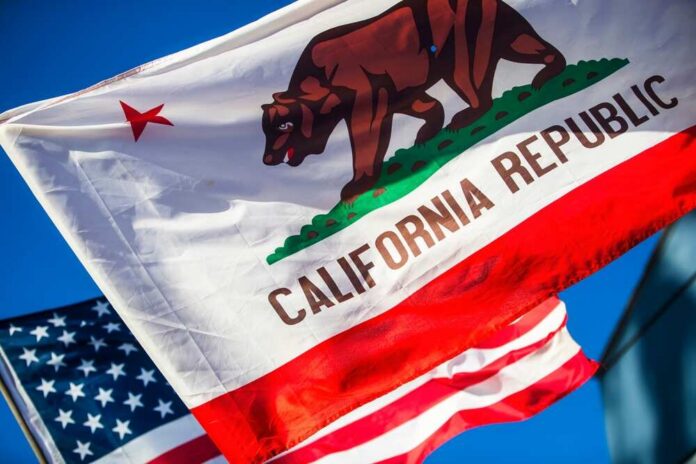
While President Trump meets China’s top leadership in Beijing, a separate scandal narrative—about a California mayor allegedly acting as a Chinese agent—shows how quickly foreign influence fears can collide with high-stakes diplomacy.
Story Snapshot
- President Trump’s May 12–15, 2026 state visit to China is confirmed, with cultural events and a summit agenda centered on trade and strategic stability.
- Commentary circulating alongside the trip claims a California mayor is set to plead guilty to acting as an illegal agent for China, but the research provided shows that claim is not independently verified in the same materials confirming the visit.
- Analysts expect incremental outcomes—such as tariff or trade-truce extensions—rather than a sweeping reset in U.S.-China relations.
- The episode highlights a broader public concern shared across parties: government systems can look unprepared to detect and deter foreign influence at the local level.
Trump’s China Trip Is Real—and Carefully Scripted
President Donald Trump’s 2026 state visit to China, running May 12–15, is confirmed by multiple mainstream and official-facing sources, with an itinerary that blends ceremony and negotiations. Reports describe scheduled stops tied to cultural symbolism—alongside formal meetings and a state banquet—aimed at setting the tone for talks. Separate coverage notes Trump’s convoy arriving in Beijing ahead of his summit, underscoring that the trip is underway, not speculative.
Brookings’ preview of the visit frames expectations around practical deliverables rather than dramatic headlines: trade and economic frictions remain central, and any “wins” are likely to come in the form of extensions, pauses, or narrow agreements. That matters domestically because it sets realistic benchmarks for voters who want toughness on China without paying higher prices at home—a balance every administration claims to seek, but few execute cleanly.
What’s Known—and Not Known—About the “California Mayor” Claim
The most provocative part of the storyline is the allegation, promoted in commentary tied to The Charlie Kirk Show, that a California mayor is preparing to plead guilty to acting as a Chinese agent. Based on the research provided, the key limitation is verification: the same packet that confirms Trump’s trip also flags that this “mayor plea” angle is not corroborated by the cited search results in the report’s verification section. In other words, the claim may exist in media chatter without matching public confirmation.
That uncertainty is not a minor detail. Accusations of foreign-agent activity are serious, and the U.S. has legal tools—such as Foreign Agents Registration Act enforcement and related federal statutes—designed to separate lawful diplomacy and community engagement from covert influence. When a claim as specific as “a mayor will plead guilty” circulates without clear, public documentation attached, it can polarize audiences and degrade trust in institutions that should be able to provide timely, verifiable answers.
Why Influence Operations Keep Targeting Local Politics
Even with the mayor detail unresolved in the provided research, the broader concern it taps into is well-established: China has long been accused of pursuing influence through “united front”-style outreach and cultivation of relationships beyond Washington. Local government can be an attractive target because it often sits closer to practical levers—permits, contracts, sister-city relationships, and business partnerships—while receiving less scrutiny than federal offices. That combination can create openings for persuasion, access, and sometimes improper coordination.
Diplomacy Meets Domestic Distrust in a Split Political Culture
Trump’s trip also lands in a tense American political environment where conservatives remain angry about years of globalized decision-making, border failures, and fiscal policy they blame for inflation, while many liberals fear crackdowns, reduced benefits, and perceived unequal treatment. Those competing frustrations often converge on one shared conclusion: government is not delivering for ordinary people. When foreign influence allegations overlap with summit diplomacy, citizens can easily conclude that elites protect themselves while the public gets spin instead of clarity.
THE CHARLIE KIRK SHOW
May 12, 2026 at 11:00 AM Central Time
TRUMP VISITS CHINA, CALIFORNIA MAYOR TO PLEAD GUILTY AS CHINESE AGENT | THE CHARLIE KIRK SHOWhttps://t.co/0xI1CgDe5h— Nita M (@NitaM07517331) May 12, 2026
For now, the confirmed facts center on the Beijing visit and the likelihood of incremental outcomes—trade management, export-control tension, and strategic messaging—rather than a sweeping breakthrough. The “mayor pleading guilty” claim, as presented in the research, remains the piece that demands careful sourcing and official confirmation. If it turns out to be accurate, it will intensify pressure for stricter transparency and enforcement; if it does not, it will stand as another reminder that viral political narratives can outrun verified public information.
Sources:
https://www.the-independent.com/news/world/asia/trump-xi-china-visit-b2972148.html
https://www.brookings.edu/articles/five-things-to-watch-as-trump-goes-to-beijing/
http://www.xinhuanet.com/english/special/trumpchina/index.htm