

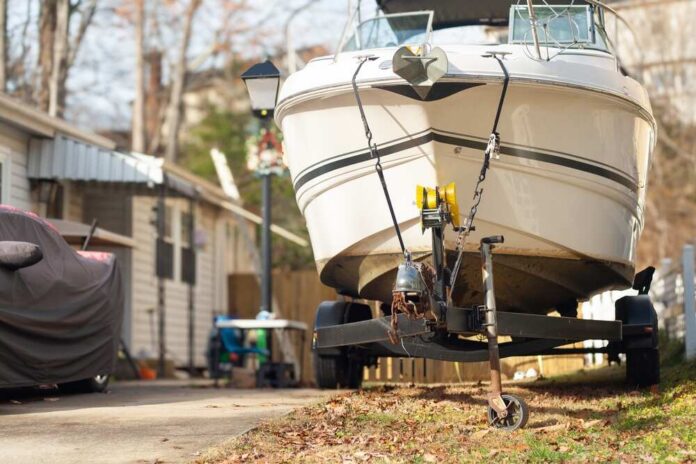
A brazen boat theft from a family’s driveway ended so fast that it’s become a reminder of what many Americans crave most right now: swift, visible accountability.
Quick Take
- A New York Post report says thieves stole a beloved boat from a family-run business driveway, but the “instant karma” ending led to a rapid recovery.
- The story taps into a wider public frustration that everyday crimes often feel ignored until something goes viral.
- Details remain limited in early reporting, including the exact timeline, location specifics, and whether arrests were made.
- A similar Florida case previously showed how driveway boat thefts can involve basic logistics—like rented trucks—and sometimes include taunting victims online.
Driveway Boat Theft Turns Into a Viral “Instant Karma” Moment
The New York Post’s account centers on a simple but infuriating scenario: thieves allegedly took a cherished boat straight off the owners’ driveway, targeting a family-run business. The hook is the outcome—described as “instant karma”—that reportedly allowed the owners to recover the boat quickly and publicly celebrate with the line, “We have the last laugh.” The report was fresh, and key case details were still thin.
Instant karma for crook who jacked beloved boat off owners' driveway: 'We have the last laugh' https://t.co/hV8u6cNh9F pic.twitter.com/LE9pXf9M2m
— New York Post (@nypost) May 9, 2026
The limited information matters because it’s the difference between a satisfying headline and a fully verifiable public record. Early versions of viral crime stories often omit the basics that determine accountability—whether police made an arrest, what charges were filed, and how the property was recovered. Until those specifics are confirmed in follow-up reporting, readers should treat the “instant karma” framing as a narrative description, not a documented legal outcome.
Why Driveway Thefts Keep Happening: High-Value Targets, Low Barriers
Boat theft is not new, and it’s not always sophisticated. Prior local-news coverage of a 2023 case in Sunrise, Florida described a crook using a rented U-Haul-style setup to take a boat from a family business driveway—suggesting that access and opportunity can matter as much as professional criminal networks. That earlier report also underscored why these incidents hit a nerve: the targets are expensive, personal, and often tied to a family’s livelihood.
Those patterns are why many voters—conservatives and plenty of non-conservatives—are fed up with a system that can feel more focused on political theater than public safety basics. The public doesn’t need politicians staging press conferences about “root causes” or abstract jargon; they want practical deterrence, quick reporting, and consequences that are predictable. When a case ends quickly, it feels like a rare exception, which is why “instant karma” stories spread so easily.
Accountability vs. Entertainment: What the Story Doesn’t Yet Prove
The Post piece is written as a human-interest victory lap, but the underlying claims still deserve the same standard of verification as any other crime report. At the time of the research summary, no police statements, suspect identities, or court records were cited in the available information, and the precise mechanics of the “karma” moment were not clearly documented. That gap leaves readers with an emotional conclusion, but an incomplete factual chain.
The Larger Political Frustration: Everyday Crime Meets Public Distrust
Stories like this land in a country where trust in institutions is already brittle. Many Americans, especially older voters who remember more consistent standards of enforcement, see a pattern: high-minded rhetoric from elites, but uneven attention to daily quality-of-life crimes that crush small businesses. That dynamic fuels suspicions—on both left and right—that government responds fastest when a story embarrasses someone or spikes engagement, not when ordinary people first call for help.
For now, the most responsible takeaway is narrow: a family business reportedly got its boat back, and the public loved the idea of immediate consequences. The broader lesson is also clear—citizens want reliable enforcement, not lucky breaks. If follow-up reporting confirms arrests and charges, it will strengthen the story’s accountability angle. If not, it remains a viral parable about what people wish happened more often.
Sources:
My truck was stolen (GMT400 forum thread)