

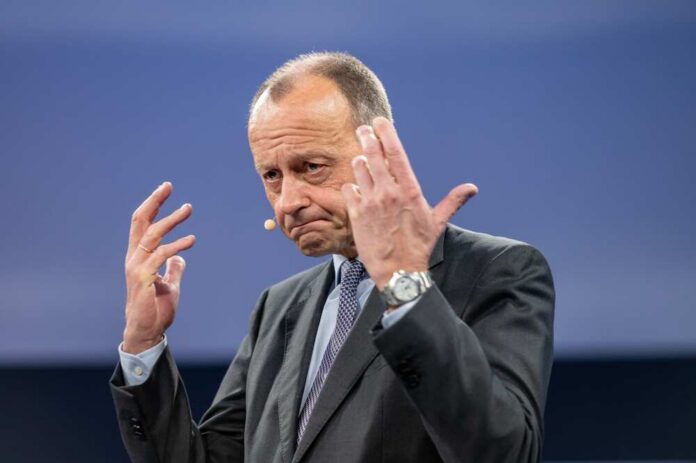
A NATO ally’s leader publicly said Iran is “humiliating” the United States—and President Trump responded by torching the remark as both ignorant and dangerously naïve about nuclear weapons.
Story Snapshot
- German Chancellor Friedrich Merz said Iran was “humiliating” the U.S. and warned the West lacks a clear strategy or exit plan in the Iran conflict.
- President Donald Trump fired back on Truth Social, accusing Merz of acting as if an Iranian nuclear weapon would be acceptable and attacking Germany’s leadership and economic performance.
- German Foreign Minister Johann Wadephul moved quickly to reframe Merz’s words as criticism of Iran’s behavior—not a slap at the United States.
- The dispute lands as U.S.-Iran fighting and diplomacy remain unsettled, with high stakes for energy security and alliance unity.
Merz’s “Humiliation” Comment Triggers a Public Split
German Chancellor Friedrich Merz set off a transatlantic political storm after remarks delivered April 28 at a school in Marsberg, Germany. Merz said Iran was “humiliating” the United States and questioned whether Washington had a coherent strategy or a visible exit plan, drawing comparisons to past U.S. struggles in Iraq and Afghanistan. The comment quickly circulated beyond Germany, becoming a proxy argument over credibility, deterrence, and who is steering Western policy during an active crisis.
Merz’s critics argue the phrasing matters because it elevates a propaganda narrative that adversaries often try to sell: that America is weak, divided, and improvizing. Supporters of Merz contend he was underscoring a strategic risk—negotiations dragging on while Iran gains leverage—rather than trying to score points against the U.S. Even so, the fact the message was delivered publicly, not privately through diplomatic channels, ensured it would be interpreted as a political judgment.
Trump’s Rebuttal: Nuclear Stakes and a Broader Leadership Critique
President Donald Trump responded April 29 via Truth Social with a direct rebuke. Trump asserted that Merz “thinks it’s OK for Iran to have a Nuclear Weapon,” dismissed him as uninformed, and tied the dispute to a broader swipe at German leadership and economic performance. The White House’s underlying message was familiar to Trump-era voters: U.S. deterrence depends on clarity and strength, and allies should avoid rhetoric that undercuts American negotiating leverage during war and high-stakes talks.
The factual limitation is important here: reporting indicates Merz did not explicitly endorse an Iranian nuclear weapon, even though Trump’s post framed Merz’s position that way. That gap between what was said and what was inferred is a recurring feature of modern alliance politics—viral soundbites turn quickly into hardened narratives. Still, Trump’s response reflects a real red line for many Americans across parties: preventing a hostile regime from reaching nuclear capability remains a core national-security priority.
Germany’s Walk-Back: Damage Control Through Wadephul
Germany’s government moved to limit the fallout after Trump’s post. Foreign Minister Johann Wadephul said Merz’s remarks were aimed at Iran’s conduct and negotiating tactics, not meant as an attack on the United States. The clarification tried to pull the statement back into a conventional framework: allies can debate tactics, but they should keep a united front toward Tehran. Merz also insisted publicly that his personal relationship with Trump remained intact despite the dispute.
That diplomatic cleanup highlights how quickly alliance messaging can become a liability. When an ally’s leader suggests the U.S. is being “humiliated,” it invites domestic political blowback in America and pressures Washington to show toughness—sometimes narrowing room for quiet bargaining. From a conservative perspective that prioritizes national sovereignty and credible deterrence, this episode is a reminder that U.S. policy is often forced to respond not only to adversaries, but also to allies’ public posturing.
Why This Spat Matters: Alliance Cohesion, Energy Risk, and Public Trust
The timing is not accidental background noise. The dispute is unfolding amid ongoing U.S.-Iran military pressure and uncertain negotiations, with the Strait of Hormuz and broader regional security frequently cited as pressure points. Any perception of wavering unity can raise the temperature in global markets and complicate coordination among NATO partners. Even if Merz intended to warn Tehran, the political effect inside the West can be the opposite: more distrust, more reactive politics, and less strategic patience.
Trump Hits Back at Germany’s Merz for Suggesting that Iran ‘Is Humiliating the US’, as Foreign Minister Wadephul Tries To Walk Back the Absurd Comments by Failing Chancellor
READ: https://t.co/EIKAaMn09g pic.twitter.com/mVZqSfRjUz
— The Gateway Pundit (@gatewaypundit) April 30, 2026
For Americans already convinced that institutions and “elite” decision-makers put careers and ideology ahead of results, the episode feeds a familiar frustration: leaders talk past each other while costs stack up at home. Conservatives see echoes of past foreign-policy misadventures—vague goals, open-ended commitments, and messaging that signals weakness. Liberals, meanwhile, tend to worry about escalation and alliance strain. The shared risk is that public quarrels replace clear objectives, leaving voters with slogans instead of accountability.
Sources:
Trump fires back at German Chancellor Merz’s Iran ‘humiliation’ comments
Trump slams German Chancellor Merz over Iran
Trump attacks Merz over Iran war criticism.
After Iran talks barb, Trump says Germany’s Merz doesn’t know what he’s talking about