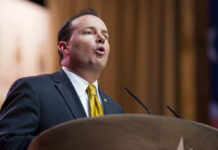


A Texas Democrat’s “progressive Christianity” pitch is colliding head-on with a basic question conservatives keep asking: is the media redefining faith to protect left-wing politics?
Story Snapshot
- David French publicly praised Texas Democratic Senate nominee James Talarico as a model of Christian “decency,” even as backlash intensified over Talarico’s past comments.
- Talarico, a Texas state representative and Presbyterian seminarian, won the Democratic primary on March 5, 2026, pushing a faith-forward message into a high-stakes general election.
- Critics argue Talarico’s positions on abortion and gender-related claims contradict core Christian doctrines, while defenders say attacks on his faith are politically motivated.
- The dispute highlights a growing split over whether “Christian witness” in politics is measured by personal tone or by adherence to theological and moral teaching.
French’s Praise Meets a Fast-Moving Backlash
David French’s latest column praising James Talarico has become a flashpoint in the broader fight over how Christianity is being used in politics. Reporting describes French “doubling down” after critics objected to his framing of Talarico as a kind of “Christian X-ray,” celebrated for warmth and rhetorical compassion while taking progressive positions that many believers see as non-negotiable moral issues. The controversy accelerated after Talarico’s March 5 primary win, which put the debate into immediate electoral context.
James Talarico’s rise is unusual for Texas Democrats because his campaign isn’t treating faith as a private footnote. Sources describe him as a 36-year-old Texas state representative and a Presbyterian seminarian whose public messaging pushes back on “Christian nationalism” and calls for clear church-state boundaries, while still using overtly Christian language. After the primary, he publicly predicted opponents would label him a “fake Christian,” an expectation that now looks central to his general-election strategy.
What Talarico Has Said—and Why It Matters Politically
The political heat is not just about style; it is tied to resurfaced clips and public remarks that critics argue touch foundational doctrine and ethics. Coverage points to a Joe Rogan appearance discussing abortion through a consent framework connected to the Annunciation story, and to a “God is nonbinary” remark that Talarico later clarified as meaning God is “beyond gender.” Other sermons and appearances reportedly blend Christian themes with progressive social categories, fueling arguments that religious language is being repurposed to sanctify left-wing priorities.
From a constitutional perspective, the fight also reflects competing instincts about religion in public life. Talarico’s emphasis on separation of church and state appeals to voters wary of government-led religion, but it also raises conservative concerns when “separation” is used as a one-way weapon—pressuring traditional believers to stay silent while progressive moral claims are treated as the default public ethic. The available reporting focuses on rhetoric and theology, not on specific proposed statutes, limiting conclusions about policy outcomes.
The Core Conservative Divide: Character vs. Doctrine
French’s argument, as described in the reporting, leans heavily on observable character: integrity, decency, and love as the outward markers of Christian authenticity in politics. Critics, including theologians and conservative commentators cited in the coverage, counter that defining “real Christianity” primarily through tone can function like an escape hatch—allowing politicians to hold progressive positions on abortion and gender while still being treated as faithful because they sound compassionate. That disagreement is now playing out publicly on the right.
The dispute also exposes an intra-conservative tension that Democrats appear eager to exploit in 2026: when prominent voices on the right criticize “MAGA Christianity” as cruel, Democrats can present a religiously literate candidate as the antidote. Supporters highlight Talarico’s seminarian background and “fresh tone,” while opponents stress that sincerity is not the same as sound doctrine. The reporting presents these as competing standards, with no shared referee beyond voters and denominational authorities.
Why This Fight Won’t Stay in Texas
Talarico’s nomination is being treated as a test case for a broader “religious left” strategy: using explicit faith language to soften progressive politics for culturally traditional voters. The coverage suggests this could reshape how campaigns talk about religion, especially if Democrats find candidates who can quote Scripture while defending policies many churches have historically opposed. For conservatives who prioritize limited government, family stability, and moral clarity, the concern is straightforward: rhetorical compassion can’t substitute for the real-world consequences of policy.
The available sources agree on the basic timeline—primary win, subsequent coverage, and escalating online backlash—while acknowledging some uncertainty around intent and interpretation. Talarico’s clarification about the “nonbinary” phrasing shows how quickly modern political language can collide with theology, and how campaigns attempt damage control when clips go viral. With the general election ahead, the central question remains: will Texans evaluate “faith in politics” by what a candidate believes and supports, or by how he speaks?
Sources:
Texas Dem Senate nominee Talarico draws praise, criticism from conservative columnist