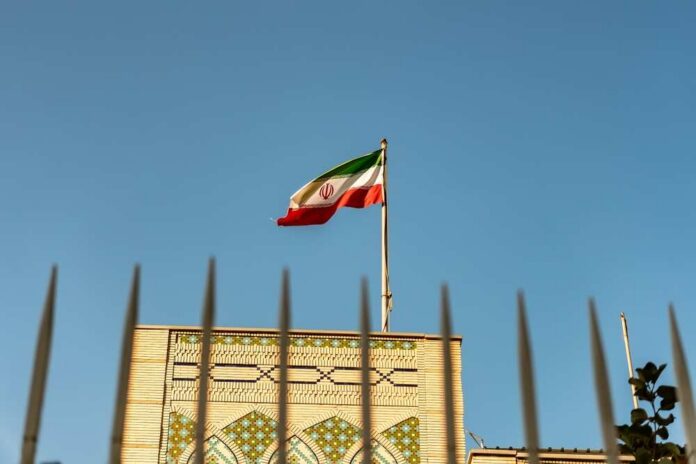
Iran’s regime is demanding “revenge” while refusing to show its new supreme leader on camera—fueling a fog of war where rumors race far ahead of verifiable facts.
Quick Take
- Reports agree Mojtaba Khamenei was injured in the Feb. 28 U.S./Israeli strikes that killed Ayatollah Ali Khamenei, but the severity remains disputed.
- Iranian state messaging has tried to project stability, including reading an attributed statement by an anchor instead of presenting Khamenei publicly.
- Claims that U.S. War Secretary Pete Hegseth “confirmed” disfigurement, limb loss, or coma are not independently verified in the provided reporting.
- The absence of visual proof has become the story—raising questions about succession stability inside a system built on opacity and control.
What’s Verified: Injury After the Strike, Then Silence
Multiple outlets tie the current uncertainty to the February 28, 2026 U.S./Israeli airstrikes that reportedly killed Ayatollah Ali Khamenei and injured his son Mojtaba, who was then announced as Iran’s new Supreme Leader on March 8. After that announcement, Mojtaba Khamenei has not been publicly seen, and reporting describes heightened security around treatment in Tehran. That absence, more than any single headline, is what keeps the speculation alive.
Iran’s system is designed to project continuity because the Supreme Leader sits above the presidency and controls the armed forces and judiciary. In that context, any extended disappearance—especially during a shooting war—creates a vacuum that state media must fill. Reports describe an attributed statement delivered through a news presenter rather than by Khamenei himself, a move that may calm loyalists short-term but also invites scrutiny because it sidesteps the simplest proof of fitness: a public appearance.
Competing Claims: “Safe and Sound” Versus Coma and Amputation Reports
The factual record in the available sources is mixed. Iranian-linked voices and officials have pushed back on the most extreme claims, with messaging that he is alive, hospitalized, and not critically injured. At the same time, other reports cite opposition figures, foreign outlets, and anonymous claims describing far more serious wounds, including internal injuries, coma, or amputations. Without photographs, a medical briefing, or a live address, the public is left sorting competing narratives rather than confirmed medical details.
The Hegseth “Confirmation” Problem: Sensational Claim, Thin Documentation
The headline-grabbing allegation is that War Secretary Pete Hegseth “confirmed” Mojtaba Khamenei is “wounded and likely disfigured,” with some versions adding limb loss and coma. The research provided, however, flags a key limitation: the underlying reporting does not clearly document a primary, on-the-record confirmation matching those graphic specifics. In plain terms, there is a major difference between “reports say” and “the U.S. confirmed,” and the available material does not close that gap.
Why Iran’s Messaging Matters to Americans Watching the War
Iran’s leaders have strong incentives to hide weakness, especially when retaliation threats are aimed at U.S. bases and regional allies. If Khamenei is merely recovering, the regime still benefits from buying time and preventing panic. If his condition is severe, secrecy becomes even more important to keep rival factions and outside adversaries guessing. Either way, the pattern reinforces what Americans have long observed about authoritarian systems: information is treated as a weapon, not a public right.
Strategic Stakes: Succession Stress and Escalation Risks
Reports outline a short-term risk of leadership confusion and a longer-term risk of internal fracture if Iran’s top figure cannot function. That matters because the Supreme Leader’s role is not ceremonial; it directs military and security strategy. For the Trump administration and U.S. voters exhausted by years of drift, the lesson is straightforward: clarity beats chaos. When regimes hide basic facts about leadership, miscalculation becomes more likely—especially during active conflict where threats and deterrence depend on credibility.
WATCH: War Sec Pete Hegseth Confirms Iranian Supreme Leader is 'Wounded and Likely Disfigured' Amid Reports That He's Lost Limbs and May Be in a Coma https://t.co/tB84kN9ZZB #gatewaypundit via @gatewaypundit
— Gail Russo (@GOPGigi) March 14, 2026
For now, the most responsible reading of the available coverage is narrow: Mojtaba Khamenei was reportedly injured, Iranian messaging has been defensive and carefully staged, and outside reports vary wildly on severity. Until Iran produces verifiable evidence—live remarks, recent video, or credible medical confirmation—Americans should treat dramatic claims, including alleged “confirmations,” as unproven. In an information war, skepticism is not cynicism; it’s basic due diligence.
Sources:
https://www.euronews.com/2026/03/12/missing-in-action-what-we-know-about-mojtaba-khameneis-condition
https://www.rferl.org/a/iran-supreme-leader-mojtaba-khamenei-health/33702161.html