
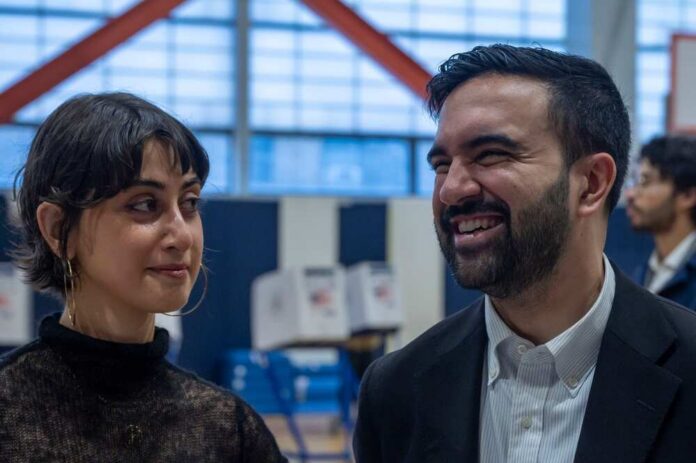
New York City’s new mayor is trying to brush off his wife’s politically charged activism as “private,” even as her online footprint collides with the city’s promise to fight antisemitism.
Story Snapshot
- Reports spotlight illustrator Rama Duwaji, wife of NYC Mayor Zohran Mamdani, for pro-Palestinian posts and “likes” tied to October 7 rhetoric and activist imagery.
- Mamdani has defended Duwaji as a “private person” with no role in his administration while City Hall reiterates Hamas is a terrorist organization and October 7 was a “horrific war crime.”
- Conservative artist Jon McNaughton argues Duwaji’s rising profile reflects political “connections,” comparing it to controversies over Hunter Biden’s art market success.
- Some reported social media “likes” were later not visible, leaving uncertainty over whether they were deleted or changed.
What sparked the controversy around Rama Duwaji’s posts
Coverage of Rama Duwaji intensified after Zohran Mamdani’s late-2025 election as New York City mayor. Duwaji, a Brooklyn-based animator and illustrator educated at Virginia Commonwealth University, has shared black-and-white sketches and political posts aligned with pro-Palestinian activism. Reports describe a post honoring Saleh al-Jafarawi—identified as an influencer known for celebrating Hamas’s October 7, 2023 attacks—along with other content depicting activist figures and “flotilla” imagery tied to the broader Gaza debate.
The dispute is not limited to what she posted publicly. Additional reporting describes Duwaji “liking” posts that framed October 7 as “resistance,” included “from the river to the sea” slogans, and shared images described as celebrating terrorists on Israeli vehicles. The same reports say she liked content dismissing claims of sexual violence on October 7 as a “mass rape hoax.” Those specific “likes” matter politically because they go beyond policy criticism and land in the moral question of excusing atrocities.
Mamdani’s response: “private person,” no official role
Zohran Mamdani’s public posture has been to separate his wife’s social media from his governing agenda. At a Bronx press appearance, he described Duwaji as “the love of my life” and emphasized she is a private person. City Hall also issued a clear statement that “Hamas is a terrorist organization” and that October 7 was a “horrific war crime.” That framing attempts to create a firewall: Duwaji’s expression is personal, Mamdani’s stance is official.
That firewall is politically difficult to maintain in New York City, where trust is the currency of public safety and civic cohesion. Mamdani has promised to combat antisemitism, yet reporting says Jewish voters supported him at a far lower rate than his opponent, reflecting existing skepticism. When a mayor’s household is linked to social media engagement that appears to rationalize or sanitize terrorist violence, the gap between private speech and public responsibility becomes the central test of credibility.
Why the “art world” angle is fueling backlash
Fox News’ reporting elevates a second, parallel critique: whether politics is inflating Duwaji’s artistic profile. Conservative artist Jon McNaughton described her work as resembling a “student sketchbook” and argued the attention resembles the “Hunter Biden effect,” where perceived access and political proximity can boost value and exposure. McNaughton’s broader point is cultural: politically aligned art is treated as virtuous activism in elite spaces while conservative work is more readily dismissed as propaganda.
The available reporting does not document specific sales figures, contracts, or government involvement tied to Duwaji’s work, so the “connections” argument remains more inference than proof. Still, the comparison resonates because it describes a pattern voters recognize: influential families often benefit from media protection and professional lift, even when controversies would end careers for normal Americans. In an era when many citizens want equal standards, that perception alone can keep a story alive.
Public trust and New York’s antisemitism commitments
Politically, the controversy is now larger than one Instagram account. Republicans, including Rep. Mike Lawler, have criticized Mamdani amid the reporting, and national figures have amplified the issue. The immediate impact is on confidence: residents and Jewish community leaders want to know whether City Hall’s antisemitism pledges will be enforced consistently, especially when criticism comes from inside the mayor’s own orbit. For public order, clarity matters as much as rhetoric.
Here's How Mamdani Excused His Wife Illustrating a Book for an Antisemitic Palestinian Activist
https://t.co/vRKhMjPKkB— Townhall Updates (@TownhallUpdates) March 16, 2026
Key factual limits remain. Some “likes” were reported as no longer visible after media attention, but the sources do not definitively prove whether they were removed, hidden, or altered by platform changes. The year for one described March post is also not specified with precision. Even with those gaps, the story’s core question persists for voters: whether New York’s leadership can credibly condemn terrorism and antisemitism while excusing or minimizing rhetoric that appears to do the opposite.
Sources:
Mamdani’s wife’s ‘student sketchbook’ art is Hunter Biden effect all over again, says U.S. artist