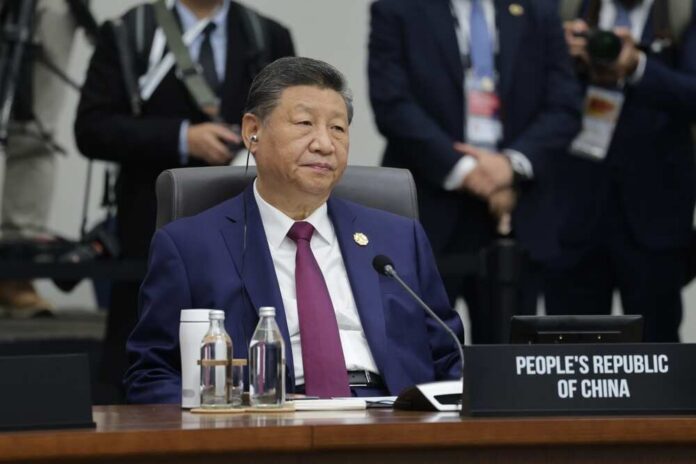
Xi Jinping has tightened the Communist Party’s grip on China so far that loyalty now sits above open competition for power.
Quick Take
- Xi has concentrated authority in his own hands and weakened older power-sharing norms.
- Personnel promotion now gives Party leaders wider control over appointments and rewards loyalty.
- Official Chinese documents still describe Party leadership as the base of reform and modernization.
- Some analysts say Xi’s changes fit old Leninist habits more than a brand-new system.
Xi’s Power Has Become More Personal
Multiple studies say Xi has shifted China away from collective rule and toward personal control. One recent analysis says his measures strengthened the consultative Leninist state in the short term, but also replaced predictable power transfer with stronger rule by one man. Another report says Xi still holds the top posts across the Party-state system and has made the bureaucracy answer to a tighter circle around him.
This matters because control over appointments shapes every level of government. Research on personnel politics under Xi says Party leaders now have more room in hiring and promotion, while the absence of fixed, objective rules makes clientelist ties more important. A separate study of provincial promotions found that Xi has favored close personal ties over normal promotion rules when choosing key local leaders. That pattern supports the view that loyalty now carries real weight.
Party Control Still Drives the System
The Chinese Communist Party has not hidden its direction. A 2024 Central Committee resolution said Party leadership provides the “fundamental guarantee” for deepening reform and advancing Chinese modernization. The same document stressed Xi Jinping’s “core position” inside the Party, which shows how official language ties reform to his authority. That framing does not prove open dictatorship by itself, but it does show that the Party sees stronger centralized control as a virtue, not a problem.
Earlier reform efforts had pointed in a different direction. A historical review of nomenklatura practice shows that Party authority over appointments has shifted over time, including transfers of control from the center to provincial committees in the 1980s. That background matters because it shows the current model is not the only way China has managed elite selection. Under Xi, however, the trend has clearly moved back toward stronger central oversight and tighter political screening.
The Counterargument Is Real, But Limited
Supporters of the current system argue that Xi has not destroyed all rules. They point to the same 2024 resolution, which says the tenure system for leading officials will be refined and handover mechanisms will be improved. They also note that the nomenklatura system itself is old and has long been used by the Party. Those points are accurate, but they do not erase the larger record of power moving upward and inward under Xi’s rule.
For readers worried about checks and balances, the key issue is not whether China still has procedures on paper. The key issue is who controls those procedures in practice. The available research says Xi has packed the top leadership with loyal allies, expanded direct Party control, and reduced the room for independent state bodies. That is why many analysts describe the system as a more personalist version of Leninist rule, even if Beijing calls it modernization.
Sources:
realcleardefense.com, libertarianinstitute.org, jamestown.org, prcleader.org, csis.org, indsr.org.tw, bbc.com, teneo.com, thinkchina.sg, ppa.hku.hk, api.pageplace.de