

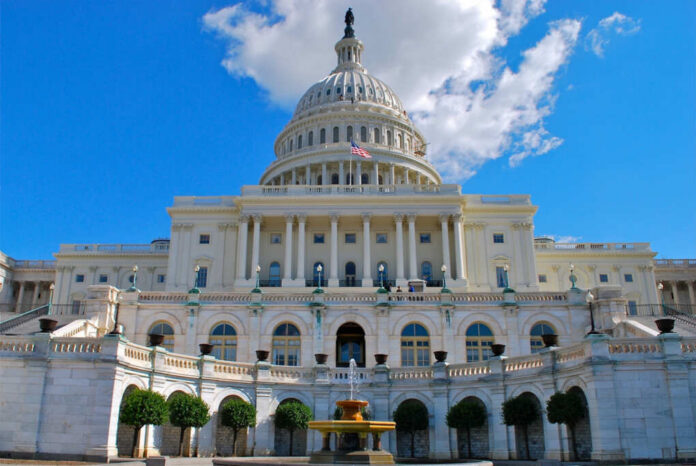
Senator Mike Lee is sounding the alarm: the Senate has only 8 legislative days left to pass the SAVE America Act before the 2026 midterms — and a handful of Republicans are standing in the way.
Story Snapshot
- Senator Mike Lee is pushing the Senate to pass the SAVE America Act before August 8, warning it will be too late to implement for the 2026 midterm elections.
- The bill requires proof of citizenship — such as a passport or birth certificate — to register to vote in federal elections, and has already passed the House.
- Three Republican senators — Lisa Murkowski, Mitch McConnell, and Thom Tillis — voted against the bill, blocking it from clearing the Senate’s 60-vote filibuster threshold.
- The Senate parliamentarian ruled the bill cannot be passed through the budget reconciliation process, closing off the simple-majority shortcut Republicans had hoped to use.
Lee Warns: Time Is Almost Up
Senator Mike Lee of Utah is urging his Republican colleagues to act fast. He says only 8 legislative days remain before the August 8 deadline — the last point at which states could realistically set up systems to enforce the law before the 2026 midterms. Lee argues that if the Senate doesn’t pass the Strengthening and Advancing Voting for Everyone (SAVE) America Act now, the opportunity is gone until after the election. He has called out fellow Republicans for dragging their feet, labeling some of them “lazy.”
The White House is fully behind the push. The administration’s official position is clear: “American citizens — and only American citizens — should decide American elections.” The bill passed the House in February 2026, with the House Rules Committee approving it by a 9-4 vote. It requires voters to show documentary proof of citizenship — a U.S. passport, birth certificate, or certain state and tribal IDs — when registering to vote in a federal election.
Republicans Block Their Own Bill
During a Senate procedural vote on June 4, 2026, Lee secured 50 votes in favor — but that wasn’t enough. Getting past a Senate filibuster requires 60 votes. Three Republicans — Murkowski, McConnell, and Tillis — voted no, leaving the bill 10 votes short of that threshold. Senate Majority Leader John Thune has said the bill simply “cannot pass” without eliminating the filibuster, a step Republican leadership has resisted. Lee’s frustration with his own party’s leadership is now public and pointed.
An earlier attempt to attach the bill to a budget reconciliation package also failed. Senator Lindsey Graham offered that amendment, but it fell 48-50. The Senate parliamentarian ruled the bill is “policy, non-budgetary” and cannot be bundled into reconciliation, which would have allowed passage with just 51 votes. That ruling shut down the main workaround Republicans had been counting on. The bill has only managed to reach 50 votes twice in the Senate, and never broken through.
Fourteen States Already Have Similar Laws
Supporters point out that 14 states have already passed laws requiring proof of citizenship to register to vote. That gives the federal version a clear real-world precedent. Lee also cites polling showing 70 to 80 percent public support for the idea, cutting across party lines. The White House frames this as a basic common-sense protection — making sure only citizens cast ballots in U.S. elections.
BREAKING: Senator Mike Lee is urging Senate Republicans to pass the SAVE America Act this month, calling it the most fitting tribute to Lindsey Graham after President Trump revealed their final conversation centered on the legislation. Lee said Graham was deeply committed to the… pic.twitter.com/jF0I0oeQ9A
— NewYork-Insight (@NewYork_Insight) July 12, 2026
Critics — mostly on the left — call the bill “voter suppression” and claim it would make registration harder for some eligible citizens. One analysis estimated about 12 percent of registered voters may lack the specific documents the bill requires. Opponents have not produced court rulings declaring the bill unconstitutional, and no verified data shows widespread non-citizen voting that would counter the bill’s core rationale. The left’s loudest objections rest on hypotheticals, not documented fraud-free election records. What is documented: a Senate Republican conference that, so far, cannot get out of its own way on one of the most popular election-integrity proposals in years.
Sources:
thegatewaypundit.com, usatoday.com, foxnews.com, americanprogress.org, democracydocket.com, facebook.com, whitehouse.gov, mapresearch.org