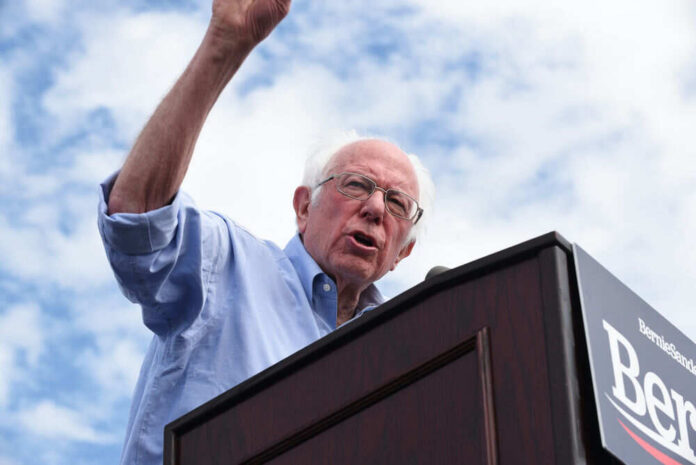
Democrats are fuming at Bernie Sanders because he is publicly accusing their party of selling out working Americans to billionaire donors and political consultants, and he is backing those charges with a full‑blown crusade against what he bluntly calls an “oligarchy.”
Story Snapshot
- Bernie Sanders says Democratic leaders turned their backs on workers decades ago and now serve billionaire interests.
- His “Fighting Oligarchy” tour blasts dark money, Super PACs, and corporate power, putting party elites on the spot.
- Election and polling data show a long decline in working-class support for Democrats, even as some groups stay loyal.
- Party strategists argue ideology and cultural issues, not economic betrayal, drive workers toward Republicans like Trump.
Sanders’ Charge: Democrats Chose Billionaires Over Workers
Senator Bernie Sanders has been telling anyone who will listen that the Democratic Party walked away from its working-class roots and climbed into bed with the wealthy and big corporations starting in the 1970s. In a major opinion piece, he argued party leaders decided it was “wise” to align with corporate America and the rich, a move he called “disastrous” for both the party and the country. For Sanders, this is not a minor misstep. He says today’s Democrats are trapped inside an “oligarchy” where economic elites and their consultants set the agenda while ordinary workers are left with stagnant wages, rising costs, and little political voice.
Sanders’ harsh language lands like a punch inside Democratic circles because it attacks the party’s core identity claims. Party leaders insist they fight for the middle class, yet Sanders says they abandoned economic justice to please donors and experts. He wants dark money banned and Super Political Action Committees shut down, arguing that as long as billionaires can pour unlimited cash into campaigns, no party can truly stand with working families. This cuts straight against the way modern Democrats fund campaigns, staff media operations, and craft poll‑tested messages. It is no surprise his words make many in the party, especially consultants and big fundraisers, furious.
The ‘Fighting Oligarchy’ Tour: Taking the Battle on the Road
Sanders is not just writing essays; he is on a nationwide “Fighting Oligarchy” tour with Representative Alexandria Ocasio‑Cortez, holding huge rallies focused on wealth taxes, universal health care, and breaking billionaire power. The tour launched in early 2025 and has drawn well over two hundred thousand people to events that hammer home a simple theme: a tiny wealthy class, backed by corporate lobbies and dark money, dominates American politics while regular workers fall behind. At one rally in Maine, Sanders laid out eye‑popping numbers, citing data that the top one percent now holds more wealth than most of the country combined, and pushing a five percent yearly tax on billionaire fortunes as a way to claw back what he calls fifty years of rigged rules.
That message thrills many progressives but puts mainstream Democrats in a bind. By attacking billionaire money and “consultant‑driven” politics, Sanders is effectively attacking how Democratic campaigns are run today. His tour also calls for remaking the party back to its Franklin Roosevelt‑era model, with open class warfare against corporate power and big social programs funded by taxing the rich. For party officials trying to keep business donors, suburban professionals, and union members all under one tent, Sanders’ approach looks dangerous. They worry he paints Democrats as corrupt and elitist at the very moment Republicans, led by Trump, are courting blue‑collar voters on issues like immigration, energy costs, and cultural pushback.
Why Party Strategists Push Back: Data and Ideology
Democratic strategists do not accept Sanders’ story that the party simply “sold out” workers. Analysts point to election data showing Vice President Kamala Harris won solid majorities among blue‑collar Black and Latino voters and beat Trump among union members in 2024. They argue this proves many working-class communities still trust Democrats more than Republicans on kitchen‑table issues. Other research says lower‑income white voters have not massively abandoned the party over the last forty years; instead, highly educated and wealthy voters moved toward Democrats, changing the overall coalition. To them, this shift reflects values and social views, not a plot to favor billionaires.
One major study from the University of Virginia’s Center for Politics makes a sharper claim. It finds ideology, especially conservatism on cultural and national issues, explains why so many white working‑class voters backed Trump and other Republicans. These voters are often more focused on immigration enforcement, crime, and resisting “woke” agendas than on wealth taxes or larger federal programs. A policy report aimed at reviving Democrats’ fortunes among workers shows that many want tougher action on illegal immigration, leaner government spending, and lower medical costs, with far fewer calling for a big government crusade against inequality. Strategic Democrats use this to argue that Sanders’ message may be out of step with the actual priorities of many working Americans.
Deep Cracks Inside the Democratic Coalition
Even with that counter‑argument, there is serious evidence that Democrats’ working‑class base has eroded over decades. Research on party coalitions suggests the share of working‑class voters inside the Democratic camp peaked in the mid‑20th century and has steadily fallen, replaced by more college‑educated and professional supporters. Commenters on the party’s own renewal debates complain that progressive leaders spend too much time talking to each other and not enough time listening to real‑world Trump voters, further feeding the image of a detached elite. Sanders’ attacks hit this sore spot hard, pointing to long‑term decline as proof the party’s choices on donors, consultants, and cultural fights have pushed many workers away.
Platner’s Rise and Fall Revives Old Questions About ‘Bernie Bros’ and Women
The collapse of Graham Platner’s Senate bid in Maine after a rape allegation renewed attention to a movement built by Senator Bernie Sanders that some say is too forgiving of male misconduct.By Patricia…
— B.P. Majors 🐍🗽🔯 (@MajorsBruc34400) July 11, 2026
Recent scandals also reveal how divided Democrats are over Sanders’ role. When Maine Senate candidate Graham Platner faced sexual assault claims, Sanders publicly urged him to drop out, while some party figures resisted. Commentators said the clash exposed old tensions between Sanders’ populist wing and the Chuck Schumer establishment wing, weakening efforts to present a united front. For conservative readers, this inner turmoil matters. It shows a party that lectures the country on “democracy” yet cannot agree on basic standards inside its own ranks, even as one of its most famous voices accuses it of serving an oligarchy and forgetting the workers who built America.
Sources:
townhall.com, wunc.org, aei.org, theconversation.com, statsandsociety.substack.com, brookings.edu, centerforpolitics.org, uakron.edu