
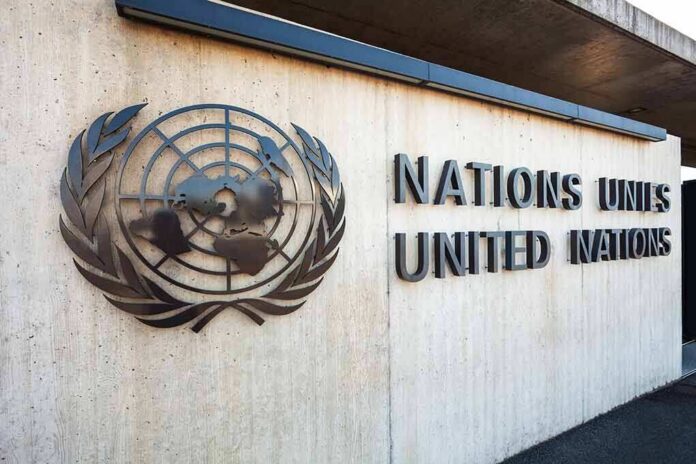
The United States blocked a United Nations pandemic declaration over unfinished pathogen-sharing terms and vague ideology that could pressure national sovereignty.
Story Snapshot
- The U.S. formally objected and stopped consensus adoption of a nonbinding UN pandemic declaration.
- U.S. envoy cited “divisive ideologies” and unfinished pathogen access and benefit-sharing language.
- The text now moves to the full General Assembly for further action without consensus support.
- World Health Organization materials confirm the pathogen-sharing annex remains under negotiation.
U.S. Blocks UN Consensus Over Unfinished Pathogen-Sharing Terms
United States representatives at the United Nations on September 25 formally objected to a nonbinding political declaration on pandemic prevention, preparedness, and response. That objection stopped adoption by consensus and forced the text to the General Assembly for further debate. The move came after months of friction over how countries share dangerous pathogen samples and who gets access to vaccines and drugs made from them. The decision signals caution against global commitments that could outpace clear, accountable rules.
Erica Schwartz, representing the United States, said the draft mixed in “divisive ideologies” and pointed to references tied to an unfinished pathogen access and benefit-sharing annex. She argued the declaration leaned on a process that had not reached international agreement. That concern focused on linking rapid pathogen sharing with promises of “equitable” product access, which remains unsettled in talks. The objection targeted unclear obligations that could later be framed as expectations on the United States.
Why Pathogen Sharing Became The Red Line
The World Health Organization has acknowledged that member states are still negotiating an annex to the Pandemic Agreement on a Pathogen Access and Benefit-Sharing system. That annex aims to match fast sharing of samples with access to vaccines, treatments, and tests. Supporters say this would speed detection and fairness. Critics warn that vague terms can harden into pressure on supply chains and technology, with real costs for national control and industry incentives.
European Union officials also raised objections, especially on intellectual property protections and forced technology transfer. Reports say the European Union pushed to keep any tech transfer voluntary and on agreed terms. That separate stance backs up that the draft text carried unresolved issues beyond the United States position alone. The shared resistance showed the declaration risked locking in political lines that outpaced the detailed negotiations still underway on key parts of the system.
A Nonbinding Text With Real Political Weight
Outlets and officials described the United Nations declaration as nonbinding. That is true on paper. But such texts still shape expectations, negotiations, and funding paths. Adopting language that references unfinished deals can box countries in later. The United States has argued since its World Health Organization withdrawal notice that pandemic governance failed during the last crisis and that officials hid or delayed vital data. That record added urgency to demand clear limits and verified terms before any new pledges.
World Health Organization leaders and several countries counter that the Pandemic Agreement respects sovereignty and does not let the World Health Organization order lockdowns, mandates, or border rules. Their materials say the Secretariat lacks power to change national law. Those claims set guardrails, but they do not resolve how a pathogen-sharing system would work in practice during the next emergency, when the pressure to “comply” with political pledges can be intense.
What Comes Next For U.S. Policy And Sovereignty
The United Nations will now consider the declaration without consensus, which weakens its political punch. United States officials can use this time to seek precise terms on sample sharing, data use, and benefit access that protect American law, supply chains, and innovation. Clear limits, transparent triggers, and voluntary technology sharing on mutually agreed terms would align with the European Union’s stated lines and with United States sovereignty concerns. Until then, Washington signaled it will not sign onto open-ended promises.
Bottom Line For Readers
The Trump administration’s team drew a hard line at the United Nations to prevent unclear global language from setting soft obligations on the United States. The fight was not about helping during outbreaks. It was about who decides when, how, and on what terms America shares its science and its stockpiles. With the pathogen-sharing annex still unfinished, pressing pause protects our authority, our supply chains, and our taxpayers while the details get nailed down.
Sources:
wsws.org, studioglobal.ai, kffhealthnews.org, thehill.com, abcnews.com, who.int