

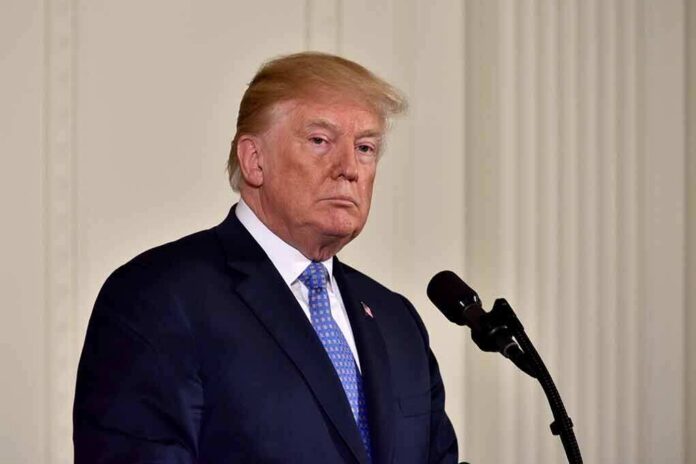
House lawmakers ordered President Trump to end U.S. hostilities with Iran after a razor-thin vote under the War Powers law, escalating a high-stakes constitutional showdown.
Story Snapshot
- The House passed a War Powers resolution 215–208 directing a halt to U.S. hostilities with Iran.
- A small group of Republicans joined Democrats, revealing a rare split on war powers.
- The measure pressures the White House but does not automatically stop operations.
- President Trump signaled he acted under his constitutional authority as Commander in Chief.
War Powers Vote Puts Congress Back in the Fight
The House of Representatives approved a resolution directing President Trump to remove United States forces from hostilities with Iran, passing 215 to 208. The official roll call shows four Republicans joining Democrats to form the majority, underscoring a narrow but real split inside the GOP over how to handle Iran and war powers. The vote used the War Powers framework adopted after Vietnam. It is a formal demand by Congress to assert its role before any further fighting expands or drags on.
Reporters noted that while the resolution is a serious rebuke, it does not by itself stop current operations. It increases political pressure and sets a legal marker that Congress wants either a withdrawal or explicit authorization before continued hostilities. National Public Radio explained the measure’s effect is to demand removal from hostilities, but it carries limits and requires further action to bind all branches in practice. That means the constitutional tug-of-war now shifts to next steps.
What the Resolution Demands and Why It Matters
The text directs the President, under section 5(c) of the War Powers Resolution, to remove United States forces from hostilities with Iran unless Congress authorizes force. Congress created this process in 1973 to check any president who sends troops into combat without a declaration of war or a clear statute. Congressional research summaries describe how the War Powers Resolution forces consultation, reporting within forty-eight hours, and withdrawal if lawmakers do not approve continued action. This vote follows that template and reasserts the people’s voice through Congress.
The War Powers record shows this fight is not new. After Korea and Vietnam, lawmakers tried to reclaim their duty to decide when the nation goes to war. Scholars call the statute’s legal path “unhappy,” because presidents of both parties often claim broad executive power while Congress pushes back in waves. This makes the current Iran debate part of a long pattern. The House vote signals lawmakers want clearer limits, defined missions, and accountability before lives and money are risked further overseas.
Where the White House Stands and the Next Steps
The White House has pointed to the President’s constitutional role. Legal summaries of the administration’s notification say President Trump cited his authority as Commander in Chief and Chief Executive when he directed strikes and warned of possible future actions to address threats. He did not rely on a separate statute in that message, which mirrors the long-running executive view of inherent power to defend Americans swiftly. That position will now be tested against Congress’s demand.
Major outlets report the House vote is a political and legal warning shot, not an immediate shutdown of operations. Coverage emphasized that additional action in the Senate and further negotiations would be needed to force a binding end to hostilities or to craft a new authorization tailored to Iran. Practically, that means the administration and Congress must either agree on a clear mission and limits or continue a public clash that leaves troops in an uncertain policy space. Voters will watch who sets strategy and who answers for the costs.
Constitutional Stakes for Conservatives
Conservatives value peace through strength, but they also demand constitutional order. The House roll call shows some Republicans joined to insist on proper authorization before open-ended fighting with Iran. That stance aligns with the Founders’ design: Congress declares war, the President commands the military. Reasserting that balance protects troops, restrains mission creep, and keeps Washington from writing blank checks that grow debt and distract from border security and energy policy here at home.
🚨 7 GOP LAWMAKERS BROKE FROM TRUMP!
They joined every voting Democrat to pass a House war powers resolution 220-204 that would limit U.S. military operations in Iran, arguing the 60-day clock under the 1973 War Powers Resolution has already expired and Congress—not the White… pic.twitter.com/pXLHDtHaM3
— The Politic Prepper (@PoliticPrepper) September 16, 2026
The fight now should center on clarity. If force is needed, Congress can debate and vote on a tight authorization. If missions are done, the executive can wind them down in an orderly way. Either path honors the Constitution, respects service members, and avoids endless commitments that raise costs for families dealing with inflation and high energy bills. The House vote has opened the door; leaders in both branches must now choose a course that is strong, lawful, and accountable.
Sources:
thegatewaypundit.com, reuters.com, bbc.com, apnews.com, vinnews.com, cnbc.com