
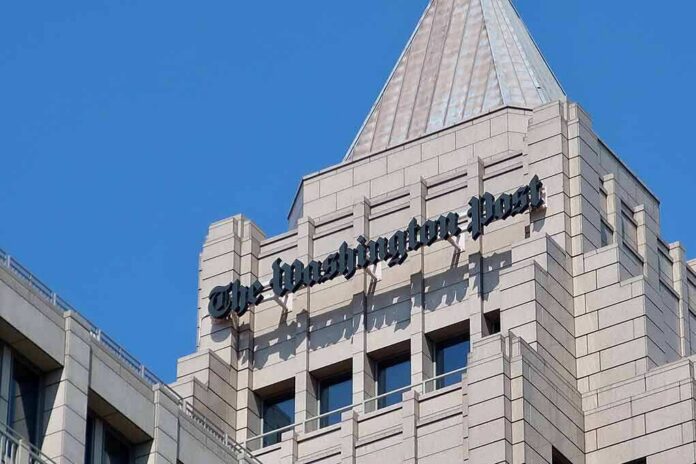
An arbitrator ruled The Washington Post lacked “good and sufficient cause” to fire a columnist over anti-Charlie Kirk posts and ordered full reinstatement with back pay.
Story Highlights
- An arbitrator found the firing violated the union contract and ordered reinstatement with full back pay.
- The Post’s “gross misconduct” claim failed to meet the contract’s standard of proof.
- The case centers on two Bluesky posts made after Charlie Kirk’s killing and the paper’s social media policy.
- Attiah says she has not yet been contacted to return to work after the order.
Arbitrator Overturns Firing And Orders Full Make-Whole Relief
On August 24, 2026, private arbitrator Sarah Miller Espinosa ruled The Washington Post did not have “good and sufficient cause” to terminate opinion writer Karen Attiah. The written award ordered the paper to reinstate her and to make her whole, including full back pay and lost benefits. The arbitrator also found the Post failed to prove “gross misconduct,” the label management used when it cut ties with her last September. The union grievance succeeded under the collective bargaining agreement.
Several days after the award, Attiah said she had not yet received a call about returning. She told a Washington, District of Columbia, outlet she was “waiting to hear from the Washington Post” and was willing to go back to work. That status highlights a common friction after arbitration: the paper must decide how to comply and when to bring an employee back into the newsroom. Back pay continues to accrue until the employer complies.
Why The Case Turned: Policy Claims Versus Contract Standards
The Post’s termination letter cited its social media rules and accused Attiah of “gross misconduct,” claiming her public comments harmed the paper’s integrity and could endanger staff safety. The letter focused on two Bluesky posts made after Charlie Kirk’s killing and noted her account identified her as a Post columnist. Management argued those posts violated the policy’s respect and reputational clauses. The arbitrator rejected the discharge because the paper did not meet its contractual burden.
Reuters, The Wall Street Journal, and other outlets reported the core holdings the award made: no good cause, no gross misconduct, reinstatement, and back pay. Those findings track typical labor arbitration outcomes when employers overreach on discharge without clear, proven violations. The decision does not bless the tone of the posts. It rules the employer did not carry its proof under the contract’s standards. That legal difference drove the result more than the culture-war debate.
What Was Said Online And How It Factored
Coverage summarized one post in which Attiah declined “performative mourning” for “a white man that espoused violence.” The Post tied its concerns to that framing and to her identification as a columnist on the platform. Critics argued the post smeared a murdered conservative activist. Supporters called it protected opinion. The arbitrator did not adjudicate political truth claims. She assessed whether the employer proved policy-violating misconduct that met the contract threshold for firing. She found it did not.
Some reporting said managers also believed she misrepresented a past Charlie Kirk comment about affirmative action, though that detail appeared through outside accounts, not the award itself. The binding piece remains the written decision and remedy: restore the job, pay the wages and benefits, and treat the discharge as contractually improper. That result sets a precedent inside the outlet for how far managers can go on social media discipline of opinion staff.
Free Speech Principles, Newsroom Rules, And Fair Process
The advocacy framing around the case shouted “First Amendment victory,” but the award is a labor ruling, not a constitutional judgment against government. Still, the outcome reinforces a practical point conservatives know: free speech norms collapse when vague civility rules become speech weapons. If a newsroom can label disfavored opinions as “gross misconduct,” then any voice can be silenced. Here, process and proof beat corporate reputation management in a union forum.
An independent arbitrator ruled that former Washington Post columnist Karen Attiah was wrongfully terminated last year over social posts tied to the death of Charlie Kirk, and ordered her reinstated with back pay and lost benefits.
— Kyle Griffin (@kylegriffin1) August 24, 2026
For readers who respected Charlie Kirk, the posts felt cruel. For many, they showed the contempt some media figures have for conservative Americans. Yet the rule of law cut through bias. The arbitrator required evidence that fit the contract. The Post did not have it. That standard protects everyone. Today it shields an opinion writer; tomorrow it can shield a conservative journalist targeted for speaking up about borders, faith, or the Second Amendment. The principle matters most when speech offends.
What Comes Next For The Post And For Readers
The Post must decide how it will comply, where it will place Attiah, and how it will apply its social media policy going forward. If it drags its feet, it risks more liability tied to back pay. Readers should watch whether the paper applies rules evenhandedly to all viewpoints or only when a post angers the progressive base. Transparent standards, clear evidence, and equal enforcement are the only way to avoid repeat losses in arbitration and rebuild public trust after this ruling.
Sources:
pjmedia.com, wtop.com, deadline.com, wsj.com, nytimes.com