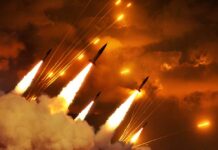
President Trump’s order to resume nuclear weapon testing shatters a 33-year moratorium, igniting fierce debate over America’s military strength and global security risks.
Story Snapshot
- Trump’s directive reverses decades of U.S. nuclear test restraint, citing Russia and China as benchmarks.
- Announcement made directly via social media before a major diplomatic summit with China.
- Pentagon begins preparations; no test confirmed as of October 31, 2025.
- The policy provokes international criticism and raises alarm about renewed arms race.
Trump’s Nuclear Testing Order: A Strategic Shift in U.S. Defense Policy
On October 30, 2025, President Donald Trump announced via Truth Social that the Pentagon would immediately prepare to resume nuclear weapons testing. By referencing Russia and China’s programs, Trump signaled a dramatic strategic shift intended to reassert American military dominance after years of perceived decline. This marks the first presidential order to restart nuclear testing since 1992, bypassing traditional diplomatic protocols and coinciding with high-level talks at the Asia-Pacific Economic Cooperation summit in South Korea. The timing and method of the announcement underscore the administration’s intent to confront adversaries directly and unambiguously.
President Trump Orders the Department of War to Resume Nuclear Weapon Tests https://t.co/Rp2a35oyPm
— ConservativeLibrarian (@ConserLibrarian) October 30, 2025
The directive comes as the U.S. reconsiders its longstanding approach to nuclear deterrence. Since 1992, the United States has abided by a global moratorium under the Comprehensive Nuclear-Test-Ban Treaty, which was signed but never ratified by most major powers. Russia, China, and North Korea have all advanced their nuclear capabilities, with North Korea continuing to conduct tests into the 21st century. The Pentagon’s immediate preparations highlight the seriousness of the directive, though the lack of a confirmed test as of October 31 indicates operational and political hurdles remain.
Watch; Trump Orders Pentagon to Resume Nuclear Tests Over Russia, China Moves | Firstpost America
Diplomatic Tensions and Domestic Fallout
This abrupt policy reversal has triggered international and domestic controversy. Allies and adversaries alike have voiced concerns about destabilizing decades of arms control progress and reigniting a global nuclear arms race. Domestically, Congress faces renewed pressure to oversee executive decisions involving nuclear policy, funding, and treaty obligations. The announcement’s proximity to the diplomatic summit with China adds further complexity, as it may influence negotiations over military and economic competition in the Asia-Pacific region.
Impact on Security, Economy, and Global Norms
The short-term effects of Trump’s directive include diplomatic fallout and increased scrutiny from arms control organizations. In the long term, resuming nuclear testing could erode the global test ban regime, provoke a renewed arms race, and increase proliferation risks as other nations respond in kind. Economically, defense contractors may benefit from increased spending, but public health and environmental concerns loom large near test sites. Politically, the move polarizes domestic opinion, raising questions about constitutional checks on executive power and the future of America’s international commitments. The nuclear weapons industry may see significant activity, while non-proliferation efforts face major setbacks.
Sources:
Trump Orders Pentagon to Match Other Nations’ Nuclear Testing – The American Legion