
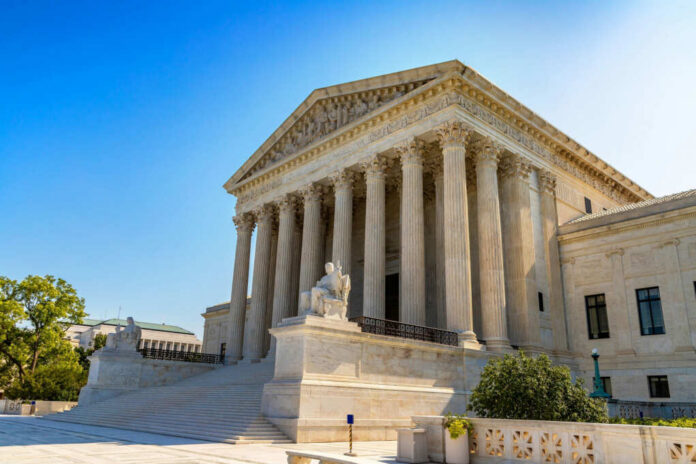
Hundreds of protesters swarmed the Supreme Court steps on April 1, 2026, clashing with police during oral arguments in a case that could force Big Tech to amplify conservative voices—or hand them unchecked power over speech.
Story Snapshot
- Protests peaked with hundreds outside as Justices heard NetChoice v. Paxton, challenging Texas and Florida laws against social media censorship.
- Texas AG Ken Paxton fights Big Tech silencing conservatives; 15 arrests made after clashes with Capitol Police.
- 6-3 conservative Court majority may strike down state laws, aligning with Trump’s anti-censorship stance but risking government overreach concerns.
- MAGA base frustrated with endless distractions from endless wars, inflation, and immigration while free speech hangs in balance.
Protests Erupt Amid High-Stakes Oral Arguments
Protesters assembled on Supreme Court steps at 9 AM ET on April 1, 2026, ahead of oral arguments in NetChoice v. Paxton and Moody v. NetChoice. Crowds swelled to hundreds by mid-morning, chanting and holding signs against state laws restricting social media moderation. U.S. Capitol Police reported minor skirmishes. Arguments began at 10 AM inside, with Justices Kavanaugh and Barrett probing moderation precedents. Demonstrations peaked outside without disrupting proceedings. Police dispersed crowds by 1 PM ET after two hours.
Case Challenges Big Tech Censorship Power
NetChoice, representing Meta and Google, defends platforms’ First Amendment right to moderate content. Texas AG Ken Paxton enforces HB 20, barring viewpoint-based censorship to protect conservative speech. Florida’s similar law faces the same challenge. Lower courts split: the 5th Circuit upheld restrictions, while the 11th struck them down. Certiorari granted in October 2024 set arguments for April 1, 2026. Paxton stated on X, “Big Tech can’t silence conservatives anymore.” NetChoice countered that the ruling defines online free speech.
Protesters, including Free Speech Coalition and progressive groups, opposed the laws as “forced speech” enabling misinformation. They aligned with tech interests against red-state measures. Historical protests trace to Roe v. Wade overturn in Dobbs and Bruen gun rights rulings. This event marks the largest on argument day for a tech case, amid 2026 midterms where censorship polarizes Republicans against Democrats favoring moderation.
Stakeholders Clash Over Free Speech Boundaries
Texas and Florida AGs battle Big Tech’s $10 million lobbying influence via amicus briefs. The Biden Administration’s Solicitor General supports platforms in February 2026 brief. Supreme Court holds a 6-3 conservative tilt, with Justices Alito and Sotomayor key voices. U.S. Capitol Police enforced post-January 6 protocols, making 15 arrests for unlawful assembly. Protests shifted to Capitol Hill after clearance. Permits denied March 30 prompted defiance.
Experts diverge: EFF’s David Greene warns ruling guts platform autonomy; Heritage’s Sarah Field hails viewpoint diversity win. Stanford’s Daphne Keller predicts 70% chance SCOTUS reverses 5th Circuit. Volokh Conspiracy forecasts 6-3 for NetChoice citing 303 Creative precedent. Conservatives like Paxton see victory against censorship; others fear eroding Section 230 safe harbors.
Impacts Threaten Conservative Priorities
Short-term, D.C. security costs hit $500,000 as media frenzy elevates visibility. Platforms paused moderation changes. Long-term, ruling could invalidate 10+ state laws affecting 100 million users, swinging billions in Meta and Google market caps. Conservatives gain amplified voices but risk Big Tech unchecked power amid frustrations with high energy costs, illegal immigration, and Trump’s promise to avoid new wars. Midterms loom with censorship as wedge issue. Decision expected June 2026, reshaping tech regulation without federal overreach.
MAGA supporters question endless regime change wars and Israel aid, now eyeing domestic fights like this. Trump’s second term demands focus on constitutional liberties over distractions. Limited data on exact crowd motives notes progressive tilt against conservative laws, urging vigilance on First Amendment erosion.