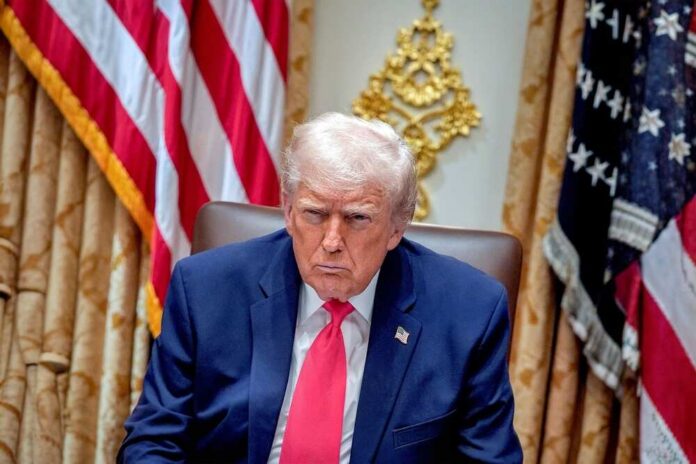
President Trump has imposed a total naval blockade on Iranian ports in a high-stakes gambit that could reshape global energy markets while putting American servicemembers in the crosshairs of an open-ended Middle East conflict.
Story Snapshot
- US Navy blockades all Iranian ports effective April 13 after seven weeks of Iran choking the Strait of Hormuz
- Blockade targets 23 million barrels of Iranian floating oil while risking global price spikes and potential confrontation with China
- Failed weekend peace talks and expiring ceasefire leave Trump’s “blockade the blockaders” strategy without clear exit plan
- US troops face 24/7 boarding operations with threats to “eliminate” ships approaching the blockade zone
Trump’s Naval Countermove Against Iranian Stranglehold
President Donald Trump announced a complete US naval blockade of Iranian ports on the Arabian Gulf and Gulf of Oman, effective April 13 at 10 a.m. Eastern Time. The action directly responds to Iran’s seven-week de facto blockade of the Strait of Hormuz, a chokepoint controlling twenty percent of global oil trade. US Central Command began enforcing the blockade against all maritime traffic entering or exiting Iranian ports, with Trump declaring via social media that approaching vessels “will be eliminated.” Oil tankers rerouted ahead of enforcement as the administration framed the move as essential to countering Iranian economic blackmail.
Failed Diplomacy Precedes Military Escalation
The blockade follows marathon negotiations over the weekend that collapsed without resolving nuclear disputes or reopening the Strait of Hormuz. A fragile two-week ceasefire between US and Iranian forces nears expiration, with the administration considering resumed strikes. Iran has leveraged its control of the vital shipping lane to impose tolls on select vessels while threatening others, enabling what Trump characterizes as extortion. The conflict traces back to Trump’s withdrawal from the Obama-era nuclear deal, which Iran answered by weaponizing its geographic control over global energy flows through asymmetric maritime threats.
Selective Enforcement Creates Strategic Vulnerabilities
CENTCOM officials emphasize impartial enforcement against vessels of all nations attempting to access Iranian ports, while explicitly permitting transit to non-Iranian destinations through the Strait. This selective approach differs from a full closure but creates enforcement loopholes that analysts warn could undermine the blockade’s effectiveness. The US Navy must conduct visit-board-search-seizure operations on suspect vessels while clearing potential mines, putting American sailors in continuous danger. Iran holds approximately 23 million barrels of oil in floating storage at its Arabian Gulf and Gulf of Oman ports, presenting immediate targets for the economic pressure campaign.
Global Consequences and China Wild Card
The blockade threatens to spike global oil prices while crippling Iran’s primary revenue source, but carries profound risks for American interests and international stability. Trump’s strategy lacks defined end conditions, committing US forces to an indefinite mission that keeps troops in harm’s way around the clock. China represents a dangerous wild card, as enforcement against Chinese-flagged vessels entering Iranian ports could trigger direct confrontation between nuclear powers. Shipping companies worldwide are avoiding the area, disrupting energy markets that depend on the Strait’s critical twenty percent share of oil transit. What Trump portrays as decisive naval dominance, critics describe as “grasping at straws” with potential to escalate rather than resolve the underlying conflict.
Analysts question whether the blockade represents strategic brilliance or desperation in a seven-week war that has already defied easy solutions. The administration’s willingness to risk broader conflict reflects frustration with Iran’s asymmetric tactics, but the open-ended commitment raises concerns about mission creep in a volatile region. For Americans who remember decades of Middle East entanglements, Trump’s latest move underscores how quickly limited actions can spiral into protracted conflicts. Whether this gambit forces Iran to capitulate or drags the United States deeper into an unwinnable standoff remains the critical question as naval forces assume their positions and the world watches oil markets for the inevitable price shock.
Sources:
Trump declares ‘complete blockade’ on Strait of Hormuz – The Jerusalem Post
Trump blockade could pull China into war – The Times