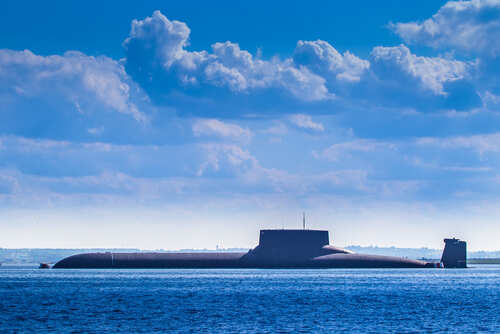
Iran’s vaunted “Black Hole” submarines were supposed to menace U.S. ships in the Strait of Hormuz—but new reporting suggests the fleet is either crippled in port or simply not where anyone can verify it is.
Story Snapshot
- U.S. officials publicly confirmed a Kilo-class submarine was struck at the Bandar Abbas pier during Operation Epic Fury.
- Open-source satellite imagery indicates Iran’s three Russian-built Kilo-class boats were in refit as the air campaign intensified, leaving them vulnerable.
- Conflicting reports suggest one submarine may have returned to service, while the rest remain out of action or unaccounted for.
- The uncertainty matters because diesel-electric submarines can threaten shipping and U.S. naval forces in the shallow waters near the Strait of Hormuz.
What the U.S. says happened at Bandar Abbas
U.S. Joint Chiefs Chairman Gen. Dan Caine stated in early March 2026 that a submarine was struck at the Bandar Abbas pier, a key Iranian naval hub. That claim, paired with satellite imagery circulating in defense reporting, fueled headlines that Iran’s “Black Hole” boats had effectively vanished. The core point is narrower but still significant: at least one high-value asset was hit while tied to shore infrastructure, not prowling at sea.
Iran’s Kilo-class submarines—IRIS Taregh (also spelled Tareq), Noor, and Yunes—were purchased from Russia in the 1990s and are known for quiet operations that complicate detection. Each boat is a large diesel-electric platform designed to carry torpedoes and mines, a classic toolkit for pressuring naval traffic. When a submarine is damaged in port, the loss is more than hull metal; it can also reflect broken maintenance cycles, damaged piers, and disrupted logistics that keep a fleet deployable.
Why “missing” may mean hidden, grounded, or both
Some coverage framed the story as if three submarines simply disappeared from the map. The research base is more mixed: multiple accounts emphasize refits and port status in late February 2026, with at least one strike confirmed afterward, while other reporting points to a submarine possibly returning to service after months in dry dock. With wartime operational security, “missing” can mean deliberately concealed under coverings or relocated within port facilities, not necessarily sunk.
That uncertainty is not trivial for planners. The Strait of Hormuz and surrounding waters are relatively shallow, and diesel-electric boats can exploit geography for ambush tactics if they slip out undetected. At the same time, the same environment limits maneuvering room and can expose submarines to persistent surveillance and anti-submarine assets once an opponent holds air and sea control. In practical terms, Iran’s best submarine advantage depends on being able to sortie reliably—and refit bottlenecks undermine that advantage.
The bigger story: readiness problems meet U.S. air superiority
Several sources converge on a central vulnerability: maintenance and modernization are hard under sanctions, and complex submarines demand steady parts, expertise, and protected facilities. Reports describing the boats as being caught “napping” point to timing—extended refits overlapping with a U.S.-led air campaign that targeted naval assets and infrastructure. If docks, power, cranes, and workshops are degraded, even an undamaged hull can remain effectively sidelined.
Strategic stakes for Americans: shipping lanes, oil risk, and deterrence
For the United States and allies, the near-term significance is risk reduction. A functioning Kilo in the area can force convoys, rerouting, expensive anti-submarine coverage, and higher insurance costs for global shipping—especially when mines are part of the threat picture. If Iran’s Kilo fleet is truly immobile, the deterrent shifts away from big submarines and toward smaller platforms and asymmetric options. That may steady markets, but it does not eliminate risk in a region where miscalculation can still spike energy prices.
Iran’s ‘Black Hole’ Kilo-Class Stealth Submarines Have Gone Missinghttps://t.co/4Hr1g9aU7r
— 19FortyFive (@19_forty_five) April 11, 2026
The reporting also highlights a recurring modern-war lesson: expensive “prestige” weapons only matter if they can generate real, repeatable capability at the moment of crisis. Conservatives who prioritize credible deterrence tend to focus on readiness, maintenance, and hard logistics—not just headline platforms. For skeptics across the spectrum who believe elites mismanage institutions, the fog around these submarines is a reminder that public narratives can race ahead of verifiable facts, especially when open-source imagery is partial and combat damage assessments take time.
Sources:
Iran’s ‘Black Hole’ Kilo-Class Submarines Are Out Of Action Against The U.S. Navy
Why Iran’s Navy Is Missing Three Submarines
Iran’s Black Hole Kilo-Class Submarines Are Out Of Action Against The U.S. Navy