

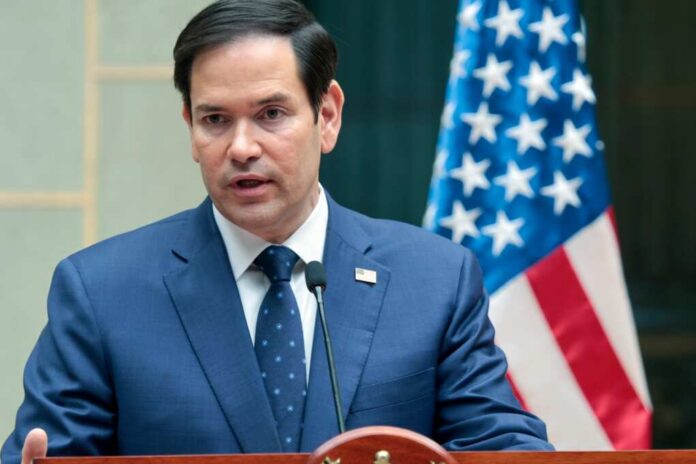
While American military forces demonstrate overwhelming capability in the escalating Iran war, bureaucratic dysfunction at an understaffed State Department leaves thousands of U.S. citizens stranded in the Middle East, unable to receive basic assistance to escape the conflict zone.
Story Snapshot
- State Department call centers overwhelmed as Americans spend hours on hold trying to evacuate from the Middle East war zone
- Over 9,000 Americans forced to self-evacuate while other nations efficiently rescue their citizens from the conflict
- Consular Affairs division crippled by chronic understaffing during the largest U.S. military deployment since 2003 Iraq invasion
- Secretary of State Rubio acknowledges airspace restrictions and operational challenges hamper evacuation efforts as war enters Day 5
Bureaucratic Failure Amid Military Success
The State Department’s consular crisis exposes a troubling reality: while President Trump’s military forces successfully degraded Iranian defenses and naval capabilities by March 4, 2026, the department tasked with protecting American civilians abroad cannot answer phone calls. Americans stranded across the Middle East report spending hours on hold, receiving only generic emails as U.S. and Israeli forces struck over 2,000 Iranian targets. This bureaucratic paralysis stands in stark contrast to the decisive military action that began February 28, demonstrating how years of governmental bloat created inefficiency exactly where citizens need competence most.
Secretary of State Marco Rubio disclosed that evacuations proceeded through chartered flights from the UAE, Saudi Arabia, and Jordan, yet acknowledged significant delays due to closed airspace and operational bottlenecks. Over 9,000 Americans self-evacuated without State Department assistance, while consular staff managed only 3,000 calls amid the chaos. European and Asian nations efficiently extracted their citizens, highlighting how America’s diplomatic infrastructure fails its people when crisis demands swift action. This failure represents not just administrative incompetence but a betrayal of the government’s most fundamental duty: protecting American citizens.
Understaffing Endangers American Lives
The consular affairs division’s inability to scale operations during the Iran war reveals structural weaknesses that prior administrations ignored. As 50,000 U.S. troops deployed alongside 200 aircraft and two carrier strike groups, the State Department lacked sufficient personnel to manage evacuation logistics for civilians caught in the crossfire. Americans reported frustration accessing emergency services while Iran launched over 500 ballistic missiles and 2,000 drones in retaliation for U.S. strikes. The disconnect between military readiness and diplomatic support capacity raises serious questions about how previous leadership allocated resources, prioritizing bureaucratic expansion over mission-critical functions that directly impact citizen safety.
Embassy drawdowns in Jordan, Lebanon, and Iraq compounded the crisis as staff evacuated rather than assisted stranded Americans. This retreat occurred while Defense Secretary Pete Hegseth oversaw Operation Epic Fury, systematically destroying Iranian missile launchers, naval assets, and nuclear infrastructure. The military executed its mission with precision; the State Department fumbled basic consular services. For Americans who believe government exists to serve citizens rather than perpetuate itself, this disparity confirms longstanding concerns about bloated agencies unable to perform core functions when tested by real-world emergencies demanding accountability and results.
Contrasting Priorities and Constitutional Duty
The State Department’s operational collapse during active conflict underscores how institutional priorities strayed from constitutional obligations. President Trump initiated strikes after intelligence suggested imminent Iranian attacks, responding to threats against American interests with decisive force. Yet the diplomatic apparatus proved unprepared for predictable consequences: Americans needing emergency assistance in a war zone. This failure reflects bureaucratic culture that favored process over outcomes, leaving citizens vulnerable while military personnel risked their lives. The understaffing crisis demonstrates why draining the swamp matters—not as rhetoric but as necessary reform to restore governmental competence and accountability to the American people who fund these operations.
https://twitter.com/AlgiersHerald/status/2034542202609877411
Senators Richard Blumenthal and Elizabeth Warren expressed fears of escalation toward ground troop deployment, yet their concerns ignored the immediate crisis: Americans abandoned by their own government’s consular services. Trump’s promise to conclude operations within four weeks reflects commitment to defined objectives, contrasting with the State Department’s open-ended dysfunction. As Iranian leadership splintered and the Revolutionary Guards defied calls for restraint, American citizens needed evacuation support, not bureaucratic excuses about airspace restrictions. This episode reinforces the necessity of reforming agencies that cannot execute basic missions, ensuring future crises meet competent responses rather than administrative paralysis that endangers lives while taxpayers fund inefficiency.
Sources:
U.S., Israel pound Iran’s defenses and ships as war enters day 5 – OPB