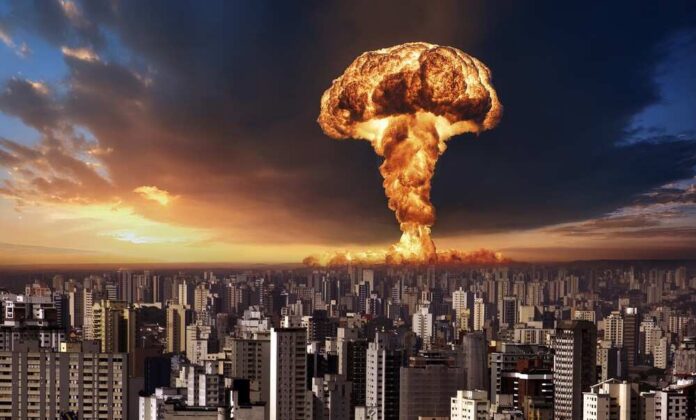
Federal agencies have updated critical survival protocols that could mean the difference between life and death in the first terrifying minutes after a nuclear detonation, yet most Americans remain dangerously unprepared for this unthinkable scenario.
Story Snapshot
- CDC and FEMA emphasize immediate sheltering over evacuation, with basement protection reducing blast and thermal injury risk by 90% in the critical first minutes.
- The first 24-72 hours after detonation present the highest fallout radiation danger, requiring citizens to seal shelters and avoid outdoor exposure to prevent acute radiation syndrome.
- Federal guidelines stress five immediate actions: recognize the blast, take cover instantly, seek dense shelter, stay inside for at least 24 hours, and decontaminate properly if exposed.
- Modern threats from rogue nations and terrorists have prompted updated 2023-2025 CDC protocols and ongoing NNSA training exercises for urban nuclear response scenarios.
Immediate Response: The First 60 Seconds
Federal preparedness guidelines emphasize that the initial moments after a nuclear detonation determine survival outcomes. CDC protocols instruct citizens to immediately drop to the ground, cover their heads, and hold position upon seeing the characteristic flash or feeling the shockwave. This “drop, cover, hold” response protects against flying debris and the intense thermal pulse that causes severe burns within miles of ground zero. Those caught outdoors face 80-90% fatality rates near the blast epicenter, making instant reaction non-negotiable. The electromagnetic pulse may disable electronics immediately, eliminating communication options and reinforcing why pre-planned family meeting points matter for conservative households valuing self-reliance and preparedness.
Sheltering Strategy: Dense Protection Saves Lives
Within 1-10 minutes of detonation, survivors must locate the densest available shelter, prioritizing basements or interior rooms of multi-story concrete buildings. ICRP research confirms basement sheltering provides 90% protection from blast effects and thermal radiation compared to above-ground exposure. Red Cross guidance warns against evacuation attempts during this window, as fallout begins descending within 15 minutes downwind of the blast. Families should seal windows and doors with available materials, shut off ventilation systems pulling outside air, and gather emergency supplies pre-positioned for exactly this scenario. This contradicts the chaotic instinct to flee, but federal data proves sheltering in place dramatically increases survival odds during the critical fallout period.
The 24-Hour Rule: Waiting Out Peak Radiation
CDC protocols mandate staying sheltered for a minimum of 24 hours, with 48-72 hours preferred, as fallout radiation intensity decreases exponentially over time. Venturing outside prematurely exposes individuals to acute radiation syndrome, causing nausea, hair loss, internal bleeding, and potential death within weeks. Hospitals activate Incident Command Systems and designate radiation safety officers to manage contaminated patients, but resources become overwhelmed quickly. Urban populations downwind face the highest risk from fallout plumes, with radioactive particles settling on surfaces and penetrating inadequately sealed structures. Monitoring official emergency broadcasts becomes essential, though EMP effects may disable standard communication infrastructure, underscoring why battery-powered or hand-crank radios belong in every prepared household’s emergency kit.
Decontamination Procedures: Removing Deadly Particles
If exposure to fallout occurs, immediate decontamination prevents radiation particles from causing prolonged damage. Federal guidelines instruct removing outer clothing carefully, sealing contaminated garments in plastic bags, and showering thoroughly with soap and water while avoiding conditioner that binds particles to hair. This simple procedure removes up to 90% of radioactive contamination before it penetrates skin or gets ingested. First responders establish decontamination lanes at hospitals to prevent facility-wide contamination that would cripple medical response capacity. The CDC emphasizes that decontamination differs fundamentally from chemical exposure protocols, requiring specific techniques average citizens can execute with proper advance knowledge. Preparedness-minded Americans recognize that government help may take days to arrive, making self-sufficiency skills vital for family protection.
Federal Preparedness: Updated Protocols for Modern Threats
The CDC updated nuclear detonation protocols in 2023-2025, reflecting heightened concerns about rogue state capabilities and terrorist improvised nuclear devices. NNSA’s Nuclear Emergency Support Team conducts ongoing NUWAIX exercises training FBI teams for urban WMD response, with 2024’s “Capability Forward” program enhancing rapid deployment capacity. These updates acknowledge that Cold War-era civil defense required modernization for asymmetric threats that could strike without warning. Federal Planning Guidance stresses the 24-72 hour window as most critical for organized response, though local resources bear initial burden before federal assets arrive. This preparedness framework aligns with conservative principles of individual responsibility and community resilience, rejecting dependency on potentially delayed government intervention during catastrophic scenarios that demand immediate, informed action from capable citizens.
Sources:
CDC – Nuclear Detonations: Immediate Actions
RITN – Response Planning and Guidance Resources
NNSA – Nuclear Emergency Support Team (NEST)
ICRP – Protection from Nuclear Attack
Red Cross – Nuclear Explosion and Radiation Emergencies