

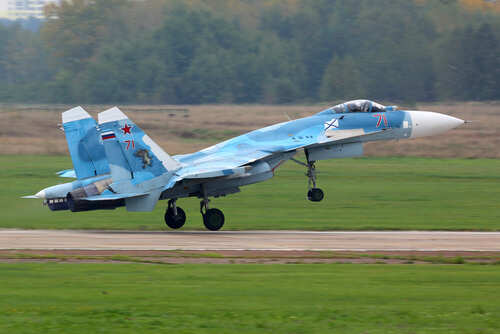
Russia’s flagship carrier fighter jet, the Su-33 Flanker-D, stands as a monument to Soviet-era ambition crushed by economic collapse and operational incompetence, leaving Moscow with a failed naval aviation program that highlights the dangers of centralized government mismanagement.
Story Snapshot
- Only 24-50 Su-33 fighters ever built due to post-Soviet economic collapse, crippling Russia’s carrier aviation capabilities
- Program plagued by combat losses, carrier breakdowns, and dependence on the troubled Admiral Kuznetsov
- Replaced by MiG-29K and facing retirement in 2026 after less than three decades of limited service
- Symbol of centralized planning failure contrasting grand Soviet ambitions with post-communist reality
Soviet Dreams Meet Economic Reality
The Su-33 Flanker-D emerged from Soviet naval ambitions in 1987 as the USSR’s first modern carrier-based fighter, adapted from the successful land-based Su-27 with reinforced landing gear, folding wings, and distinctive canards for ski-jump operations. The aircraft entered operational service on the Admiral Kuznetsov carrier in 1995, just as Russia’s post-Soviet economic catastrophe devastated military procurement. Instead of the planned fleet supporting multiple carriers, only 24 to 50 aircraft were ever produced before the program stalled. This microscopic fleet size exposed the vulnerability of centralized government planning when economic foundations crumble, leaving Russia’s naval aviation aspirations permanently stunted.
Operational Failures and Combat Losses
The Su-33’s limited operational history revealed systemic problems that conservative defense analysts recognize as hallmarks of government inefficiency. During the 2015-2016 Syria deployment, Russia lost two Su-33s in carrier landing accidents, representing a catastrophic loss rate given the tiny fleet size. High maintenance costs and the aircraft’s total dependency on the perpetually troubled Admiral Kuznetsov carrier compounded operational limitations. The Kuznetsov itself became notorious for breakdowns, requiring constant tugboat escorts and suffering from failed refit attempts that halted in 2018. This operational record demonstrates how government mismanagement and overspending on prestige projects produces hollow military capabilities rather than genuine defense strength.
Replacement and Impending Retirement
Russia officially replaced the Su-33 with the MiG-29K, acknowledging the program’s failure to deliver sustained carrier aviation capability. Recent NATO intercepts in 2025 highlighted the aircraft’s continued presence in limited operations, but projections indicate complete retirement by 2026 after barely 28 years of service. The transition underscores Russia’s broader shift away from carrier-based operations toward land-based aviation, effectively abandoning the naval aviation ambitions that justified the Su-33’s development. For American conservatives who value fiscal responsibility and effective defense spending, the Su-33 saga illustrates the predictable outcome of centralized military-industrial planning divorced from market realities and sound fiscal management.
Lessons for American Defense Policy
The Su-33’s failed legacy offers critical lessons as America rebuilds military strength under President Trump’s leadership in 2026. The program demonstrates how government overreach in defense procurement, divorced from fiscal discipline and realistic operational planning, wastes taxpayer resources while delivering underwhelming capabilities. Russia’s inability to sustain even a minimal carrier fighter fleet contrasts sharply with American naval aviation dominance built on competitive procurement, private-sector innovation, and fiscal accountability. Conservative defense priorities must continue emphasizing these principles over the kind of centralized, prestige-driven programs that produced Russia’s carrier aviation failure. The Su-33 stands as a cautionary tale about what happens when governments prioritize symbolic projects over practical defense needs and sound financial stewardship.
Sources:
Russian Flanker Fighter Jet That 27 Years Ago – The EurAsian Times
Su-33: Horrible Fighter Jet For Russia’s Admiral Kuznetsov Aircraft Carrier – The National Interest