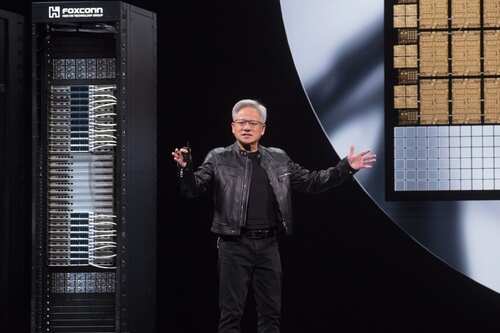
Nvidia CEO Jensen Huang confirms the Trump administration is considering allowing sales of downgraded Blackwell AI chips to China.
Story Highlights
- Nvidia CEO confirms ongoing talks with Trump administration about selling less advanced Blackwell chips to China
- Trump suggests allowing chip sales if they are 30-50% less capable than standard versions
- Deal would reverse Biden-era export bans that cost American companies billions in lost revenue
- Chinese competitors gained 4,300% revenue surge after U.S. restrictions, undermining American market dominance
Trump Administration Opens Door to Strategic Compromise
President Trump signaled a dramatic shift from previous blanket export bans, suggesting he might permit Nvidia to sell scaled-down Blackwell chips to China under a “restrictive covenant” arrangement. This approach mirrors historical precedents where the U.S. sold downgraded military technology to foreign nations while maintaining strategic advantages. Trump emphasized any deal would require the chips to be significantly less capable than standard versions, ensuring America retains its technological edge while allowing businesses to compete globally.
CHIP DIPLOMACY: Nvidia CEO Jensen Huang told FOX Business he is in talks with the Trump administration about selling the company’s powerful Blackwell chip to China, arguing that global adoption of U.S. technology could secure America’s lead in the AI race. pic.twitter.com/QR6bouvayl
— FOX Business (@FoxBusiness) August 28, 2025
Nvidia CEO Emphasizes American Technological Leadership
Jensen Huang confirmed discussions are underway but stressed negotiations will require substantial time to reach any agreement. The Nvidia CEO argued that widespread global adoption of American AI technology strengthens U.S. dominance in the artificial intelligence race, even when selling less advanced versions. Huang’s position reflects the frustration many American tech leaders felt under previous export restrictions that pushed foreign customers toward domestic alternatives while reducing U.S. influence in critical emerging technologies.
Watch: Trump confirms Nvidia deal to sell lower-end chips to China
Previous Export Controls Backfired Against American Interests
The Biden administration’s strict export controls on AI chips created unintended consequences that undermined American competitiveness. Chinese companies like Cambricon experienced explosive growth, with revenues surging 4,300% after U.S. restrictions pushed Chinese buyers toward domestic suppliers. These policies cost American firms access to one of the world’s largest technology markets while accelerating China’s development of indigenous alternatives, achieving the opposite of their intended effect of slowing Chinese technological advancement.
Strategic Balance Between Security and Economic Interests
The potential deal represents Trump’s pragmatic approach to balancing national security concerns with American business interests. Unlike blanket prohibitions that pushed China toward complete technological independence, managed exports of downgraded technology could maintain U.S. influence while generating revenue for American companies. This strategy recognizes that overly restrictive policies often accelerate competitors’ domestic development efforts, ultimately weakening rather than strengthening America’s long-term technological position in global markets.
Sources:
Trump-Nvidia talks to allow Blackwell chip sales to China will take time, CEO says
Nvidia CEO says he’s in talks with Trump admin about selling Blackwell chip to China