
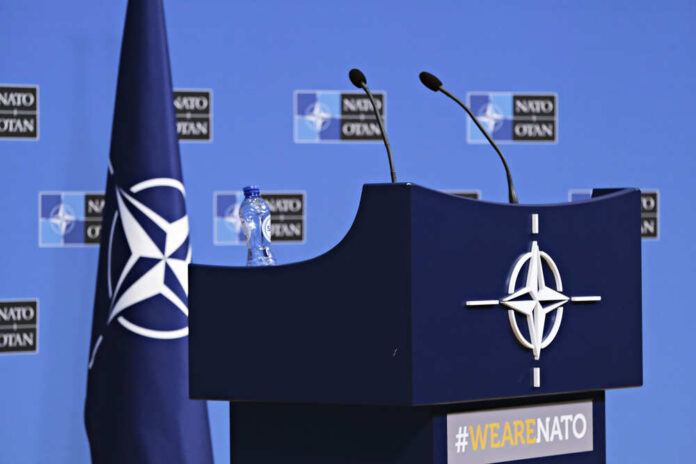
Trump’s latest NATO-Ukraine weapons deal is making headlines not for what it does, but for how it flips the bill—leaving American taxpayers asking why the rest of the world hasn’t been pulling its weight all along.
At a Glance
- President Trump unveils new plan: U.S. sends weapons to NATO, NATO pays and delivers them to Ukraine
- This marks a major shift—NATO has never directly armed a non-member state like Ukraine before
- Trump’s deal puts financial responsibility squarely on European allies, not U.S. taxpayers
- Legal and logistical questions about NATO’s new role and alliance unity spark debate across the West
Trump’s Plan: Make NATO Pay Up, Arm Ukraine—But Not on America’s Dime
President Trump has once again upended the international status quo, this time by calling out the freeloaders in Europe and demanding real action. On July 10, 2025, Trump announced a new arrangement: the U.S. will supply weapons to NATO, which will then send them on to Ukraine—but here’s the twist—NATO pays for everything. Trump described the deal with his trademark bluntness: “We’re sending weapons to NATO, and NATO is paying for those weapons, 100 percent. So what we’re doing is the weapons that are going out are going to NATO, and then NATO is going to be giving those weapons [to Ukraine], and NATO is paying for those weapons.”
NBC: In an interview, President Trump "said he just made a deal today with NATO in which … the U.S. will send weapons to Ukraine through NATO — and NATO is paying for those weapons, a hundred percent." pic.twitter.com/iIBhrVkNSm
— Rapid Response 47 (@RapidResponse47) July 11, 2025
This deal breaks decades of precedent. NATO as an institution has never before acted as a direct arms dealer to a non-member state. U.S. weapons have always moved through bilateral deals, not alliance pipelines. Trump’s approach isn’t about ending support for Ukraine—it’s about ending the insanity of America playing sugar daddy for a continent that keeps finding creative ways to dodge its own defense bills. And with the Pentagon recently halting aid and a weary Congress grumbling about endless spending, the timing couldn’t be sharper.
Watch: Trump says he struck a deal to send weapons to NATO for Ukraine
The Frustration: Americans Foot the Bill While Europe Plays Defense Tourist
Let’s be clear: this isn’t just about Ukraine, or Russia, or even about NATO’s endless love affair with bureaucracy. It’s about American taxpayers being treated like an ATM for foreign wars and “allied” governments that never seem to have enough money—except, of course, for their own bloated welfare states and green energy schemes. Trump’s move finally puts “America First” where it belongs—at the head of the check-out line, not at the bottom of the receipt. While European capitals wring their hands about “solidarity,” Americans are left to wonder why they’re paying to defend countries that can’t even meet their own defense spending promises. For decades, U.S. presidents have pleaded, cajoled, and even begged European allies to spend more on defense. The answer? Lip service, summits, and more American money down the drain.
NATO officials are scrambling to figure out how to make this work. There’s no legal precedent for the alliance to buy and deliver U.S.-made arms to a non-member. But the underlying message is crystal clear: pay up or shut up. European governments, already facing angry voters and creaky economies, now have to explain why they haven’t been ponying up. Meanwhile, Congress and the Pentagon are breathing a sigh of relief—not because they don’t care about Ukraine, but because someone finally had the guts to say enough is enough.
What’s Next: Burden-Sharing, Bureaucracy, and the Battle for Common Sense
The immediate impact is obvious: European NATO members are on the hook for real money, not just empty promises and press conferences. Trump’s approach is already sending shockwaves through Brussels, where bureaucrats love nothing more than a good committee meeting—especially if someone else is picking up the tab. For Ukraine, this could mean faster, more reliable weapons deliveries—if, and only if, NATO countries step up. For U.S. defense contractors, it’s a windfall; for American taxpayers, it’s long overdue justice.
Long-term, this could transform how the alliance operates. If NATO becomes a direct arms broker, it will set a new precedent for future conflicts. Trump’s critics are already moaning about “legal uncertainties” and “alliance unity,” as if endless American subsidies are the only thing holding the West together. The reality? True unity means shared sacrifice—and finally, Trump is making sure that means shared spending, not just shared speeches. Experts say this could reshape the U.S. role in European security, maybe even force Europe to grow up and take responsibility for its own backyard.