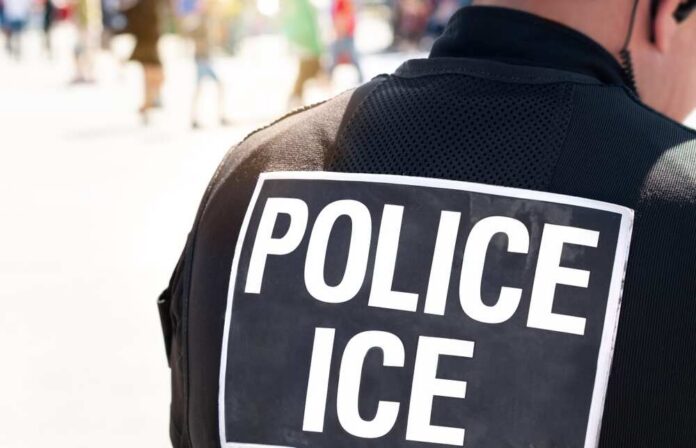
Federal immigration agents are now tracking American citizens over angry emails and social media posts, raising new alarms about government power and free speech.
Story Snapshot
- ICE agents tracked Rochester father David Streever through travel records after he sent a harsh email about an ICE killing.
- Agents delivered an unsigned warning letter to his home, then showed up at his New York City hotel after he cleared customs.
- The same week, agents confronted Syracuse poll worker Paigelynne Gonyea at a voting site over a social media post about the same shooting.
- Legal experts say these tactics fit a growing pattern of federal intimidation and mass surveillance against peaceful critics.
Agents Track Down a Critic Over One Angry Email
In January 2026, Rochester resident and father of two David Streever sent a furious email to then acting Immigration and Customs Enforcement Director Todd Lyons after an ICE agent shot and killed Minneapolis protester Renee Good. The email called Lyons “a monstrous human being” and compared him to Nazi butcher Reinhard Heydrich, saying his role in defending the shooting “will lead to your downfall” and that he would “torment yourself until your last day on Earth.”
Five months later, while Streever was traveling in Finland with one of his children, two federal agents arrived at his Rochester home and handed his wife an unsigned “warning notice” stating his email was considered a threat. After Streever returned to the United States and cleared customs, agents then appeared at the front desk of his New York City hotel, having tracked his travel and lodging information across borders. His attorney and civil liberties advocates say this response to a single email shows federal agents using their vast data tools to intimidate a critic rather than to stop real danger.
Warning Visits Spread From Email to Social Media Posts
The week Streever received his warning, Syracuse poll worker Paigelynne Gonyea says two federal officers showed up at her voting location during New York’s primaries. They confronted her face to face about a social media post she had written criticizing the ICE officer who shot Renee Good, effectively turning a peaceful online statement into grounds for an in-person law enforcement visit. Civil rights lawyers argue that tracking down citizens at work and at the ballot box over criticism of government actions crosses a line from normal security work into chilling free speech and the right to criticize officials.
Immigration and Customs Enforcement’s parent agency, the Department of Homeland Security, responded with a brief statement saying, “ICE investigates all credible threats towards its employees and officers, including threats to the ICE Director.” But the agency has not released any threat assessment or internal memo explaining why Streever’s email or Gonyea’s social media post met that “credible threat” standard. Without that documentation, the public only sees the outcome: critics of immigration enforcement getting visits at their homes, workplaces, and even hotels after they speak out.
Pattern of Surveillance, Intimidation, and Weak Limits
Reports from major civil-liberties groups show these are not isolated events but part of a wider pattern of Immigration and Customs Enforcement monitoring and targeting dissent. The Brennan Center has documented federal policy statements that label anti-ICE protesters and supporters as potential “domestic terrorists” and describe plans to use powerful spying tools against people who oppose the administration’s immigration agenda. Investigations by National Public Radio found that Immigration and Customs Enforcement uses round-the-clock social media monitoring, facial recognition, and administrative subpoenas to unmask anonymous accounts that criticize the agency and then track individuals using phone and location data, often without a judge’s warrant.
ICE agents showed up at his home—then tracked him down at hotel while on vacation with his 7-year-old daughter.
“Now, six months later, to get agents at my house, to have an agent track me to a hotel that nobody knew I was going to be at,” David Streever said.
“It doesn’t give… pic.twitter.com/td3y7fDBeb
— LongTime🤓FirstTime👨💻 (@LongTimeHistory) June 30, 2026
Legal experts interviewed in those investigations warn that these tools and tactics threaten both First Amendment free speech rights and Fourth Amendment protections against unreasonable searches. They point to lawsuits in several states claiming that home visits and surprise confrontations at peaceful protests are meant to scare citizens away from speaking out. At the same time, whistleblowers have exposed an internal Immigration and Customs Enforcement memo that claims agents can enter homes based only on an internal administrative form instead of a court warrant, a policy constitutional scholars say flatly violates the Fourth Amendment. Together, mass surveillance, home entries without real warrants, and warning visits to critics paint a picture of a federal agency whose power has grown faster than its respect for basic constitutional limits.
Courts and Congress Push Back, But Slowly
Federal courts and lawmakers are starting to push back, though the pace is slow compared with how fast enforcement tactics have spread. A federal judge recently blocked a Trump–Vance administration policy that tried to stop members of Congress from making surprise visits to immigration detention facilities, restoring a key oversight tool meant to prevent abuse and waste of taxpayer dollars. Another judge in Minnesota has restricted Immigration and Customs Enforcement’s ability to retaliate against peaceful protesters, recognizing that federal intimidation can silence lawful dissent.
Policy experts at Brookings argue that Immigration and Customs Enforcement’s expansion has far outpaced accountability, pointing to dozens of deaths in custody and multiple killings by agents, including Renee Good’s, while basic transparency measures like body cameras and clear identification are still missing. Civil-rights organizations have won settlements that bar agents from using deceptive ruses or impersonating local police to enter homes, steps that show courts do see constitutional problems in current tactics. But for ordinary citizens like David Streever and Paigelynne Gonyea, those reforms are distant. Right now, the message they received is simple and troubling: criticize a powerful federal agency, and armed officers may show up at your door, your job, or your hotel room to remind you who is watching.
Sources:
reason.com, 13wham.com, facebook.com, yahoo.com, wfmd.com, brennancenter.org, americanimmigrationcouncil.org, nytimes.com, npr.org