

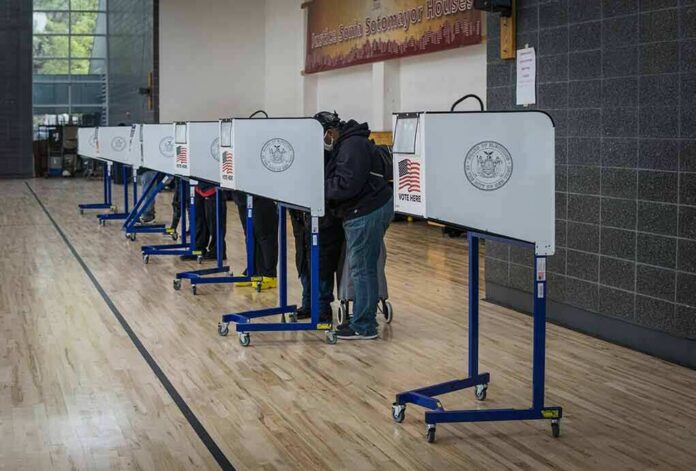
Control of Congress is on the ballot in November, and the outcome will shape President Trump’s final two years in office.
Story Snapshot
- All 435 House seats and 35 Senate seats are up on November 3, 2026.
- Republicans hold razor-thin margins that make small shifts decisive.
- Midterms often act as a national check on the president’s party.
- Close races could take days to settle final control of Congress.
What Is at Stake on Election Day
Election Day will decide who runs the United States House and Senate for the rest of President Trump’s term. Voters will choose members for all 435 House seats and 35 Senate seats on November 3, 2026. Those results will guide which bills get a vote, which nominees get confirmed, and how federal agencies are overseen. The Associated Press and public guides underline that congressional power, not just local races, is on the line this year.
Republicans enter the final stretch with tight control that could swing on a handful of seats. Reporting shows the House at the bare minimum for a majority, with Republicans at 218 seats and an aligned independent, while the Senate stands at 53 seats for Republicans and 47 for Democrats and aligned independents. That slim edge raises the stakes for turnout, late-breaking issues, and strong ground games in competitive districts and states.
How Midterms Can Shape a Presidency
Midterm elections often function as a national test of the party in the White House. The European Parliament Research Service explains that midterms typically act as a gauge of public opinion and often move against the president’s party. The Atlantic frames 2026 as a test for what President Trump can do over the next two years, because committee gavels, floor schedules, and confirmation votes depend on who holds each chamber after the count is done.
Congressional control decides whether conservative policies advance or stall. A Republican Congress can drive lower taxes, border enforcement, and energy expansion through oversight and legislation. A split Congress or a Democratic takeover can block bills, slow confirmations, and load spending bills with left-wing wish lists. That is why this midterm matters to families who want secure borders, affordable energy, accountable schools, and a federal government that stays in its lane.
Why Margins and Timing Matter
Narrow majorities magnify every close race. With Republicans holding the House by a thread and a modest Senate edge, a few districts or one or two states could flip control. The Associated Press and the British Broadcasting Corporation both track these margins and identify control as the key story line of the 2026 map. Tight counts could also affect leadership elections, committee ratios, and which investigations proceed in the next Congress.
Final answers may not arrive on election night. Close races can take days to settle as mail ballots are processed and state rules are followed. Al Jazeera notes that late or incomplete results may delay clarity on which party controls Congress. That means the public conversation could run hot while votes are still being counted. Voters should watch for official results and avoid jumping to conclusions before states certify winners.
How Outcomes Could Shape the Next Two Years
A Republican hold of both chambers would speed key parts of President Trump’s agenda. Congress could tighten border law, push American energy, press for spending discipline, and fast-track judges who respect the Constitution. A split result would force deal-making and narrower bills. A Democratic flip of either chamber would hand gavel power to the left, which could stall confirmations, spike regulatory costs, and try to revive the same big-government plans that raised prices and strained family budgets in recent years.
What Voters Should Watch
Voters should track competitive House districts, Senate toss-ups, and turnout patterns in suburbs and small towns. Midterms often turn on energy costs, border security, crime, schools, and the size of government. The Atlantic’s framing highlights the test for Trump’s next two years, while official guides stress that every House seat and many Senate seats are in play, making control genuinely at stake. Regardless of spin, certified outcomes will set the policy path into 2028.
Sources:
theatlantic.com, usa.gov, eprs.europarl.europa.eu, bbc.com, britannica.com, countrywatch.com