
Mexico’s long “hugs, not bullets” era collided with reality when its military finally took down El Mencho—then the cartel answered with nationwide terror.
Story Snapshot
- Mexican special forces killed CJNG leader Nemesio “El Mencho” Oseguera Cervantes during a Feb. 22, 2026 raid near Tapalpa, Jalisco.
- The capture attempt turned into a firefight, and El Mencho died during helicopter transport alongside two wounded cartel bodyguards.
- CJNG retaliation spread across roughly 20 states with blockades, arson, and attacks that multiple reports say caused major casualties.
- Mexico’s top defense leadership publicly highlighted strengthened intelligence sharing with the U.S., signaling a sharper security posture.
- President Trump publicly claimed credit for the takedown during his Feb. 24 State of the Union address.
How the raid unfolded in Jalisco
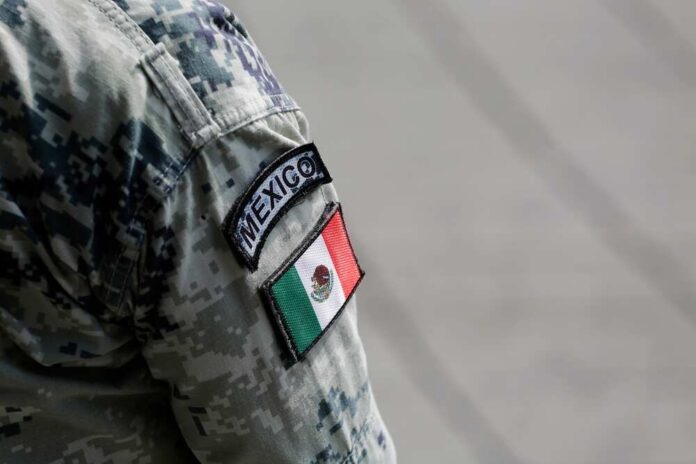
Mexican forces moved after surveillance confirmed El Mencho remained at a residential property in Tapalpa, Jalisco, guarded by roughly ten bodyguards. Planning began Feb. 21, and by early Feb. 22 the military had staged six helicopters in nearby states. When the raid began inside a gated community with helicopter support, CJNG gunmen opened fire, triggering intense exchanges. El Mencho was gravely wounded during the initial confrontation.
Mexican authorities attempted to evacuate the wounded cartel leader by helicopter for emergency treatment in Guadalajara. During that flight, El Mencho and two wounded cartel bodyguards died, and the aircraft was diverted to Morelia International Airport because of security concerns. The operational details matter because they underscore this was reported as a capture attempt that turned deadly, not a simple targeted strike announced after the fact.
Cartel retaliation shows CJNG’s reach—and the cost
CJNG’s response illustrated why many Americans view cartel power as a direct national-security problem, not a distant foreign issue. Reports described coordinated reprisals that included road blockades, vehicle burnings, and armed confrontations across Jalisco and neighboring regions, spreading into about 20 states. Residents in Jalisco’s capital reportedly sheltered in place as burned-out vehicles blocked roads in multiple states, disrupting daily life and commerce.
The violence also hit Mexican security forces hard. During the broader clash environment around the operation, a military helicopter providing aerial support was reportedly struck by rocket-propelled grenade fire after locating an armed convoy, killing nine soldiers. Other reporting cited major nationwide casualty totals from the retaliation, including significant National Guard losses. While figures vary by source, the central fact is consistent: the cartels demonstrated the ability to coordinate large-scale violence quickly.
A policy reversal after “abrazos, no balazos”
The operation was widely framed as a break from Andrés Manuel López Obrador’s “abrazos, no balazos” approach, which emphasized social programs and restraint rather than sustained confrontation. Observers quoted in reporting said that posture was often ill-defined in practice and strained cooperation with the United States. Under President Claudia Sheinbaum, Mexico’s leadership has signaled a willingness to pursue more aggressive security action, even while confronting the blowback such action can unleash.
U.S.-Mexico coordination moves into the open
Mexico’s defense leadership publicly emphasized increased information exchange with U.S. Northern Command, an unusually direct acknowledgment given Mexico’s sensitivities about sovereignty. Reporting also described broader U.S. pressure during President Trump’s current term focused on fentanyl, cartel violence, and migration enforcement. Mexico’s reported responses included handing over nearly 100 accused cartel bosses to face U.S. justice, tightening migration controls, and allowing U.S. drone flights over Mexican territory.
President Trump then made the political stakes explicit when he referenced the takedown in his State of the Union address. That matters for American voters because it ties cross-border security to policy choices at home—border control, drug interdiction, and whether Washington treats cartel power as an organized-crime problem or something closer to an insurgent threat. The sources do not resolve how durable this cooperation will be, but the public messaging marked a clear shift.
For Mexico, the immediate question is succession and stability inside CJNG. The sources describe the likelihood of a power vacuum and potential internal struggle, but they do not provide confirmed details on who will control the organization next. For Americans watching the border, the practical concern is that fragmentation can either weaken a cartel—or produce more chaos as splinter groups fight for routes tied to fentanyl and human smuggling. The reporting supports only one certainty: Mexico’s security gamble comes with real near-term risk.
Sources:
Mexico’s Catholic Church, peace and cartel crime: Military violence after El Mencho