

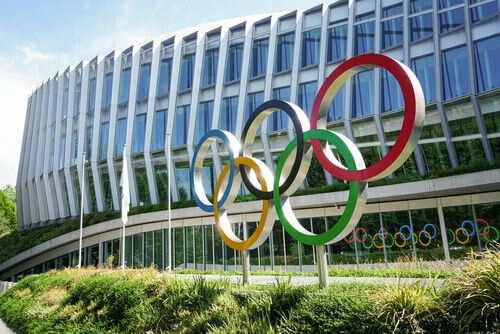
IOC bars biological males from women’s Olympic events with gene testing, delivering a long-overdue win for fairness that protects female athletes’ rights against woke overreach.
Story Highlights
- IOC announces policy excluding transgender women from women’s competitions starting 2028 Los Angeles Olympics.
- Mandatory SRY gene screening determines eligibility for all female category events in individual and team sports.
- Policy aligns with President Trump’s 2025 executive order threatening funding cuts to organizations allowing men in women’s sports.
- Shifts from inconsistent federation rules to unified IOC standard, prioritizing biological fairness over inclusion agendas.
- Not retroactive; spares grassroots sports but raises questions on Olympic Charter’s human rights claims.
Policy Announcement Details
On March 26, 2026, the IOC executive board approved a new eligibility policy excluding transgender women from women’s events at the Olympics and IOC-sanctioned competitions. The rule mandates a one-time SRY gene test to verify biological female status for all female category events. This unified standard replaces prior inconsistencies where sports federations set their own rules. President Trump’s February 2025 executive order pressured the change by threatening U.S. funding cuts and visa denials for non-compliant athletes at the 2028 LA Games. IOC President Kirsty Coventry emphasized the need for clarity ahead of Los Angeles hosting.
Olympians, including Martina Navratilova and Nancy Hogshead, are responding to the IOC's decision to bar biological males from women's sports, calling it a step toward fairness. https://t.co/v2Mtvj7wnK
— Fox News (@FoxNews) March 27, 2026
Trump’s Role in Driving Change
President Donald J. Trump’s executive order titled “Keeping Men Out of Women’s Sports” directly influenced the IOC’s decision. The order targeted organizations permitting transgender women, who experienced male puberty, in female categories. It pledged to withhold federal funds and block visas for affected athletes seeking U.S. entry. This America First stance countered years of globalist policies eroding women’s sports integrity. Track, swimming, and cycling had already banned such competitors before 2024 Paris, but Trump’s action forced IOC-wide uniformity. Conservatives applaud this as Trump delivering on protecting traditional fairness without endless foreign entanglements.
Key Provisions and Implementation
The 10-page IOC document limits female event eligibility to biological females via SRY gene screening, administered once per career. It applies across all sports but remains non-retroactive, excluding past qualifications. Grassroots and recreational programs face no changes, despite the Olympic Charter calling sports access a human right. The policy cites male puberty’s performance advantages in strength, power, and endurance events. It takes effect July 2028 at Los Angeles Olympics, providing two years for preparation. Taiwan’s Lin Yu-ting, a 2024 gold medal boxer, passed testing and retains eligibility.
Precedents include Laurel Hubbard’s 2021 Tokyo participation without medaling and 2024 controversies with DSD athletes like Caster Semenya. The IOC justifies restrictions to safeguard fairness, safety, and integrity for female competitors, acknowledging science over ideology.
Olympians, including Martina Navratilova and Nancy Hogshead, are responding to the IOC's decision to bar biological males from women's sports, calling it a step toward fairness.🍀
— OBOTEGA (@obotegarw) March 27, 2026
Implications for Athletes and Future Sports
Female athletes gain protected categories, ending debates that undermined Title IX-like principles globally. Transgender women and some DSD athletes like Semenya face exclusion from elite women’s events, potentially sparking legal fights on human rights grounds. Federations must adapt to centralized rules, reducing patchwork standards. This may prompt other bodies to follow, bolstering women’s sports worldwide. Amid frustrations with high energy costs and war strains, this victory reaffirms conservative priorities: limited government overreach, family values through fair play, and no promotion of radical agendas like biological males dominating girls’ competitions. Limited data exists on current transgender Olympic competitors, but clarity now prevails.
Sources:
IOC bans transgender women from Olympics with new eligibility policy (ESPN)
IOC bans transgender women athletes from competing in Olympics with new eligibility policy (KUTV)
IOC policy bars transgender women from Olympics (Inquirer)
Transgender Athlete Participation in Sport (USOPC)
Transgender women athletes banned from Olympics by new IOC policy (YourValley)